
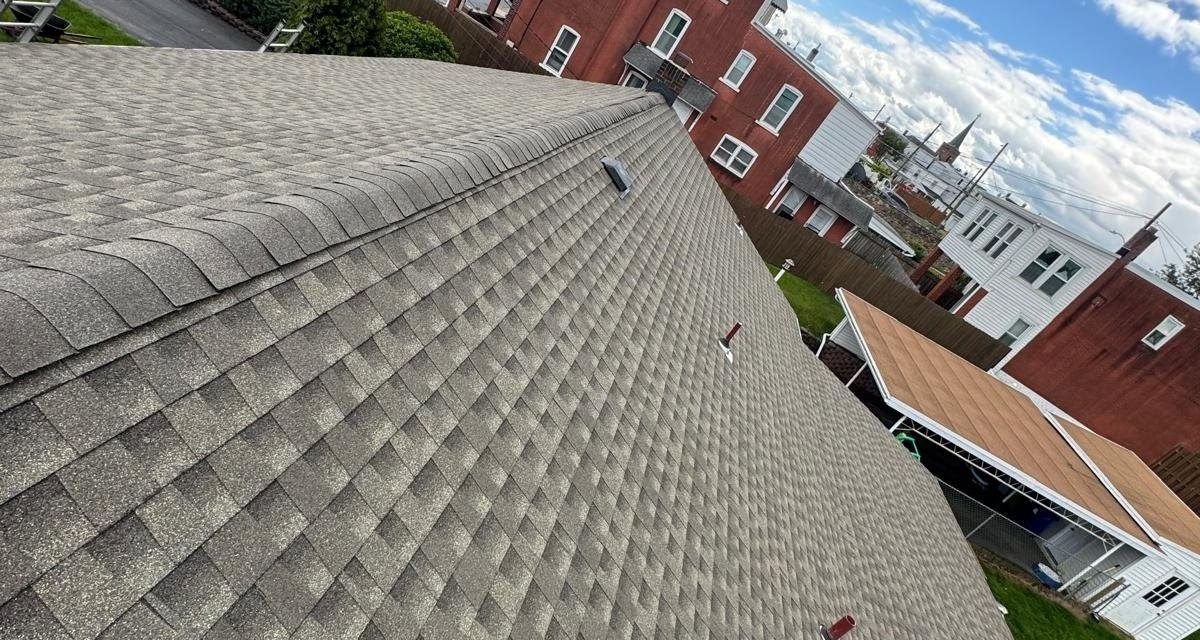
A professional roof replacement is about far more than installing a new layer of shingles. It is a complete process that combines preparation, accurate installation, weather protection, ventilation, flashing, and careful finishing. The photograph featured with this project shows a clean, finished asphalt shingle roof with consistent courses, defined ridge lines, roof penetrations, and a carefully completed surface. From an elevated view, the quality of the installation can be seen across the full roof plane.
At All State Roofing & Chimney, the goal of every roofing project is to create a finished system that looks professional while also providing dependable protection for the structure below. A roof replacement gives homeowners an opportunity to address aging materials, visible wear, leaks, damaged components, and other roofing concerns while building a new protective surface from the roof deck upward.
Why Roof Replacement Is More Than New Shingles
When homeowners look at a finished roof from the ground, the shingles are usually the first thing they notice. However, the visible shingles are only one part of a complete roofing system. Beneath them are the roof deck, underlayment, flashing, ventilation components, fasteners, and other details that work together to manage water and weather exposure.
A professional roof replacement begins with understanding the condition of the existing system. Depending on the age and condition of the roof, the process may involve removing old roofing materials, inspecting the roof deck, replacing damaged sections, preparing the surface, installing protective layers, and then installing the new shingles.
This preparation is important because the new roofing material should be installed over a sound and properly prepared surface. A finished roof may look simple from the ground, but its performance depends on many individual details being completed correctly.
The Roof Surface Shown in This Project
The photograph provides a close, elevated view of the completed roof. The gray asphalt shingles create a consistent pattern across a broad roof plane, while the ridge is finished with matching ridge shingles. Several roof penetrations are visible, showing why careful detailing is necessary even after the main shingle field has been installed.
The roof has a clean and uniform appearance. The shingle courses follow a consistent pattern, and the finished surface presents a strong visual transition along the ridge. This type of finished appearance is not simply cosmetic. Consistent installation helps create an organized roofing system in which individual components work together across the roof.
The image also shows how a residential roof must interact with nearby walls, roof sections, vents, and other exterior features. Every penetration or transition is a potential point that requires careful attention during installation and inspection.
For a homeowner, this is one reason a professional roof replacement should be evaluated as a complete system rather than judged only by the color or appearance of the shingles.
The Importance of Proper Roof Preparation
Preparation is one of the most important stages of a roof replacement. Before new shingles are installed, the existing roofing system should be evaluated so the contractor can identify conditions that may affect the new installation.
If damaged or deteriorated decking is discovered during the project, those areas may need to be repaired or replaced. A properly prepared deck provides a stable surface for the roofing layers above it.
The preparation stage can also include the installation of underlayment and other protective components. Underlayment provides an additional layer beneath the shingles, helping protect the structure from moisture that may move beneath the exterior roofing material.
Roof edges, valleys, ridges, penetrations, and transitions also require careful preparation. These areas are not identical to the large open sections of the roof and often require specific installation details.
The finished roof in the photograph demonstrates the result homeowners ultimately see, but a professional installation depends on the less visible preparation that takes place before the final shingles are in place.
Shingle Alignment and Professional Installation
One of the clearest visual characteristics of the project is the consistent alignment of the shingles. A professional roof replacement should produce an organized, uniform appearance across the roof surface.
Correct shingle placement involves more than creating straight-looking rows. The shingles must be positioned and fastened according to the manufacturer’s installation requirements and the conditions of the roof. Proper fastening, layout, overlap, and alignment all contribute to the performance and appearance of the finished system.
Asphalt shingles are widely used because they offer a practical combination of appearance, protection, and installation flexibility. The exact product selected for a project should be based on the home’s requirements, the roof design, the homeowner’s preferences, and the manufacturer’s specifications.
The image shows how a completed asphalt shingle roof can create a clean and consistent exterior appearance. The gray tone works with the surrounding property while the repeated shingle pattern gives the roof a finished architectural look.
However, appearance should never be the only measure of quality. A new roof should also be installed with attention to the underlying structure, water management, ventilation, flashing, and manufacturer requirements.
Flashing, Vents, and Roof Penetrations
Roof penetrations deserve special attention during a roof replacement. Vents and other components interrupt the continuous shingle surface, which means these areas must be properly integrated into the roofing system.
Flashing helps manage water at locations where roof surfaces meet walls, chimneys, skylights, vents, and other vertical or intersecting elements. For additional homeowner education, GAF provides useful information about the role of roof flashing and its importance around vulnerable areas.
The photograph includes visible roof penetrations that stand out against the shingle field. Their presence is a useful reminder that professional roofing is not only about covering the largest areas. The smaller components can be equally important to the weather-resistant performance of the roof.
During a roof replacement, a contractor should evaluate existing flashing and related components rather than assuming that every part of the old system can simply remain in place. Depending on condition and project scope, flashing may need repair, replacement, or integration with new roofing materials.
Proper detailing around penetrations also helps create a cleaner finished appearance. When these areas are installed carefully, the roof looks more complete and the protective system is better organized.
Ventilation and Long-Term Roof Performance
Ventilation is another important part of a complete roofing system. The roof assembly and attic need an appropriate approach to managing heat and moisture.
The U.S. Department of Energy provides homeowner and building-science resources explaining how ventilation, insulation, and air sealing can affect attic conditions and moisture management.
During a roof replacement, ventilation should therefore be considered as part of the overall roofing system rather than treated as an unrelated detail. Existing vents should be evaluated, and any new or replacement ventilation components should be installed according to applicable requirements and manufacturer instructions.
The roof shown in the photograph includes several visible roof-mounted components. These details need to be coordinated with the surrounding shingles so that the finished system remains both functional and visually consistent.
Balanced ventilation is especially important. GAF’s roofing education materials note that exhaust ventilation should not exceed intake ventilation. The correct configuration depends on the roof and attic design, so homeowners should rely on a professional assessment rather than choosing ventilation components based only on appearance.
How to Know When Roof Replacement May Be Needed
Not every roofing problem means a complete roof replacement is necessary. Some issues can be addressed through targeted repair, while extensive deterioration may require a larger project.
Homeowners should consider scheduling a professional inspection when they notice repeated leaks, missing or damaged shingles, visible deterioration, sagging areas, damaged flashing, or other signs that the roofing system may no longer be performing as expected.
GAF’s homeowner guidance recommends looking for issues such as cracked, torn, warped, or missing shingles, damaged flashing, roof penetrations that are not properly sealed, and areas that appear unsound.
Age is another consideration. Roofing materials have different service lives, and the actual condition of a roof depends on its materials, installation, weather exposure, maintenance, ventilation, and other factors. A professional inspection is therefore more useful than relying on age alone.
A roof replacement can also make sense when problems are widespread or when repeated repairs are no longer addressing the underlying condition of the roofing system.
Roof Replacement or Roof Repair?
Choosing between roof repair and roof replacement requires an evaluation of the actual condition of the roof. A localized problem may be repairable, while a roof with widespread deterioration may require more extensive work.
A professional inspection can help identify the source and extent of the problem. For example, a leak may be caused by damaged shingles, deteriorated flashing, a roof penetration, or another issue. Fixing the visible symptom without identifying the underlying source may not resolve the problem completely.
All State Roofing & Chimney provides both roof repair and roof replacement services, allowing the appropriate solution to be considered based on the condition of the property.
Homeowners can also review the company’s guide comparing roof repair and roof replacement for additional information before scheduling an evaluation.
When replacement is appropriate, the project becomes an opportunity to address the roofing system comprehensively. When repair is appropriate, focused work may be sufficient to restore the affected area.
The important point is that the decision should be based on the roof’s condition rather than on a one-size-fits-all assumption.
The Value of Professional Workmanship
Professional workmanship is visible in the details of a completed roof. The photograph shows a roof surface where the shingle courses maintain a consistent pattern and the ridge area has a defined finished appearance.
A professional roof replacement requires careful coordination from beginning to end. The crew must manage material handling, preparation, installation, transitions, penetrations, cleanup, and final inspection.
Safety is also a critical part of professional roofing work. Roofing takes place at elevation, often on sloped surfaces, and requires appropriate equipment, procedures, and jobsite awareness.
Quality workmanship also means paying attention to details that may not be obvious from the ground. Proper fastening, flashing, ventilation, underlayment, and roof-edge treatment all contribute to the complete system.
The goal is not simply to make an old roof look new. The goal is to install a roofing system with care and consistency so the finished result can provide dependable protection for the property.
Why a Final Roof Inspection Matters
The final inspection is an important stage of a roof replacement. Once installation is complete, the roof should be reviewed for visible installation issues, incomplete details, damaged materials, debris, and areas that require correction.
The inspection should include the main roof surface as well as ridges, edges, penetrations, flashing areas, vents, and transitions.
The photograph is particularly useful because it shows the finished roof from a perspective that allows the entire shingle field to be evaluated. From this type of elevated view, alignment, ridge finishing, penetrations, and overall consistency are easier to observe.
A final review also gives the contractor an opportunity to confirm that the work area has been cleaned and that the completed roof presents a professional finished result.
A roof replacement should end with more than the final installation. It should end with a careful review of the completed system.
Choosing a Professional Roofing Contractor
Selecting a roofing contractor is an important part of planning a roof replacement. Homeowners should look for a company that is prepared to explain the condition of the existing roof, the proposed scope of work, the materials being used, and the installation process.
It is also useful to ask what will happen if damaged decking or other concealed conditions are discovered during the project. A clear process for handling these conditions can help prevent confusion once work begins.
Homeowners should also ask about warranties, cleanup, ventilation, flashing, underlayment, and the final inspection.
All State Roofing & Chimney provides roofing services including roof replacement, roof repair, roof leak repair, emergency roofing, and new roof installation. The company also provides chimney services, including inspection, repair, and cleaning.
A professional evaluation can help determine which service is appropriate for the property and whether the existing roofing system needs repair or complete replacement.
Protecting the Investment After Roof Replacement
Once a new roof has been installed, ongoing maintenance remains important. A roof should not be ignored simply because it is new.
Homeowners can watch for visible changes after severe weather, including damaged or displaced shingles, debris accumulation, damaged flashing, or signs of water intrusion. Attic and interior areas should also be monitored for unexpected moisture or stains.
Regular professional inspections can help identify developing issues before they become more extensive. Keeping gutters and drainage paths clear can also help water move away from the roof and structure as intended.
Ventilation and attic conditions should be monitored as part of the overall home-maintenance strategy. The U.S. Department of Energy’s building-science resources provide educational information about ventilation, air sealing, insulation, and moisture control.
Good maintenance does not eliminate the possibility of future repairs, but it can help homeowners stay aware of the condition of their roofing system.
Schedule a Professional Roof Replacement Estimate
The completed roof shown in this photograph represents the visible result of professional roofing work: a consistent asphalt shingle surface, defined ridge lines, carefully integrated roof penetrations, and a clean finished appearance.
A successful roof replacement, however, begins well before the finished shingles are visible. It starts with inspection, preparation, attention to the roof deck, appropriate protective layers, careful installation, flashing, ventilation, and a final review.
For homeowners dealing with an aging roof, repeated leaks, storm-related damage, damaged shingles, or visible deterioration, a professional inspection can help clarify whether repair or replacement is appropriate.
All State Roofing & Chimney provides professional roofing solutions with a focus on careful preparation, workmanship, and complete roofing systems. The company offers free inspections and in-house estimates and can be reached at (862) 295-7864.
A strong roofing project is built through attention to detail at every stage. The finished roof should not only look clean and professional from the outside; it should also reflect careful work underneath the visible surface.