
A dependable roofing system is one of the most important investments a homeowner can make in protecting a residential property. The roof serves as the first line of defense against rain, wind, changing temperatures, moisture, and other environmental conditions. When an existing roof begins to deteriorate or reaches the point where repairs are no longer sufficient, a complete roof replacement can provide an opportunity to restore the structure, improve weather protection, and establish a reliable foundation for years of service.
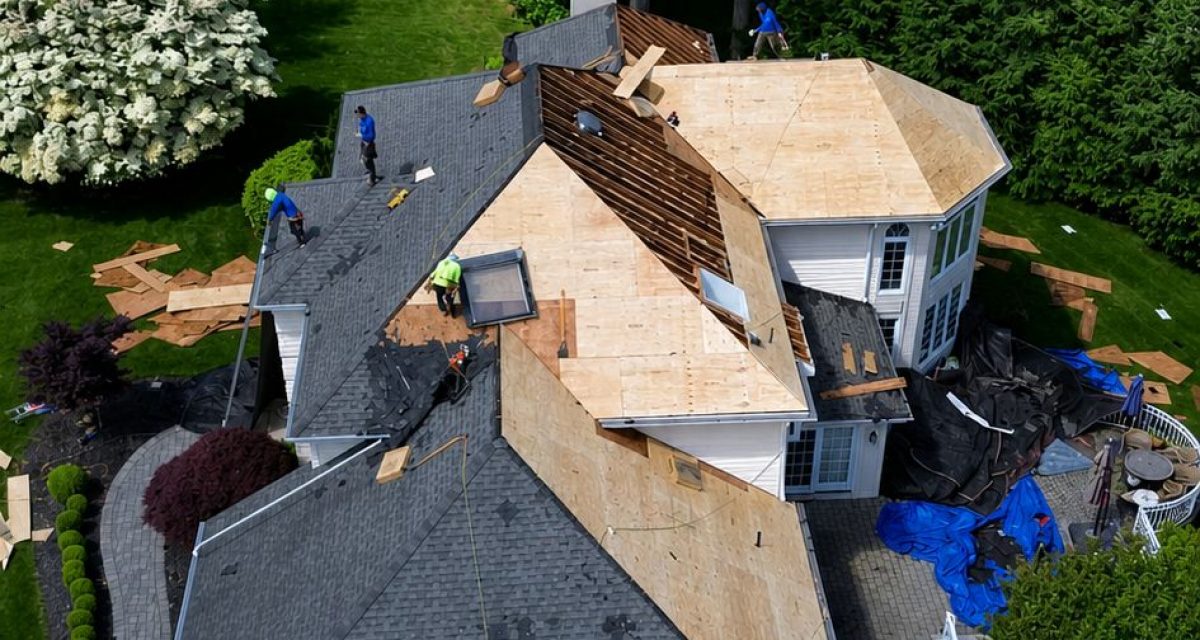
The aerial photograph accompanying this project captures an important stage of a residential roof replacement performed by All State Roofing & Chimney. The image shows a substantial multi-section roof undergoing renovation, with existing gray asphalt shingles remaining on certain surfaces while other sections have been opened to expose the plywood roof decking underneath. New wood sheathing is visible across several roof planes, and roofing professionals can be seen working throughout the property.
This stage of construction is particularly important because a successful roof replacement involves much more than installing new shingles. It requires careful preparation, examination of the underlying roof structure, appropriate decking installation, attention to roof intersections, and a systematic approach to completing every section of the roofing system.
For All State Roofing & Chimney, professional roofing work means recognizing the importance of every stage, from removing existing materials to preparing the roof for its new protective covering. This project illustrates how thorough preparation contributes to the quality, durability, and overall performance of a residential roofing system.
Table of Contents
- Understanding the Roof Replacement Process
- Why Roof Decking Matters
- Removing Existing Roofing Materials
- Inspecting the Roof Structure
- Installing New Plywood Roof Sheathing
- Preparing Multiple Roof Sections and Intersections
- Protecting the Property During Construction
- Underlayment and Moisture Protection
- Selecting the Right Roofing Materials
- Proper Shingle Installation and Finishing
- Ventilation and Long-Term Roof Performance
- Why Professional Roof Replacement Matters
- When Homeowners Should Consider a New Roof
- Choosing All State Roofing & Chimney
- Frequently Asked Questions
- Final Thoughts
Understanding the Roof Replacement Process
A residential roofing project can involve several interconnected construction stages. Each stage contributes to the performance of the finished system, and overlooking important preparation work can create problems that may become expensive to correct later.
The photograph provides an excellent view of a roof replacement in progress. The property features multiple connected roof sections, different roof elevations, sloped surfaces, and several areas where individual roof planes meet. Rather than presenting a simple, uninterrupted roof surface, this structure requires careful coordination between different working areas.
Some portions still display their existing gray shingles, while other areas reveal newly installed or exposed light-colored plywood sheathing. This contrast makes it possible to understand how a replacement project progresses across a large residential roof.
The work generally begins with preparing the property, establishing safe access, and removing the existing roofing materials in the designated sections. Once the underlying surface becomes accessible, the condition of the roof decking can be evaluated. Any damaged or unsuitable sections can then be addressed before the installation of the new roofing components.
This sequence is essential. New shingles should not simply be installed over a roof surface without considering the condition of the materials underneath.
A professional roof replacement therefore combines removal, inspection, preparation, installation, and final quality checks. Each stage must be completed with attention to the roof’s individual construction characteristics.
Why Roof Decking Matters in a Roof Replacement
Roof decking is the structural surface installed over the rafters or roof trusses. It provides the supporting foundation for the underlayment and the exterior roofing materials.
In the project photograph, the exposed light-colored panels are particularly noticeable. These plywood sheets form an important part of the roof assembly and demonstrate why decking preparation deserves careful attention during a replacement.
Although shingles are the most visible part of a residential roof, their performance depends partly on the condition and stability of the supporting surface. A damaged, deteriorated, uneven, or moisture-affected roof deck can interfere with proper installation and compromise the reliability of the overall system.
Roof decking may be affected by several conditions, including:
- Long-term exposure to moisture from roof leaks.
- Deterioration around roof penetrations and flashing.
- Repeated water infiltration through damaged shingles.
- Wood decay caused by prolonged damp conditions.
- Improper ventilation and moisture accumulation.
- Previous installation problems or inadequate fastening.
During a complete roof replacement, removing the old roofing materials provides an opportunity to examine areas that were previously concealed.
If damaged sheathing is identified, the affected sections should be evaluated and replaced as necessary. The goal is to establish a suitable, stable, and properly supported surface before the next roofing layers are installed.
According to the APA – The Engineered Wood Association, proper roof sheathing installation involves attention to panel support, fastening, ventilation, and installation spacing. These details contribute to the performance of the roof assembly. Homeowners and contractors can consult the APA guide to proper roof sheathing installation for additional technical information.
Removing Existing Roofing Materials
One of the first major stages of a traditional roof replacement is removing the existing roofing materials. This process allows contractors to access the underlying surface and evaluate the actual condition of the roof deck.
Depending on the existing roof assembly, removal may involve shingles, underlayment, deteriorated flashing, roofing accessories, and other components that are no longer suitable for continued use.
The photograph shows removed roofing debris, construction materials, and protective coverings positioned around the property. These visible details are consistent with an active construction environment in which materials are being removed and new components are being prepared for installation.
Removing old shingles requires a controlled approach. Contractors must work systematically across the designated roof sections while managing debris and maintaining safe access.
The importance of this stage goes beyond appearance. Leaving deteriorated materials in place can conceal problems that should be addressed before the new roofing system is installed.
A complete removal process also gives roofing professionals an opportunity to evaluate roof edges, valleys, transitions, and areas surrounding penetrations. These locations deserve particular attention because water can enter through improperly maintained connections or deteriorated protective components.
Once the removal work is completed in a section, the exposed surface can be assessed and prepared for the next construction stage.
Inspecting the Roof Structure Before Installation
A roof inspection during replacement is an important opportunity to identify conditions that cannot be properly evaluated while the old roofing materials remain in place.
The inspection should consider the visible condition of the decking, its support, the roof framing where accessible, and the areas where water infiltration may have occurred.
On a complex residential property, different sections of the roof may have experienced different levels of exposure and deterioration. One slope may remain in relatively good condition, while another section may have sustained moisture damage around a valley, chimney, skylight, or roof transition.
For this reason, evaluating the roof as a complete system is more appropriate than assuming that every section has the same condition.
During the inspection, professionals may look for:
- Soft or deteriorated wood sheathing.
- Discoloration associated with previous moisture exposure.
- Loose or inadequately supported decking.
- Uneven surfaces that could affect shingle installation.
- Damage around roof openings and penetrations.
- Problems near valleys, ridges, and roof edges.
- Conditions that may require additional structural attention.
The purpose is to determine whether the existing supporting materials are suitable for the new roofing installation.
If repairs are necessary, they should be completed before the roof is covered again. This helps avoid concealing problems beneath newly installed materials.
A carefully performed inspection is one of the most valuable parts of a professional roof replacement because it allows important decisions to be made while the underlying structure is accessible.
Installing New Plywood Roof Sheathing
The newly exposed plywood decking is one of the most significant visual features of the photographed project.
Across several sections of the roof, large light-colored panels can be seen covering the underlying structure. Their placement illustrates the importance of creating a consistent supporting surface before installing the remaining roofing components.
Plywood and other approved wood structural panels are commonly used as roof sheathing. The appropriate panel type, thickness, span rating, and fastening requirements depend on the existing framing, building requirements, and roofing specifications.
Installation quality matters just as much as material selection.
Panels must be appropriately supported and fastened to the underlying framing. Their arrangement should account for panel edges, joints, and the requirements of the selected sheathing product.
APA guidance also addresses the importance of proper panel spacing. For many APA-rated sheathing applications, a 1/8-inch spacing recommendation helps accommodate normal panel expansion. Actual installation must follow the product specifications and applicable construction requirements.
Homeowners can learn more through the APA technical information on roof systems.
During a roof replacement, damaged decking should not simply be covered with new shingles. Replacing unsuitable sections helps provide a more dependable foundation for the new roof assembly.
A properly prepared deck also helps create a more consistent surface for the underlayment and finished roofing materials.
The photograph demonstrates how extensive this work can become when a residential roof contains several interconnected slopes and different elevations. Every section requires attention so the finished assembly can function as one coordinated system.
Preparing Multiple Roof Sections and Intersections
One characteristic that stands out in this project is the architectural complexity of the roof.
The house has multiple sloping sections that connect at different elevations. Several roof planes meet along valleys and transitions, creating areas that require careful preparation and precise installation.
These intersections are important because they influence how water travels across the roof and toward the drainage system.
A valley, for example, collects water from two adjoining roof surfaces. If the protective materials in that area are improperly installed, moisture can enter the roof assembly and damage the decking or surrounding construction.
Ridge connections, roof edges, sidewall transitions, and penetrations also require appropriate detailing.
During a replacement, contractors must ensure that the new roofing components are compatible with the roof’s configuration. Underlayment, flashing, shingles, and other accessories should be installed according to their intended applications.
The photograph also shows a chimney extending above the roofline. Although the image does not establish that chimney work is being performed as part of this particular project, its presence illustrates why roof replacement planning should include attention to the connection between roofing materials and existing chimney structures.
The flashing around a chimney is especially important because it helps protect the joint where the roof surface meets the masonry.
For homeowners planning a larger roofing project, it is worthwhile to have these transitions evaluated as part of the overall inspection.
Protecting the Property During Construction
A major roof replacement requires more than work on the roof itself. The surrounding property must also be considered throughout the construction process.
The aerial view shows protective tarps, collected materials, removed roofing components, and equipment positioned around the house. These details highlight the practical importance of organizing a roofing project and maintaining a controlled work area.
Roofing debris should be managed carefully to reduce the possibility of damage to landscaping, walkways, outdoor furniture, and other property features.
Protective coverings can help shield designated areas during removal and installation. Materials should be stored in suitable locations, and waste should be collected and removed according to the project plan.
The property in the photograph has landscaped gardens, paved walkways, lawn areas, and an outdoor living space. These surroundings make organized material handling particularly important.
A professional crew should consider the condition of the property before work begins and maintain appropriate protection as construction progresses.
Site organization also contributes to efficiency. Keeping materials accessible and separating debris from new installation products can help prevent unnecessary delays.
A well-managed project should account for both the roof and the home beneath it.
Underlayment and Moisture Protection
Once the roof decking has been inspected and prepared, the next important stage involves installing the appropriate protective layers.
Roof underlayment is installed over the roof deck beneath the finished roofing material. It provides an additional layer of protection against moisture and serves as an important component of the complete roofing assembly.
Different roof designs and material systems may require different underlayment products. Selection depends on the roofing material, roof slope, exposure conditions, manufacturer specifications, and applicable building requirements.
Self-adhered membranes may be appropriate in certain vulnerable locations, while synthetic or other approved underlayments may be used across the remaining roof surface.
Particular attention is often required around valleys, eaves, penetrations, and other areas where water exposure or drainage conditions create additional demands.
The underlayment must be installed correctly, with appropriate overlaps and detailing. Wrinkles, improperly sealed transitions, or unsuitable material combinations can interfere with the performance of the roof assembly.
APA’s residential roofing resources explain the relationship between roof sheathing, underlayment, flashing, ventilation, and moisture control. Its Moisture-Resistant Roof Construction resource offers additional educational information.
A reliable roof replacement does not depend on shingles alone. The layers beneath the visible surface contribute substantially to the finished system’s weather resistance.
Selecting the Right Roofing Materials
Material selection is another important consideration when planning a roof replacement.
The existing gray shingles visible in the photograph indicate the type of exterior covering present on several sections of the roof. The final material selection for a replacement project should be based on the homeowner’s preferences, the roof design, the supporting structure, and the product specifications.
Asphalt shingles remain a popular residential roofing option because they offer a practical combination of appearance, material availability, and installation flexibility.
Architectural asphalt shingles can provide additional dimensional appearance compared with basic three-tab products. Their color and profile can also influence the overall appearance of the home.
Other roofing options include metal, slate, and flat roofing systems, depending on the structure and intended application.
All State Roofing & Chimney provides information about different roofing options through its roof replacement services.
Before choosing a material, homeowners should consider:
- Compatibility with the existing roof structure.
- Expected product service life.
- Manufacturer installation requirements.
- Weather resistance and performance characteristics.
- Appearance and architectural suitability.
- Maintenance requirements.
- Overall project budget.
The most appropriate roofing material is not necessarily the most expensive option. It is the product that meets the property’s requirements and can be installed correctly as part of a complete roofing system.
Proper Shingle Installation and Finishing
After the decking and protective layers are prepared, the installation of the finished roofing materials can proceed.
For asphalt shingle systems, proper placement, fastening, alignment, and manufacturer-approved installation techniques are essential.
Shingles must be installed according to the specified pattern and fastening requirements. Their arrangement should provide the intended coverage and help direct water toward the roof drainage system.
On a roof with multiple slopes and transitions, this work requires additional attention.
The valleys must be properly detailed, ridge areas must receive suitable finishing components, and roof edges must be completed with compatible accessories.
Areas around chimneys and other penetrations also require appropriate flashing integration.
The objective is to create a continuous roofing assembly in which the different components work together rather than functioning as unrelated layers.
Professional installation also includes checking for consistent shingle alignment, secure fastening, properly finished edges, and suitable detailing around roof openings.
The final appearance is important, but visual uniformity alone does not establish roofing quality. The underlying installation details are equally significant.
This is why the preparation visible in the photograph represents such an important part of the overall project.
Ventilation and Long-Term Roof Performance
A properly functioning roof must manage more than exterior rainwater.
Ventilation and moisture management within the roof and attic assembly also influence long-term performance.
Inadequate ventilation can contribute to unwanted heat and moisture accumulation under certain conditions. Depending on the building design, this may affect the roof sheathing, insulation, indoor comfort, and the durability of roofing materials.
A roof replacement offers an opportunity to evaluate existing ventilation conditions and determine whether improvements are appropriate.
Common components include soffit vents, ridge vents, gable vents, and other approved ventilation arrangements.
The correct configuration depends on the roof design, attic construction, insulation, and applicable building requirements.
Ventilation should not be approached as a one-size-fits-all solution. Intake and exhaust provisions must be considered together, and any modifications should be compatible with the building’s overall moisture-control strategy.
APA’s roof sheathing installation guidance specifically identifies roof ventilation as an important consideration during roof construction.
For homeowners, this means that a successful roof replacement should involve a broader evaluation of the roof assembly rather than focusing exclusively on the exterior shingles.
Why Professional Roof Replacement Matters
Replacing a residential roof is a demanding construction project that involves working at elevation, handling heavy materials, removing existing components, and installing multiple protective layers.
The aerial photograph shows several workers positioned across different roof sections. Their presence illustrates the coordination required when a large roof is being renovated.
Professional roofing work requires an understanding of roof geometry, material compatibility, fastening methods, moisture protection, and safe working practices.
It also requires the ability to recognize when a visible roofing problem may be connected to an underlying issue.
For example, a roof leak may appear to be limited to a small area of shingles, but the underlying cause could involve damaged flashing, deteriorated decking, or a poorly protected roof intersection.
A replacement project allows contractors to examine these conditions more thoroughly when the old materials are removed.
Working with an experienced and properly insured roofing contractor can help homeowners understand the scope of the work, the materials being used, and the steps involved in completing the installation.
All State Roofing & Chimney offers residential roofing services that include roof installation, roof replacement, roof leak repair, and emergency roofing assistance.
Homeowners who need a more focused evaluation of an existing problem can also explore the company’s roof leak repair services.
The objective should always be a roofing system that is appropriately prepared, correctly installed, and suited to the property’s requirements.
When Homeowners Should Consider a New Roof
Not every roofing problem requires a complete replacement. Some issues can be addressed through localized repairs, while others indicate that the existing system may be approaching the end of its useful service life.
Understanding the difference is important when planning a roofing investment.
Several warning signs may indicate that a roof needs professional evaluation.
Widespread shingle deterioration: Cracking, curling, missing sections, and extensive surface wear can indicate that roofing materials are losing their ability to provide reliable protection.
Recurring roof leaks: Repeated moisture problems may indicate that the existing roofing system has deteriorated or that previous repairs have not addressed the underlying cause.
Visible decking damage: Soft areas, sagging, and signs of wood deterioration may indicate problems beneath the exterior roofing materials.
Storm-related damage: Strong winds, falling branches, and severe weather can damage shingles, flashing, and other roofing components.
Advanced roof age: Roofing materials have different expected service lives. Age should be considered alongside visible condition, maintenance history, and the extent of deterioration.
Multiple repair requirements: When several sections require attention, a professional assessment can help determine whether repeated repairs remain practical or whether a complete replacement would provide a better long-term solution.
The National Roofing Contractors Association recommends regular roof inspections and additional evaluations following severe weather events. Its residential roof maintenance guidance discusses the importance of inspecting roofing components, adjacent surfaces, and drainage areas.
Homeowners should avoid walking on steep or unfamiliar roofs to investigate damage themselves. A qualified roofing professional can evaluate the condition more safely and provide recommendations based on the actual findings.
Choosing All State Roofing & Chimney for Your Roofing Project
Selecting the right contractor is an important part of planning a successful roof replacement.
Homeowners should look for a company that communicates clearly, explains the proposed scope of work, evaluates the condition of the existing roof, and provides information about materials and installation procedures.
All State Roofing & Chimney provides roofing and exterior services for residential properties, with offerings that include roof replacement, roof installation, roof repairs, emergency roofing, chimney services, gutter work, and siding.
The company emphasizes professional workmanship, free inspections, and in-house estimates.
The photographed project reflects the importance of careful preparation on a larger residential roof. From the remaining shingles to the exposed plywood sections, the work illustrates how replacement involves multiple stages that must be coordinated across the entire structure.
A homeowner considering a similar project can begin by arranging an inspection and discussing the existing roof’s condition.
An appropriate estimate should explain the anticipated removal work, decking evaluation, material selection, protective layers, installation details, and any additional repairs that may be required.
For more information about the company’s services, visit the All State Roofing & Chimney homepage.
Homeowners can also review the company’s roof installation services to learn more about the installation process.