
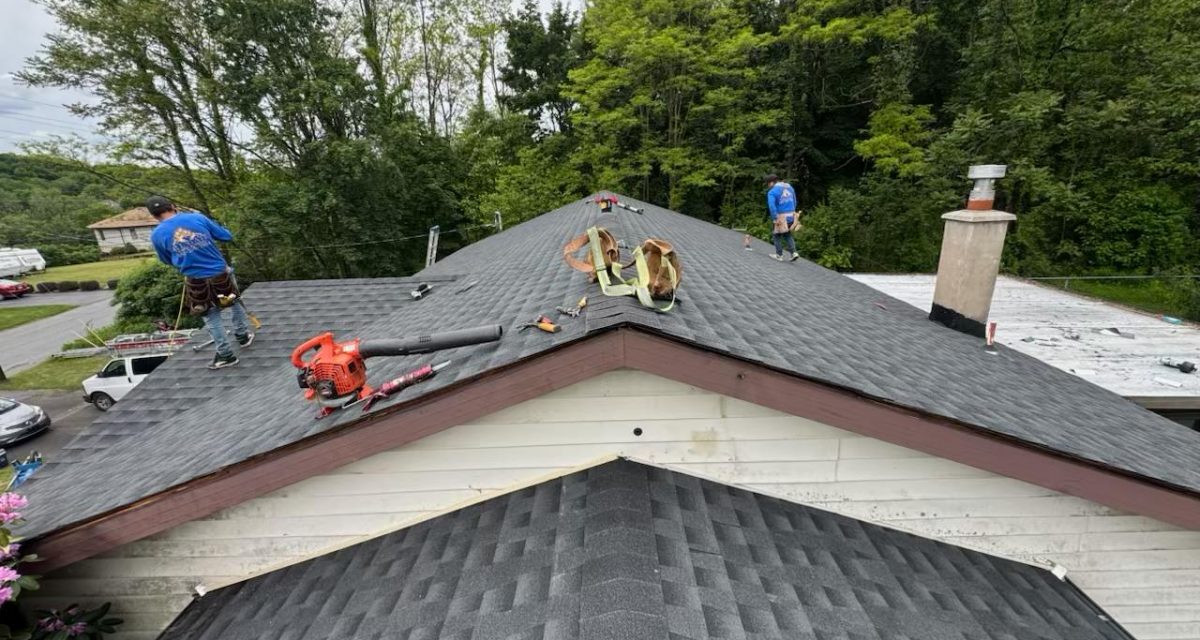
Roof replacement is one of the most important investments a homeowner can make when an existing roofing system has reached the end of its service life or no longer provides dependable protection. The photograph featured in this project shows an active residential roofing installation, with professional roofers working across several connected roof planes while new gray asphalt shingles are being installed. The image also highlights the importance of careful workmanship around ridges, transitions, roof penetrations, and a chimney.
At All State Roofing & Chimney, a professional roof replacement is approached as a complete roofing project rather than simply placing new shingles over an existing surface. Preparation, installation, safety, material handling, and final attention to detail all contribute to the performance of the finished roof. The work shown in this photo provides a useful behind-the-scenes look at how an organized roofing crew brings a large residential project together.
A Roof Replacement Begins With Professional Preparation
The finished appearance of a roof replacement is only one part of a successful installation. Before new shingles can provide their long-term protective function, the roofing surface must be properly evaluated and prepared. A professional crew needs to understand the roof’s configuration, identify vulnerable areas, organize materials, and establish a safe working process before installation moves forward.
The photo shows a roof with several intersecting planes, a prominent ridge, a lower roof section, and a chimney. These features make accurate installation especially important. Every change in direction, edge, ridge, and penetration requires attention because roofing materials must work together as one weather-resistant system.
Preparation also includes making sure the work area is organized. Roofing tools, materials, ladders, safety equipment, and installation accessories are visible in the photograph. This is a normal part of an active roofing project, but it also demonstrates why experienced crews need to work methodically. A large roof cannot be treated as one flat surface. Each section must be approached according to its slope, dimensions, transitions, and relationship to the surrounding areas.
Professional preparation also helps the crew identify areas that need special attention before they become hidden beneath new materials. That can include roof edges, valleys, flashing points, penetrations, and changes in slope. Addressing these details during construction is generally more effective than discovering a problem after the finished roof has already been installed.
For homeowners, this means the most important parts of a roofing project are not always the most visible ones. The finished shingles are important, but the preparation underneath them and the details around the roof are what help create a complete system.
The photo also shows why roofing is skilled construction work rather than a simple surface-covering task. Working on multiple sloped planes requires coordination, proper equipment, and attention to safety throughout the installation.
Understanding the Roof Structure Before Installation
One of the most important aspects of roof replacement is understanding what is underneath the visible shingles. Roofing systems contain several components that work together, including the roof deck, underlayment, flashing, shingles, ventilation components, and edge details. When an existing roof is removed during roof replacement, the condition of the underlying surface can be evaluated and necessary preparation can be completed before new materials are installed.
Although the photograph focuses on the installation stage, it represents the result of many preparation decisions that take place before the visible shingle surface is completed. A professional roofing project should never be based only on appearance. The objective is to create a complete system that manages rainwater, resists weather exposure, and protects the structure beneath it.
The roof deck is especially important because it provides the supporting surface for the roofing layers. If portions of the decking are damaged, deteriorated, or otherwise unsuitable, those areas may need to be addressed before the new roof is installed. Proper evaluation helps prevent the new roofing material from being placed over an underlying problem.
This foundation-first approach is one reason a professional roof replacement can provide more value than simply covering visible deterioration. The new roof should be supported by a sound and properly prepared surface.
Installing Asphalt Shingles With Consistent Alignment
The most visible part of the project shown in the photograph is the new gray asphalt shingle installation. The shingles create a clean, consistent pattern across the main roof planes, giving the home a refreshed appearance while forming the primary exterior barrier against weather.
Proper shingle installation requires more than placing individual pieces across the roof. Courses need to remain aligned, fasteners need to be positioned correctly, and the installation must follow the requirements of the selected roofing materials. The crew must also maintain consistency as the roof changes direction or connects with another section.
The photograph provides a clear example of why professional experience matters. Several roof surfaces meet around the central ridge, while the lower roof plane creates another transition. The crew must maintain the visual and functional continuity of the roofing system across these areas.
A well-installed asphalt shingle roof created through professional roof replacement should have an organized appearance from the ground as well as from an elevated view. Consistent lines and clean transitions are not merely cosmetic details. They reflect the care taken during installation and contribute to the overall quality of the finished roofing system.
For homeowners considering a roof replacement, the material itself is only part of the decision. The quality of installation is equally important. High-quality roofing materials cannot perform as intended if they are installed carelessly or if critical details are overlooked.
Careful Work Around Ridges and Roof Transitions
The central ridge visible in the photo is one of the most important architectural features of the roof. Ridges are areas where different roof planes meet, and they require precise installation so that the roofing system remains protected at the highest points of the structure.
Roof transitions also occur where the upper and lower sections meet. These areas must be planned carefully because changes in slope and direction influence how water moves across the roof. Properly installed roofing materials should guide water away from vulnerable areas rather than creating opportunities for water to enter beneath the system.
The smaller details can have an important effect on the performance of the entire installation. Edges, valleys, ridges, penetrations, flashing areas, and connections between roof sections all deserve careful attention.
The image shows workers positioned across different portions of the roof, demonstrating how a larger project can progress systematically. Instead of treating the roof as one uninterrupted surface, the crew works across individual sections while maintaining the overall design of the roofing system.
A professional approach to these transitions can also improve the finished appearance. When shingles are properly aligned and roof lines remain clean, the completed installation looks intentional, balanced, and well constructed.
Protecting the Roof Around the Chimney
The chimney visible on the right side of the photograph is another important area during a roof replacement. Whenever a roof meets a chimney during roof replacement, the connection between the roofing materials and masonry must be handled carefully because it creates a potential location for water entry.
Chimney flashing is designed to help manage water around the masonry and direct it away from the vulnerable transition. During a roof replacement, the surrounding roofing materials and flashing areas should be evaluated rather than treating the chimney as an unrelated feature.
The chimney shown in this project has a visible cap and masonry structure extending through the roof. The surrounding shingles must meet the chimney area cleanly, while the transition needs to remain properly protected. This is one reason roofing and chimney expertise can be valuable on the same project.
A roof can be in excellent condition across its main surface and still experience problems if a transition around a chimney, wall, vent, or other penetration is not properly addressed. Water does not always enter directly through the middle of a shingle field. It can find vulnerable points where different materials meet.
For that reason, a complete roof replacement should include careful attention to all roof penetrations and transitions. When roofing and chimney components are evaluated together, homeowners can have a clearer understanding of the condition of the complete exterior protection system.
Why Workmanship Matters as Much as Materials
Roofing materials are important, but materials alone do not determine the quality of a finished roof. Installation practices, preparation, fastening, flashing, alignment, and attention to details all influence the final result.
The photo shows several members of a roofing crew working simultaneously on the same project. This kind of coordinated work requires planning and communication. Roofing professionals need to move safely across sloped surfaces while keeping tools and materials organized and maintaining consistent installation practices.
The visible equipment also illustrates the practical side of roofing work. Professional installation requires specialized tools and safety equipment appropriate for elevated work. Crews must consider access, movement, material placement, weather conditions, and the condition of the work surface throughout the project.
Once the shingles are installed and the site is cleaned, the tools, ladders, and preparation work disappear. What remains is the finished roofing system.
That is why choosing a roofing company should involve more than comparing the appearance or price of roofing materials. Homeowners should consider the contractor’s approach to preparation, installation quality, communication, safety, and final inspection.
Managing Water and Weather Exposure
A primary purpose of a roof is to manage water and protect the structure from changing weather conditions. Rain, wind, snow, ice, sunlight, and temperature changes can all place stress on roofing materials over time.
A professional roof replacement should therefore be designed around effective water management. Shingles, underlayment, flashing, roof edges, valleys, ridges, and penetrations all contribute to the system’s ability to keep moisture out of the building.
The United States Environmental Protection Agency emphasizes the importance of moisture control and properly constructed roof and flashing details as part of protecting a building from unwanted water entry. Homeowners can review its moisture-control guidance for additional independent information about building-envelope maintenance.
This matters because moisture problems can extend beyond the visible roofing surface. If water reaches the roof deck or interior building components, damage can become more complicated and expensive to correct. Addressing vulnerable roofing conditions early can help reduce the likelihood of larger problems.
The photograph shows a roof being actively rebuilt and protected with a new shingle surface. Once the installation is completed, the new roofing system will be responsible for handling the home’s ongoing exposure to outdoor conditions.
Recognizing When Roof Replacement May Be Appropriate
Not every roofing problem requires a complete roof replacement. Some conditions can be addressed through targeted repairs, depending on the age and overall condition of the existing system. A professional evaluation is therefore important before deciding what type of work is appropriate.
Roof replacement may become a consideration when a roof has widespread deterioration, repeated leaks, extensive damage, aging materials, or multiple areas that require ongoing repairs. The condition of the roof deck and other underlying components can also influence the decision.
Visible signs that may justify a professional evaluation include missing or damaged shingles, recurring water stains, deteriorated flashing, significant granule loss, sagging areas, and evidence of moisture intrusion. These signs do not automatically mean a complete replacement is required, but they should not be ignored.
A professional inspection can help determine whether repair, partial work, or a full roof replacement is the more appropriate solution. This approach protects homeowners from making a major investment without first understanding the condition of the existing system.
When replacement is necessary, the goal should be to rebuild the roofing system carefully from the supporting surface upward rather than focusing only on the visible shingles.
The Importance of a Final Inspection
A roof replacement is not finished simply because the last shingle has been installed. A final inspection gives the roofing team an opportunity to review the completed work and identify details that may need adjustment or correction.
The inspection should consider the overall shingle installation as well as roof edges, ridges, valleys, flashing, penetrations, chimney transitions, and cleanup. The goal is to make sure the finished roofing system is complete and that the work area has been left in an orderly condition.
The National Roofing Contractors Association provides homeowner-oriented guidance emphasizing inspection, maintenance, and repair as important parts of extending roof system service life. Homeowners can use independent resources such as the NRCA’s residential roofing information to better understand ongoing roof care.
The final inspection provides an opportunity to confirm that the installation follows the intended plan and that visible details have been completed consistently.
A careful final review supports the same principle that guides the rest of the project: quality comes from paying attention to the details.
Maintaining a New Roof After Installation
A roof replacement should not be considered maintenance-free. Regular observation and professional inspections can help identify developing issues before they become major problems.
Homeowners should watch for visible changes such as damaged or missing shingles, debris accumulation, unusual staining, damaged flashing, or signs of water intrusion inside the home. After significant weather events, a professional inspection can be particularly useful if there is concern about wind or storm damage.
Maintenance should also include attention to the areas surrounding the roof. Chimneys, gutters, vents, flashing, and roof-to-wall transitions can all influence the overall performance of the building envelope.
The NRCA recommends preventative maintenance and periodic inspections for residential roof systems. Its homeowner guidance also emphasizes the importance of identifying deterioration and addressing necessary repairs.
A homeowner who understands what to look for is better positioned to recognize changes early and request professional assistance when needed.
A Professional Roof Replacement Built Around Quality
The photograph featured in this project captures more than a new shingle surface. It shows the people, equipment, roof structure, chimney, transitions, and detailed installation work that come together during a professional roofing project.
The gray asphalt shingles provide the visible finished layer, but the quality of the roof depends on everything beneath and around them. Proper preparation, sound decking, protective materials, flashing, accurate shingle alignment, ridge installation, chimney detailing, and final inspection all contribute to a complete roofing system.
At All State Roofing & Chimney, the objective is to approach each project with attention to workmanship and the details that matter. Whether a homeowner is dealing with an aging roof, recurring leaks, storm-related damage, or a roofing system that has reached the end of its service life, a professional evaluation can help determine the appropriate next step.
The company provides roof replacement, roof repair, roof leak repair, emergency roofing, and chimney services. Combining these areas of expertise can be especially useful when roofing and chimney components meet at important weather-protection transitions.
For homeowners considering a new roof, the best starting point is a professional inspection and a clear assessment of the existing roofing system. From there, the project can be planned according to the structure’s condition, roofing materials, and specific installation requirements.
A successful roof replacement should leave more than an attractive roofline. It should provide a carefully installed system designed to protect the home, manage water, withstand weather exposure, and perform reliably over time.