
Introduction: The Importance of a Professionally Installed Roofing System
Roof Replacement is one of the most significant improvements homeowners can make to maintain the protection, appearance, and long-term condition of their property. A properly installed roofing system serves as the first line of defense against rain, wind, snow, sunlight, and other environmental conditions that can gradually affect a home’s exterior. Beyond its protective function, a new roof also contributes to the property’s overall architectural appearance and can help prevent problems associated with aging or deteriorating roofing materials.
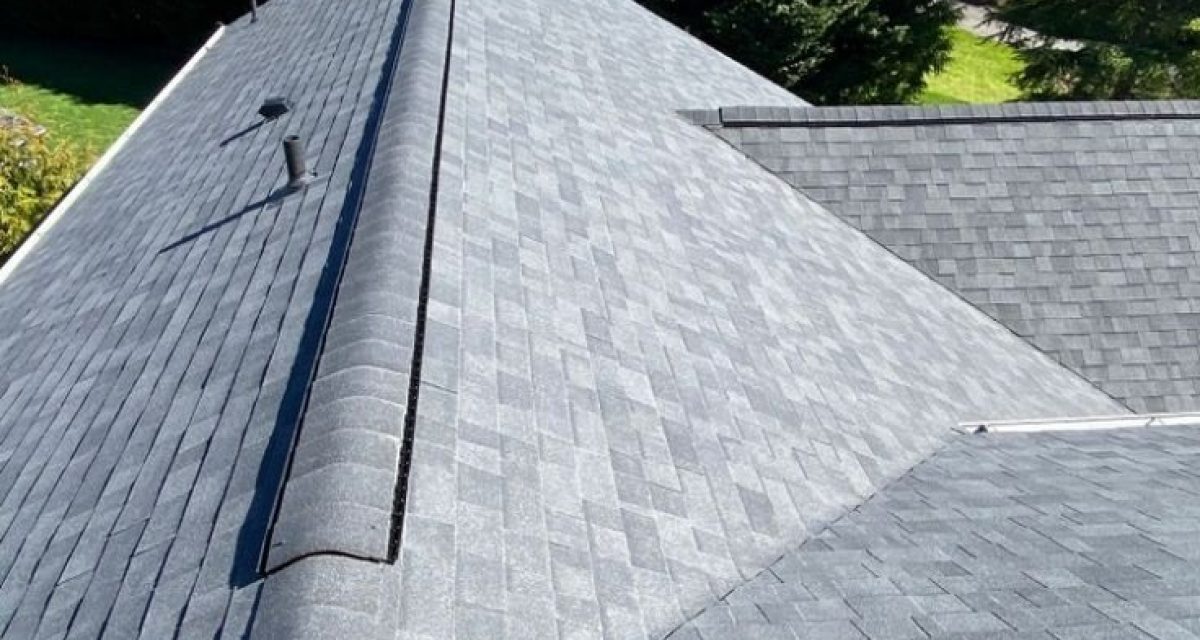
The roofing project presented in this photograph showcases a residential roof finished with gray asphalt shingles. The installation features multiple sloping roof sections, a prominent central ridge, matching ridge cap shingles, and carefully arranged shingle courses across the visible surfaces. The consistent gray appearance creates a clean, coordinated finish while demonstrating the importance of properly planned roofing details.
A successful roofing project requires more than selecting attractive shingles. Every component must be considered, including the supporting roof deck, protective underlayment, flashing, ventilation, fastening methods, and finishing details. When these elements are properly coordinated, they contribute to a roofing assembly designed to protect the property against changing weather conditions.
For homeowners considering a new roofing system, understanding the importance of these components makes it easier to evaluate available materials, recognize quality workmanship, and make informed decisions. All State Roofing & Chimney provides residential roofing services focused on installation, replacement, and repair, helping homeowners address their roofing requirements with professional attention to detail.
Understanding the Purpose of Roof Replacement
A residential roof experiences continuous exposure to environmental stress. Seasonal temperature changes, heavy rainfall, strong winds, ultraviolet radiation, and accumulated moisture can gradually affect the materials protecting the structure. Even roofing products manufactured for durability eventually experience wear, particularly when they are exposed to years of changing weather conditions.
Roof Replacement provides an opportunity to address extensive deterioration and restore the protective layers of the roofing system. Instead of repeatedly repairing individual damaged areas, homeowners can evaluate the condition of the entire roof and determine whether installing a new system is the more appropriate long-term solution.
One important advantage of a complete replacement is the opportunity to inspect the underlying roof structure. Existing shingles and other roofing layers can conceal conditions that are not visible during an exterior inspection. Once the old materials are removed, the roof decking can be examined for deterioration, moisture damage, and other problems requiring attention.
This preparation stage is essential because new shingles should never be considered a substitute for a properly prepared supporting surface. Installing new materials over damaged decking can compromise the performance of the finished system.
A professional replacement project should also evaluate the roof’s configuration, drainage patterns, penetrations, and connections between different sections. These areas influence how water moves across the roof and where additional protective detailing may be necessary.
Homeowners should therefore consider replacement as a complete roofing improvement rather than simply an exterior cosmetic upgrade.
A Closer Look at the Gray Asphalt Shingle Installation
The photograph illustrates a completed roofing surface with a consistent gray asphalt shingle finish. The roof includes several sloping sections that meet around a clearly defined central ridge, creating a configuration that requires careful attention to alignment and finishing details.
The shingles are arranged in horizontal courses with a staggered rectangular pattern. This arrangement creates the familiar appearance of asphalt shingle roofing while providing overlapping coverage across the roof surface. Consistent placement helps maintain an organized visual finish and supports the intended installation pattern.
The central ridge is one of the most noticeable features. It extends along the highest point of the roof and is covered with darker gray ridge cap shingles. These specialized components provide a finished appearance while protecting the junction where the adjoining roof slopes meet.
Another visible detail is the pipe penetration on the left-hand roof section. Openings of this type require compatible flashing and appropriate integration with the surrounding shingles to help prevent water from entering beneath the roofing materials.
The photograph also shows adjoining roof planes that connect at different heights and angles. Such configurations require accurate measurements and careful installation because transitions must be properly coordinated with the overall drainage design.
The gray color provides a balanced exterior appearance that can complement different architectural styles. Its neutral character allows the roof to integrate naturally with surrounding landscaping, exterior walls, and other property features.
Although a photograph cannot confirm the condition of concealed roofing components or the technical specifications of the installation, the visible arrangement demonstrates the importance of consistent material placement and carefully finished roof details.
Choosing Quality Asphalt Shingles for Residential Roofing
Asphalt shingles remain a popular choice for residential roofing because they offer a practical combination of appearance, material availability, installation flexibility, and different performance options.
Manufacturers produce asphalt shingles in numerous colors, profiles, and product categories. Homeowners can select traditional architectural styles or more distinctive designs depending on their property’s appearance and personal preferences.
Gray asphalt shingles, such as those visible in the supplied photograph, provide a versatile exterior finish. Their neutral appearance can work well with many siding colors, exterior trim combinations, and architectural designs. Different shades of gray can also create subtle visual variations across a large roof surface.
However, material selection should involve more than color preference. Homeowners should consider product specifications, wind-resistance ratings, impact classifications, manufacturer warranties, and compatibility with the existing roof structure.
Architectural shingles, for example, generally have a dimensional appearance that differs from traditional three-tab products. Their construction and product specifications vary by manufacturer, so comparing individual products is important.
The selected material must also be appropriate for the roof’s slope and configuration. Manufacturers provide installation requirements that specify suitable applications, fastening patterns, underlayment arrangements, and other technical considerations.
A professional roofing contractor can help homeowners compare these options and understand the differences between available products.
Quality materials are important, but their performance also depends on proper installation. Even a premium shingle product can experience problems when it is installed over an unsuitable surface or without following the manufacturer’s requirements.
For this reason, material selection and installation planning should always be considered together.
Roof Deck Preparation and Structural Inspection
The roof deck provides the supporting surface for the roofing materials. Its condition is an essential factor in determining whether a replacement project can proceed correctly.
During a complete roofing replacement, existing materials may need to be removed to expose the underlying decking. This allows the contractor to evaluate the condition of the supporting surface and identify areas that may require corrective work.
Roof decking should be stable, properly secured, and suitable for the selected roofing system. Sections affected by deterioration, prolonged moisture exposure, or structural damage may require repair or replacement before new materials are installed.
This inspection is particularly important around areas where water may have entered previously. Roof valleys, eaves, penetrations, and connections near chimneys can experience concentrated moisture exposure when protective components deteriorate.
After the decking has been evaluated and prepared, the appropriate protective layers can be installed. These may include roofing underlayment and specialized moisture barriers in designated vulnerable areas.
Underlayment provides secondary protection beneath the exterior shingles. It is an important component of the roofing assembly because it helps protect the supporting structure from moisture that may pass beneath the primary roofing material.
The exact underlayment arrangement depends on the selected products, roof configuration, manufacturer instructions, and applicable building requirements.
Proper preparation also helps establish a consistent surface for shingle installation. Uneven or damaged areas should be addressed before the finished roofing materials are applied.
Taking the time to prepare the roof deck correctly supports the quality of the entire project and helps reduce the risk of problems developing beneath the visible surface.
Ridge Cap Installation and Roof Transitions
Ridge details are particularly important in residential roofing because they protect one of the principal connections within the roof structure.
A ridge is formed where two sloping roof surfaces meet at the uppermost point. This junction requires an appropriate finishing system to protect the connection and provide a coordinated appearance.
Ridge cap shingles are manufactured specifically for this purpose. They cover the upper connection and are installed according to the selected roofing system’s requirements.
In the supplied photograph, the central ridge features a continuous line of darker gray cap shingles. Their appearance creates a defined transition between the adjoining roof planes and complements the main shingle surfaces.
Proper ridge installation involves correct positioning, fastening, overlap, and alignment. The specific requirements depend on the manufacturer and the selected roofing products.
Other roof transitions require similar attention. Residential properties can contain hips, valleys, intersecting slopes, and changes in roof height. Each connection must be detailed appropriately to manage water movement and maintain the protective continuity of the roofing system.
Valleys are particularly important because they collect water from adjoining roof surfaces. Their construction must account for the roofing material, water flow, and appropriate flashing or valley protection.
Incorrectly finished transitions can allow moisture to reach the underlying structure even when the main shingle surfaces appear undamaged.
Professional installation therefore requires attention to the entire roof configuration, not simply the largest visible sections.
Roof Ventilation and Attic Moisture Management
Ventilation is another important consideration during Roof Replacement. A properly designed attic ventilation system can help manage heat and moisture within the roof space.
Many residential ventilation arrangements use intake openings near the lower roof edges and exhaust openings closer to the upper portion of the roof. When designed correctly, these components support the movement of air through the attic.
The central ridge shown in the photograph makes ridge detailing an important part of the discussion. However, the presence of ridge cap shingles does not automatically indicate that a functional ridge vent has been installed.
These components have different purposes. Ridge caps provide a protective finish, while ridge vents are specialized ventilation products designed to allow air to exit the attic.
A professional assessment should consider the available intake ventilation, exhaust capacity, attic configuration, insulation, and potential airflow obstructions.
Poorly designed ventilation can contribute to moisture accumulation and may affect the performance of the attic space. However, ventilation should not be evaluated independently of insulation and the overall building design.
Homeowners can consult the U.S. Department of Energy’s educational information on attic insulation and ventilation to better understand how these building components work together.
During a replacement project, evaluating ventilation provides an opportunity to identify potential improvements and determine whether the existing arrangement is appropriate for the property.
Flashing and Protection Around Roof Penetrations
Roof penetrations are among the areas that require careful detailing during installation. Pipes, vents, skylights, and other openings interrupt the continuous shingle surface and create connections that must be protected against water infiltration.
The photograph shows a pipe-like penetration on the left-hand roof slope. Components such as plumbing vent pipes typically require compatible flashing assemblies that integrate with the surrounding shingles.
The purpose of flashing is to direct water away from vulnerable connections and prevent it from reaching the underlying roofing layers.
Correct installation involves positioning the flashing appropriately and integrating it with the surrounding materials according to the applicable product instructions.
Other vulnerable areas include chimney connections, roof valleys, skylights, and exterior wall intersections.
Chimneys deserve particular attention because they extend vertically through the roof surface. The connection between the chimney and the surrounding roof requires properly designed flashing and counterflashing to manage rainwater.
Depending on the construction, step flashing and other compatible components may be necessary.
Homeowners should understand that roof leaks do not always originate from damaged shingles. Deteriorated flashing, poorly protected penetrations, and defective transitions can also contribute to water infiltration.
All State Roofing & Chimney offers roofing and chimney-related services to help homeowners address different components of their property’s exterior protection.
A detailed inspection can help determine whether an isolated repair is appropriate or whether more extensive roofing work should be considered.
Why Professional Roofing Workmanship Matters
The success of a roofing project depends on the quality of the materials and the accuracy of the installation process.
A professionally managed project begins with an evaluation of the existing roof. The contractor should consider its size, slope, configuration, accessibility, visible damage, and existing roofing components.
This assessment helps establish the appropriate project scope and identify the materials required for the installation.
During the work, shingles must be positioned and fastened according to the manufacturer’s instructions. Fastener placement, alignment, exposure, and fastening patterns are important details that influence the finished roofing system.
Contractors should also pay attention to the installation of underlayment, flashing, ridge caps, and other supporting components.
Following product-specific requirements is essential. Homeowners can review the published Owens Corning asphalt shingle installation instructions for examples of technical considerations associated with shingle installation.
These requirements should be considered alongside applicable building codes and the specifications of the selected products.
Professional workmanship also includes responsible project organization. Roofing replacement involves removing old materials, transporting new products, managing debris, and protecting the surrounding property.
The work area should be maintained carefully throughout the project. At completion, the contractor should review the accessible roofing details and ensure that construction debris has been removed.
A final inspection should consider shingle alignment, roof edges, ridge details, flashing, penetrations, and other important connections.
Homeowners should also request clear information about the materials used, warranty conditions, and any maintenance recommendations.
Recognizing When Roof Replacement Is Necessary
Determining when a roof requires replacement involves evaluating its overall condition rather than relying on one visible problem.
Some roofing issues can be corrected through localized repairs. Other conditions may indicate that the existing materials have deteriorated extensively and that a complete replacement should be considered.
Missing shingles are one possible warning sign. They can expose underlying roofing layers to direct weather exposure and may indicate damage associated with strong winds or aging materials.
Curling, cracking, and widespread granule loss can also indicate deterioration. These conditions may reduce the ability of the shingles to provide their intended protective coverage.
Repeated leaks deserve particular attention. If water continues entering the property despite previous repairs, the underlying problem may involve multiple areas or more extensive deterioration.
Interior warning signs can include ceiling stains, damp attic insulation, and moisture around exterior walls. These symptoms should be investigated to determine their source.
The age of the roofing system is another consideration. Different asphalt shingle products have different expected service lives, and actual performance depends on installation quality, weather exposure, ventilation, and maintenance.
A roof should not automatically be replaced based only on age. A professional inspection is necessary to determine its present condition and the most appropriate solution.
If deterioration is limited, repair may be sufficient. When problems affect extensive sections or repeatedly occur in different areas, Roof Replacement may provide a more comprehensive approach.
Maintaining Your New Roofing System
Installing a new roof is a significant improvement, but regular maintenance remains important after the project is completed.
Periodic professional inspections can help identify developing concerns before they become more extensive. These evaluations may include accessible shingle surfaces, flashing, roof penetrations, drainage areas, and other visible components.
Homeowners should also pay attention to the roof after severe weather. Strong winds, heavy rainfall, and falling branches can potentially damage roofing materials.
Visible signs such as missing shingles, displaced components, and accumulated debris may indicate that a closer inspection is necessary.
Gutter maintenance is another important part of exterior property care. Gutters and downspouts help direct rainwater away from the roof edges and foundation.
When gutters become clogged, water may overflow and contribute to moisture-related issues around the building.
Tree maintenance can also help reduce unnecessary roof exposure. Overhanging branches may deposit leaves and organic debris, while direct contact can potentially damage roofing materials.
Homeowners should monitor attic conditions as well. Damp insulation, unusual moisture, and visible staining may indicate that further evaluation is needed.
Safety should always remain a priority. Walking directly on roofing materials without appropriate equipment and experience can be dangerous and may cause damage.
Instead, homeowners should arrange professional inspections when a closer assessment is required.
Consistent maintenance, combined with quality installation, can help preserve the condition of the roofing system and support the long-term value of the replacement investment.
Selecting a Reliable Roofing Contractor in New Jersey
Choosing the right contractor is one of the most important decisions homeowners make when planning a roofing project.
A professional contractor should be able to explain the proposed work, discuss material options, and provide a clear understanding of the installation process.
Homeowners should verify applicable licensing and insurance requirements and request information about the contractor’s experience with similar residential roofing projects.
A detailed written estimate is also essential. It should describe the proposed work, material specifications, removal requirements, preparation, installation procedures, and any relevant exclusions.
It is important to discuss how concealed damage will be handled if deteriorated decking or other unexpected conditions are discovered after the existing materials are removed.
Warranty information should also be reviewed. Manufacturer warranties and workmanship warranties cover different aspects of a roofing project, and homeowners should understand their respective conditions.
Communication is another important consideration. A reliable contractor should provide understandable answers, explain the project scope, and discuss potential issues before work begins.
All State Roofing & Chimney provides roofing services for residential properties throughout New Jersey. Its roofing-related services include roof replacement, installation, and repair, with additional attention to chimney and exterior protection needs.
Homeowners can visit All State Roofing & Chimney to learn more about the company and its available services.
Comparing contractors based on preparation, communication, material knowledge, insurance, and workmanship is more valuable than selecting a provider solely because of the lowest initial estimate.
Frequently Asked Questions About Roof Replacement
How long does asphalt shingle roofing last?
The expected service life depends on the specific product, installation quality, exposure to weather, attic conditions, and maintenance. Homeowners should review the manufacturer’s product information and arrange periodic inspections.
Are gray asphalt shingles suitable for residential properties?
Gray asphalt shingles are a versatile choice because their neutral appearance complements many exterior designs. Homeowners should compare available colors, profiles, and product specifications before making a selection.
Does the roof deck always need replacement?
No. The decking should be inspected, but replacement is generally necessary only when sections are damaged, deteriorated, or unsuitable for supporting the new roofing materials.
What is the purpose of ridge cap shingles?
Ridge cap shingles finish and protect the upper connection between adjoining roof slopes. They provide an important protective detail and contribute to the overall appearance of the roof.
Can roof leaks always be repaired?
No. Some leaks result from isolated damage that can be corrected through targeted repairs. Others are associated with widespread deterioration or multiple failing components. A professional assessment helps determine the appropriate solution.
Why is flashing important?
Flashing protects vulnerable connections around penetrations, chimneys, valleys, and other roof transitions. Proper installation helps direct water away from areas where moisture could enter the roofing assembly.
What influences the cost of a new roof?
Costs depend on roof dimensions, slope, accessibility, material selection, removal requirements, decking condition, flashing details, and project complexity. A property-specific inspection is necessary for an accurate estimate.
Protect Your Property With Professional Roofing Services
A successful roofing project combines suitable materials, careful preparation, accurate installation, and attention to the details that protect the entire structure. The gray asphalt shingle roof shown in this photograph demonstrates the importance of consistent shingle placement, coordinated roof sections, and properly finished ridge details.
However, the long-term performance of a roof depends on more than its visible appearance. The supporting deck, underlayment, flashing, ventilation, and roof transitions all contribute to the protection provided by the complete system.
Homeowners considering Roof Replacement should evaluate these components together and work with a contractor who understands the importance of proper installation practices.
All State Roofing & Chimney provides residential roofing services for homeowners throughout New Jersey, with solutions for replacement, installation, and repair. Whether an existing roof requires a complete upgrade or an inspection to identify developing problems, selecting the appropriate service begins with understanding the property’s actual roofing condition.