
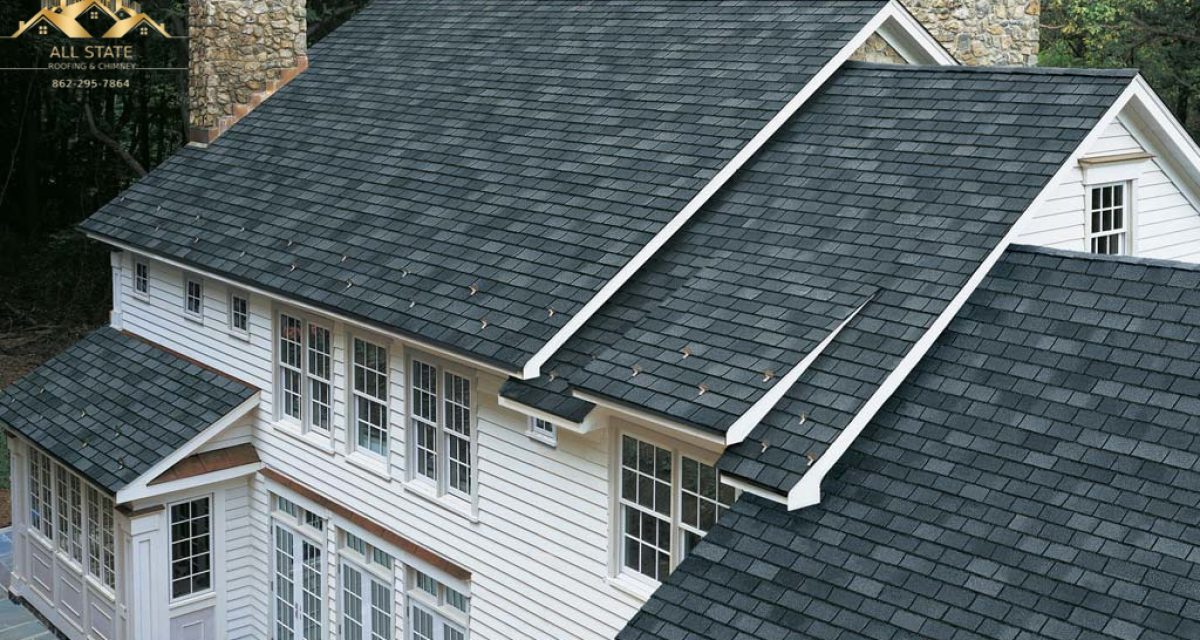
Roof replacement is an important investment in a home’s protection, appearance, and long-term structural performance. The featured property demonstrates how a carefully finished roofing system can complement traditional architecture while creating a consistent and attractive exterior. Its dark gray shingles, sharply defined rooflines, white trim, and prominent stone chimneys highlight the importance of selecting suitable materials and paying attention to installation details.
For homeowners considering roof replacement, an attractive finished surface is only one part of a successful project. The roofing system must also manage rainwater, withstand weather exposure, protect the underlying structure, and provide reliable transitions around chimneys, valleys, ridges, and roof edges.
All State Roofing & Chimney NJ provides roofing and chimney services for homeowners seeking professional assistance with their properties. Whether a roof requires replacement, repairs, or an assessment of vulnerable chimney connections, the appropriate solution begins with understanding the existing conditions and determining which work is necessary.
This article explores the major considerations involved in roof replacement, using the photographed home as a visual reference for discussing shingle selection, complex rooflines, chimney flashing, water management, and installation quality.
Why Professional Roof Replacement Matters
A residential roof serves as a primary protective barrier between the home and outdoor conditions. It helps keep rainwater away from the roof deck, insulation, interior ceilings, and structural components while contributing to the building’s overall appearance.
Over time, roofing materials can deteriorate because of sunlight, temperature fluctuations, wind, moisture, and normal aging. Missing shingles, curling edges, exposed fasteners, and recurring leaks may indicate that the roof requires professional attention.
However, not every visible problem automatically means the entire roofing system needs replacement. A qualified assessment can help determine whether a localized repair is sufficient or whether widespread deterioration makes a complete roof replacement more practical.
The home in the photograph features a coordinated arrangement of dark gray shingles across several roof sections. The consistent color and orderly pattern create a unified appearance, while the white exterior trim emphasizes the property’s architectural details.
Achieving a similar result requires careful planning before installation begins. The contractor must evaluate the existing roof, consider the property’s design, select appropriate materials, and account for transitions between different roof planes.
Professional roof replacement should address both visible and concealed components. The shingles contribute to the finished appearance, but the roof deck, underlayment, flashing, fastening methods, and ventilation also influence performance.
A comprehensive approach helps homeowners understand what their roofing system needs instead of focusing exclusively on the appearance of new materials.
Dark Gray Asphalt Shingles and Exterior Appeal
One of the most noticeable features of the photographed property is its dark gray asphalt shingle roof. The color provides a strong contrast against the white siding and complements the natural tones of the stone chimneys.
Gray shingles are a versatile option for many residential designs because they coordinate with white, cream, brick, stone, and other neutral exterior finishes. Darker shades create a defined roofline, while dimensional shingle profiles can add depth and texture.
During roof replacement, homeowners should compare more than the color of available products. Important considerations include manufacturer specifications, wind-resistance ratings, warranty requirements, installation compatibility, and expected performance under local weather conditions.
Architectural asphalt shingles are frequently selected for residential projects because they offer a variety of colors and dimensional designs. The most suitable product depends on the building, the homeowner’s priorities, and the specifications of the complete roofing system.
The surrounding materials should also be considered. White trim, gutters, siding, and masonry should complement the selected shingles without creating an inconsistent appearance between roof sections.
Homeowners should review shingle samples under natural light because the appearance of a color can change depending on sunlight and surrounding surfaces.
Roof color can also influence solar heat absorption. Dark shingles generally absorb more sunlight than highly reflective roofing products, although actual thermal performance depends on the product’s reflectance, emittance, insulation, ventilation, and other building characteristics. The U.S. Department of Energy explains these considerations in its Guide to Cool Roofs.
The goal is to choose a roofing material that balances appearance, protection, budget, and the property’s practical requirements.
Complex Rooflines Require Careful Installation
The featured home has several intersecting roof planes, multiple gables, and lower roof sections connected to the main structure. These architectural elements create visual interest, but they also require precise installation planning.
Every change in roof direction or elevation introduces a transition that must be detailed correctly. Valleys, ridges, hips, gable edges, and adjoining roof sections all need suitable materials and installation methods.
Roof valleys deserve particular attention because they collect runoff from adjoining slopes. Their construction must direct water toward the appropriate drainage path while protecting the underlying roofing assembly.
Gable edges and ridges also require careful finishing. Starter shingles, ridge components, edge flashing, and other accessories must be installed according to the roofing manufacturer’s instructions.
During roof replacement, the contractor should evaluate the layout of the entire roof rather than treating each section as an unrelated surface. This includes identifying transitions, estimating material quantities, planning access, and determining how each component will connect.
A uniform shingle pattern is visually appealing, but appearance alone does not demonstrate that concealed installation details are correct. The finished system must also provide appropriate protection beneath the visible surface.
Homeowners should therefore ask how valleys, edges, ridges, and intersecting sections will be addressed in the proposed project.
Roof Decking and Underlayment Protection
The roof deck provides the supporting surface for roofing materials. Underlayment adds another protective layer beneath the shingles and forms part of the overall roofing assembly.
During a complete roof replacement, existing materials may need to be removed so the contractor can examine the exposed decking. This inspection can reveal deterioration, moisture damage, weakened panels, or other conditions that were not visible before removal.
Damaged decking should be evaluated and repaired or replaced where necessary before the new roofing materials are installed. Covering compromised wood without addressing the underlying issue may leave the roof vulnerable to future problems.
Once the deck is suitable, the specified underlayment and related protective components can be installed. Product selection should reflect the roof’s slope, the roofing system’s requirements, applicable building codes, and manufacturer instructions.
These layers are particularly important because shingles should not be treated as the only element responsible for keeping water out of the home. The complete assembly must work together to manage moisture and protect the structure.
Homeowners should ask whether the roof replacement estimate includes removal of existing materials, inspection of the deck, underlayment installation, and the replacement of damaged decking if required.
Clarifying these details before work begins helps establish realistic expectations about the project’s scope and the possibility of additional repairs.
Chimney Flashing and Roof-Water Protection
The stone chimneys are prominent architectural features in the photograph. Their masonry construction creates a strong contrast against the dark gray shingles, but each chimney-to-roof connection is also a location that requires careful water management.
Flashing helps direct rainwater away from the joint between the chimney and the roofing surface. Depending on the construction, the assembly may include step flashing, base flashing, and counterflashing that work together to reduce the risk of water entering the building.
Counterflashing is particularly important where the chimney rises above the roof. It helps protect the upper portion of the flashing assembly and must be integrated appropriately with the masonry and surrounding materials.
The Insurance Institute for Business & Home Safety’s metal flashing guidance explains how flashing directs water away from roof edges and penetrations, including chimney connections.
When a roof replacement is planned, the contractor should inspect the visible condition of chimney flashing and identify signs of deterioration, separation, or moisture intrusion. Necessary repairs should be established according to the actual condition of the existing assembly.
It is also important to distinguish between roofing work and chimney restoration. Deteriorated mortar joints, damaged masonry, defective chimney crowns, and other masonry concerns may require separate repairs.
Replacing shingles alone will not correct every chimney-related problem. A coordinated assessment can help identify which components need attention and prevent vulnerable transitions from being overlooked.
For properties with multiple chimneys, each roof penetration should be evaluated individually. Careful attention to these connections contributes to a more complete roof replacement project.
Roof Valleys, Flashing, and Effective Drainage
Water management is a central part of professional roofing. A roof must direct rainwater away from the building without allowing it to collect around vulnerable joints or enter beneath the roofing materials.
The multiple roof slopes shown in the photograph create several intersections where water-management details are important. Roof valleys, chimney penetrations, gable intersections, and changes in elevation should be included in the installation plan.
Flashing is used at many of these locations to guide water away from joints and toward the appropriate drainage path. Its material, placement, fastening, and integration with surrounding roofing components must suit the particular application.
Valleys should be constructed according to the specifications of the selected roofing system. Leaves and other debris should also be considered because accumulated material can obstruct runoff and retain moisture.
Roof edges require suitable detailing as well. Properly installed edge components help manage runoff, while gutters and downspouts should be evaluated where appropriate to ensure water can move away from the building effectively.
The complete water-management system includes more than shingles. Underlayment, flashing, roof geometry, and drainage components must work together to protect the property.
A professional roof replacement plan should account for these elements instead of concentrating exclusively on the appearance of the finished surface.
Roof Replacement Versus Roof Repair
A complete roof replacement is not always necessary when a roofing problem develops. Localized damage may be addressed through a targeted repair when the surrounding materials remain serviceable and the underlying cause can be corrected.
Roof repair may be appropriate when a limited number of shingles are damaged, a specific flashing detail needs attention, or a localized problem can be resolved without replacing the entire roofing assembly.
However, recurring leaks, widespread shingle deterioration, extensive damage, or a roof approaching the end of its useful service life may justify considering replacement.
A professional assessment should examine the roof’s overall condition, including visible shingles, flashing, penetrations, drainage details, and accessible areas of the deck. The history of previous repairs can also help determine whether the existing system remains practical to maintain.
The cost of the work should be considered alongside the roof’s condition and the likelihood of future repairs. A less expensive repair may be suitable for a limited problem, but repeatedly repairing a deteriorating roof may become less practical over time.
Homeowners should request a clear explanation of the recommended work. A written estimate should distinguish between necessary repairs, optional improvements, and the potential costs associated with concealed damage.
For further information about available roofing services, visit the official All State Roofing & Chimney NJ website. Its roofing service information includes roof repair, roof replacement, and related installation options.
Selecting Roofing Materials for Durability
Selecting suitable materials requires balancing appearance, durability, installation requirements, and budget. The dark gray shingles shown in the photograph demonstrate how a consistent roofing color can complement white siding and stonework.
However, color alone should not determine the product selection. Homeowners should compare the specifications of available materials and consider the environmental conditions the roof will experience.
Important factors include wind-resistance ratings, manufacturer installation instructions, applicable impact-resistance classifications, warranty terms, and compatibility with the proposed underlayment and accessories.
Architectural asphalt shingles offer a variety of colors and profiles for residential properties. Slate and metal roofing may also be suitable for certain buildings, depending on structural characteristics, architectural preferences, budget, and installation requirements.
The selected materials should form a compatible system. Starter strips, ridge caps, flashing, fasteners, underlayment, and ventilation components must all be suitable for the intended application.
Homeowners should ask which products are included in the estimate and how they will be installed. It is also useful to understand the warranty conditions and any maintenance requirements associated with the chosen roofing system.
Quality materials are important, but they cannot compensate for poor installation. Correct preparation and attention to manufacturer specifications remain essential to achieving the intended performance.
Ventilation and Moisture Control
Attic ventilation is another consideration during roof replacement. A properly designed system can help manage heat and moisture within the roof assembly, although its performance depends on insulation, air sealing, building design, and climate.
The roof should not be considered independently from the rest of the home. Moisture entering the attic from indoor air, inadequate ventilation, or other building-envelope problems can contribute to condensation and material deterioration.
During a roofing assessment, accessible ventilation components can be reviewed to identify visible concerns. Any recommended changes should be based on the home’s requirements rather than adding vents without considering the existing system.
Ventilation openings must also be integrated correctly with roofing materials. Poorly detailed penetrations can create potential water-entry points.
Homeowners should ask whether the existing ventilation appears suitable and whether any deficiencies should be addressed during the project. Additional evaluation may be appropriate if significant moisture or insulation problems are discovered.
Considering these issues during roof replacement allows related concerns to be identified before the new materials are installed.
How Weather Affects Roofing Performance
Residential roofs are exposed to changing weather throughout the year. Rain, wind, sunlight, temperature fluctuations, and seasonal debris can affect the condition of shingles and other roofing components.
Asphalt shingles may develop granule loss, curling, cracking, or reduced adhesion as they age. These signs do not automatically mean the entire roof must be replaced, but they can indicate that a professional inspection is appropriate.
Wind can lift or damage shingles, particularly when materials have deteriorated or installation details are compromised. Heavy rainfall can reveal weaknesses around valleys, roof penetrations, and chimney flashing.
Falling branches and accumulated debris may also damage roofing materials or obstruct drainage paths.
The Insurance Institute for Business & Home Safety’s roofing guidance discusses common weathering changes in roofing materials, including granule loss and curling in asphalt shingles.
After severe weather, homeowners should arrange an assessment when damage is suspected. Climbing onto a steep, wet, or damaged roof can be dangerous and may cause further damage.
A new roofing system cannot eliminate every weather-related risk. Product suitability, installation quality, maintenance, and environmental exposure all influence its performance.
Maintaining a Newly Replaced Roof
Regular maintenance helps homeowners monitor the condition of their roofing system and identify concerns that may require attention.
Gutters and downspouts should be kept clear enough to allow water to drain properly. Blocked drainage can cause overflow and contribute to moisture problems around roof edges and exterior walls.
Trees near the home should also be monitored. Where appropriate, trimming overhanging branches can reduce falling debris and help limit the accumulation of leaves on the roof.
Homeowners should pay attention to warning signs inside the property, including ceiling stains, dampness in accessible attic areas, and recurring moisture near chimneys. These symptoms can have different causes, so the source should be established before repairs are selected.
Periodic professional inspections can help assess visible shingles, flashing, roof penetrations, and drainage components. Inspection frequency should reflect the roof’s condition, age, exposure, and relevant manufacturer recommendations.
Cleaning methods should be chosen carefully. Aggressive pressure washing or unsuitable chemicals may damage roofing materials. Homeowners should follow product-specific guidance and avoid maintenance practices that could compromise the shingles or affect applicable warranties.
Keeping records of materials, installation details, warranties, inspections, and repairs can also help with future maintenance decisions.
What to Expect During a Professional Roof Replacement
A well-organized roof replacement begins with an assessment of the existing roofing system and a discussion of the homeowner’s concerns. This helps establish the project scope and determine which materials and installation details are appropriate.
The written proposal should explain the removal of existing materials, inspection of the roof deck, underlayment installation, new shingles, flashing work, and agreed-upon repairs.
Before work begins, homeowners should understand the anticipated schedule, material delivery arrangements, site-access requirements, and measures for protecting landscaping and surrounding areas.
During removal, concealed conditions may become visible. If damaged decking or other unexpected problems are discovered, the contractor should explain the findings and discuss the required corrective work and any associated cost changes.
The new roofing materials should then be installed according to the manufacturer’s specifications and applicable building requirements. Attention should be given to shingle alignment, fastening, valleys, ridges, roof edges, and chimney connections.
After installation, the completed work should be reviewed, the work area cleaned, and applicable warranty information provided.
Clear communication throughout the project helps ensure that homeowners understand what has been completed and what maintenance may be needed in the future.
Choosing All State Roofing & Chimney NJ
Choosing a roofing contractor is an important decision for homeowners planning repairs or replacement. A useful starting point is to review the proposed scope, request a written estimate, confirm appropriate insurance and licensing where required, and understand which materials will be used.
Homeowners should also ask how the contractor evaluates concealed conditions and handles unexpected repairs. A professional recommendation should explain the reason for the proposed work and distinguish observed damage from issues that require further investigation.
For homes with masonry chimneys, the relationship between roofing and chimney components deserves particular attention. Ask whether chimney flashing will be assessed and whether separate masonry repairs may be needed.
All State Roofing & Chimney NJ lists roofing services that include roof replacement, roof repair, roof leak repair, and emergency roofing. The company also lists chimney inspection and repair services. Homeowners can review the available information directly on the official website.
For information about installation services, visit the company’s roof installation page.
The appropriate solution depends on the property’s condition, the materials involved, and the homeowner’s priorities. A clear assessment and a detailed proposal help establish realistic expectations before work begins.
A Beautiful Roof Begins With Professional Planning
The featured home demonstrates how dark gray shingles, white trim, multiple roof slopes, and stone chimneys can work together to create an attractive exterior. Reproducing this type of finished appearance requires careful material selection and attention to the details beneath the visible roofing surface.
A successful roof replacement must consider the roof deck, underlayment, flashing, drainage, ventilation, and connections around chimneys and adjoining roof planes. These components work together to help protect the building from moisture and weather exposure.
For some homes, localized repairs and regular maintenance may be sufficient. For others, widespread deterioration or recurring leaks may make replacement the more practical option. The correct decision should be based on the roof’s actual condition rather than appearance alone.
All State Roofing & Chimney NJ offers homeowners a starting point for exploring roofing and chimney services. By seeking a professional assessment, understanding the proposed work, and selecting suitable materials, homeowners can make informed decisions about their property’s protection.
A carefully planned roofing project can improve curb appeal while supporting dependable performance for years to come.