
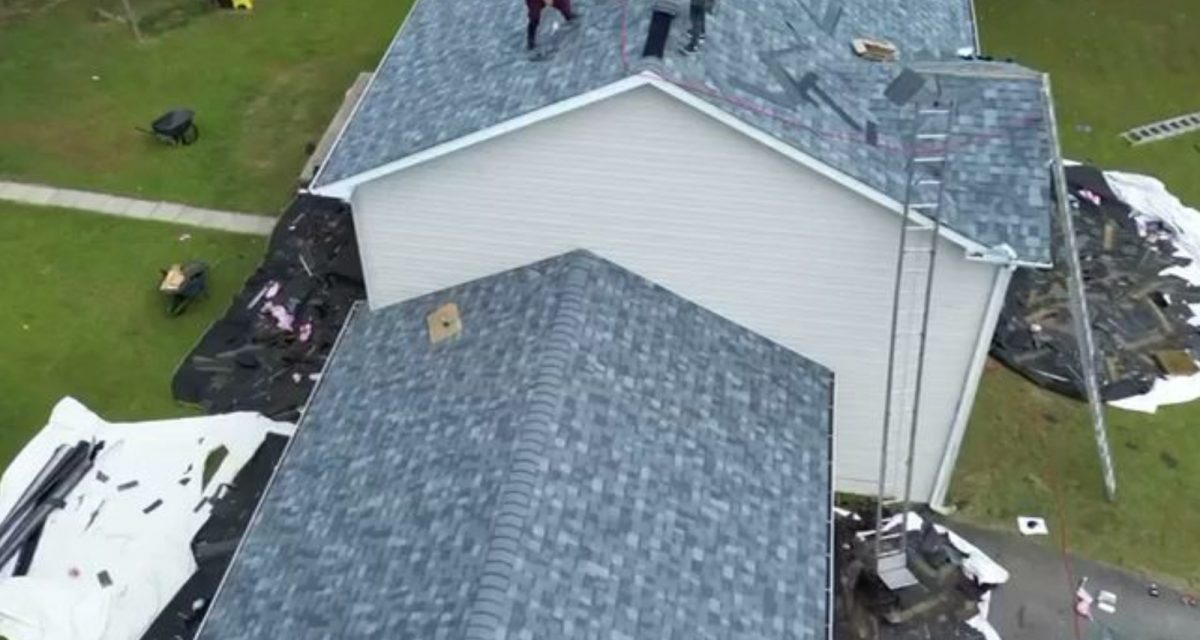
Roof replacement is one of the most important investments a homeowner can make, and the project in this photograph shows how much careful work goes into it. Captured from above, the image reveals a two-section residential roof in the middle of a complete transformation: fresh blue-gray architectural shingles on one side, a working crew on the other, and protective sheeting spread across the lawn below. At All State Roofing & Chimney, we believe every roof replacement should be planned, protected, and executed with precision from the first ladder placement to the final cleanup.
In this article, we walk through what the photo reveals about professional workmanship, how a proper roof replacement in New Jersey unfolds, and what homeowners should expect before signing a contract. Whether your roof is leaking, aging, or simply showing its years, the guidance below will help you choose your next step with confidence.
A Closer Look at This Roof Replacement Project
The photograph was taken by drone, which gives us a rare and revealing perspective. In the foreground, a freshly shingled gable shows the uniform, overlapping pattern of a new architectural shingle system in a blended gray-blue tone. The ridge line runs cleanly through the center, the edges are crisp, and the gutter line is straight. This is exactly what a finished section of new roofing should look like: consistent, tight, and free of visible gaps.
Further back, two roofing professionals stand near the upper ridge, reviewing the next phase of the work. Around them, you can see the transition between completed shingles and sections still awaiting final courses. A ladder rests against the roof edge, and a few scraps of old material remain on the surface, which is normal while a job is underway.
At ground level, large black and white protective sheets cover the grass and surrounding areas. They catch old shingles, nails, and debris as the tear-off progresses. This detail matters. It shows that the crew respects the property, and that protecting a family’s yard, walkway, and play area is part of every project we perform.
Taken together, these details describe a job that is organized, safe, and moving steadily toward completion. For homeowners, that is the real value of working with an experienced team: the visible result on the roof matches the careful process happening around it.
Why Roof Replacement Matters for New Jersey Homes
New Jersey roofs work harder than most. Winter freeze-and-thaw cycles, heavy snow, wind-driven rain, humid summers, and the occasional nor’easter test shingles, flashing, and decking year after year. Over time, even quality materials lose granules, curl at the edges, and allow moisture to reach the structure.
A timely roof replacement stops that cycle. Instead of paying for repeated patch repairs, you reset the clock on your home’s most important protective layer. A new roof system also improves energy performance, strengthens curb appeal, and supports resale value, since buyers and inspectors pay close attention to roof age.
Delaying replacement, on the other hand, rarely saves money. Small leaks can saturate insulation, stain ceilings, damage framing, and create conditions for mold. Acting early keeps the project predictable and the budget under control.
For a closer look at how we build new systems from the ground up, visit our roof installation page.
Warning Signs Your Roof Needs Replacement
Many homeowners ask whether they need a simple repair or a full roof replacement. These are the most common warning signs we see in the field:
- Age: Asphalt shingle roofs typically last 20 to 30 years, so older roofs are prime candidates.
- Damaged shingles: Cracked, curling, or missing shingles expose the roof to water.
- Granules in gutters: Heavy granule loss signals deteriorating shingles.
- Interior leaks: Stains on ceilings or walls often point to roof problems.
- Sagging: A drooping roof deck may indicate structural trouble.
- Daylight in the attic: Light passing through roof boards means it is time to act.
If you notice two or more of these signs, schedule an inspection promptly. For active leaks, our roof leak repair team can stabilize the problem quickly while we evaluate whether a full replacement is the smarter long-term choice.
Our 7-Step Roof Replacement Process
A successful project follows a disciplined sequence. Here is the process our crews follow, and the same sequence visible in the photograph above.
Step 1: Free Inspection and Detailed Estimate
Every roof replacement begins with a free in-house inspection. We examine shingles, flashing, vents, gutters, and attic conditions, then explain our findings in plain language. You receive a clear estimate covering materials, labor, and disposal, so there are no surprises. Request yours through our free estimate page.
Step 2: Material and Color Selection
Next, you choose the shingle style and color. The blue-gray blend in the photo is a popular choice because it hides dirt, complements white or neutral siding, and suits both traditional and modern New Jersey homes. We help you compare samples so you can judge color in natural light.
Step 3: Site Protection and Safe Setup
Before any shingle is removed, the crew covers landscaping, walkways, and the ground below the eaves, exactly as seen in the image. Ladders are secured, safety lines are set, and equipment is staged so the work proceeds safely and efficiently.
Step 4: Complete Tear-Off and Deck Inspection
Old shingles and underlayment are removed down to the roof deck. A full tear-off, rather than layering over old material, allows us to inspect the wood for rot, soft spots, and moisture damage. The dark debris area visible in the photo is typical of this stage, which is why containment is so important. Skipping this step is the most common shortcut in a low-quality roof replacement.
Step 5: Deck Repair and Protective Underlayment
Damaged plywood is replaced so the new roof has a solid, flat foundation. We then install underlayment, ice and water protection in vulnerable areas, and drip edge along the eaves and rakes. These hidden layers are the real defense against wind-driven rain and ice dams, and they determine how well a new roof performs ten or twenty years later.
Step 6: Shingle Installation and Flashing
Shingles are installed course by course from the eave upward, with correct nailing patterns and proper offsets. Valleys, ridges, vents, and chimney areas receive new flashing, which is where many leaks begin. The clean ridge and straight edges in the foreground of the photo reflect this attention to detail.
Step 7: Final Inspection and Cleanup
Once the last ridge cap is set, we inspect the entire roof, check the gutters, and sweep the property with magnetic tools to collect stray nails. Tarps are removed, debris is hauled away, and we walk through the finished roof with you before the job is closed.
Protecting Your Property During Roof Replacement
A roof replacement is a construction project, and it should be managed like one. Noise and activity are unavoidable, but damage to your property is not. Our crews cover shrubs, mulch beds, and lawns, keep ladders away from fragile surfaces, and protect nearby items such as outdoor furniture and play equipment.
Notice the play set and open yard in the photograph. The work takes place beside a lived-in family yard, and careful containment keeps that space safe. Walkways stay clear, and debris is directed onto tarps rather than the ground.
Daily cleanup is another hallmark of professionals. Nails and fasteners can cause flat tires and injuries, so magnetic sweeps should happen regularly. Clear communication about schedules also matters, so you know when work starts, what to expect, and when to move vehicles.
Choosing the Right Materials for Your Roof Replacement
Material choice shapes appearance, longevity, and cost. The roof in this project appears to use architectural asphalt shingles, which remain a popular option in New Jersey thanks to their balance of price, durability, and style. Their dimensional profile adds depth, and their layered construction offers better wind resistance than basic three-tab products.
Other materials are available for different needs:
- Flat roofing: Ideal for low-slope residential and commercial structures.
- Slate: Elegant and extremely long-lasting, often exceeding fifty years.
- Metal: Lightweight, weather-resistant, and known for exceptional longevity.
Each option carries different costs, weights, and maintenance needs. During your estimate, we compare these choices against your budget, your home’s structure, and the look you want, so the finished roof fits both your property and your plans. You can also review general shingle guidance from the Asphalt Roofing Manufacturers Association.
Roof Replacement Cost in New Jersey: What to Expect
Cost is naturally the first question homeowners ask. In New Jersey, a new roof commonly falls between $5,000 and $15,000, depending on several factors:
- Material: asphalt shingles are the most affordable, while slate and metal cost more.
- Size and complexity: larger roofs, steep pitches, and multiple levels increase labor.
- Removal: tearing off and disposing of old roofing adds to the total.
- Location: local labor rates and material availability affect pricing.
Because every home is different, the only reliable figure is a customized quote. That is why we offer free inspections and estimates, along with current promotions such as $1,000 off a new roof when you mention our website. Offers cannot be combined and are limited to one use, so ask about the details when you call. To explore your options, visit our roof replacement service page.
Gutters, Siding, and Chimneys: Completing the Exterior
A new roof looks and performs best when the surrounding components are in good condition. In the photograph, the white vinyl siding and clean gutter lines frame the new shingles and show how closely these elements work together. Gutters channel water away from the roof edge and foundation, while siding protects the walls beneath the roofline.
Many homeowners combine a roof replacement with gutter or siding upgrades to save on setup and achieve a unified look. We also handle chimney work, including flashing, cap and crown repairs, and inspections, since chimney junctions are among the most leak-prone areas of any roof. Learn more about our gutter services, siding options, and chimney repair solutions.
Timing Your Roof Replacement Around New Jersey Weather
Weather plays a major role in scheduling. Dry, moderate conditions allow shingles to seal properly and keep the deck protected during tear-off, which is why spring and fall are popular seasons. That said, roofs do not fail on a convenient schedule, and a skilled crew can work safely through much of the year when conditions allow.
The photograph also illustrates a staged approach, with one section already shingled while another is still being prepared. Working in sections limits the time any part of the roof is exposed to the elements, which is a sound practice on any roofing project.
After a storm, do not wait. Wind, hail, and fallen limbs can compromise shingles and flashing in ways that are not visible from the ground. Our emergency roofing service is available around the clock to secure your home, and a follow-up inspection will tell you whether repairs or a full replacement is the right path.
Ventilation and Maintenance: Protecting Your New Roof
A new roof is only as durable as the system beneath it. Balanced attic ventilation removes excess heat and moisture, which helps prevent premature shingle aging, ice dams, and condensation problems. During replacement, we evaluate intake and exhaust vents to confirm that air can move freely through the attic.
Maintenance is simple but valuable. Inspect your roof twice a year, once in spring and once in fall, and after major storms. Keep gutters clear, trim overhanging branches, and address small issues before they grow. Our chimney inspections and gutter cleaning services make these routine checks easy to schedule.
With proper care, an asphalt shingle roof can deliver two to three decades of dependable service, while premium materials can last considerably longer. Think of your roof replacement as the foundation of that long-term protection, and treat ongoing maintenance as the way to maximize it.
Why Choose All State Roofing & Chimney for Your Roof Replacement
Choosing a contractor is as important as choosing materials. A licensed and insured company protects you from liability, follows local building codes, and stands accountable for its work. In New Jersey, you can confirm that a contractor is registered through the state Division of Consumer Affairs, and you can learn what to expect from a quality installation through the National Roofing Contractors Association.
All State Roofing & Chimney is locally owned and operated, fully licensed and insured, and committed to competitive pricing. We serve homeowners across Bergen, Passaic, Hudson, Essex, Morris, Hunterdon, Somerset, Sussex, Union, and Warren Counties, and we offer free inspections with same-day service available.
From a small leak to a complete roof replacement, our team approaches every project with the same standards: honest assessments, quality materials, careful protection of your property, and craftsmanship you can see from above, just as this photograph demonstrates. Browse our Bergen County roof replacement page to see how we serve local communities.
Roof Replacement FAQs for New Jersey Homeowners
How long does a roof replacement take?
Most residential projects are completed in one to three days, depending on roof size, complexity, and weather. Larger or more complicated roofs may take longer.
Can new shingles go over an existing roof?
Sometimes, but it is not always recommended. Layering adds weight and can hide rot or damage, so a full tear-off is usually the better choice for a lasting result.
Do I need to be home during the work?
It is not required, but we recommend being reachable. We will review the plan with you beforehand and walk the finished roof with you afterward.
How do I know whether I need repair or replacement?
If damage is isolated and the roof is relatively young, repair may be enough. If problems are widespread, recurring, or the roof is near the end of its lifespan, replacement is usually the wiser investment. A free inspection gives you a clear answer.
Start Your Roof Replacement With Confidence
The photograph at the top of this article captures more than shingles and ladders. It captures a process built on preparation, protection, and skilled execution. A well-managed roof replacement transforms the safety, efficiency, and appearance of a home, and it begins with a conversation.