
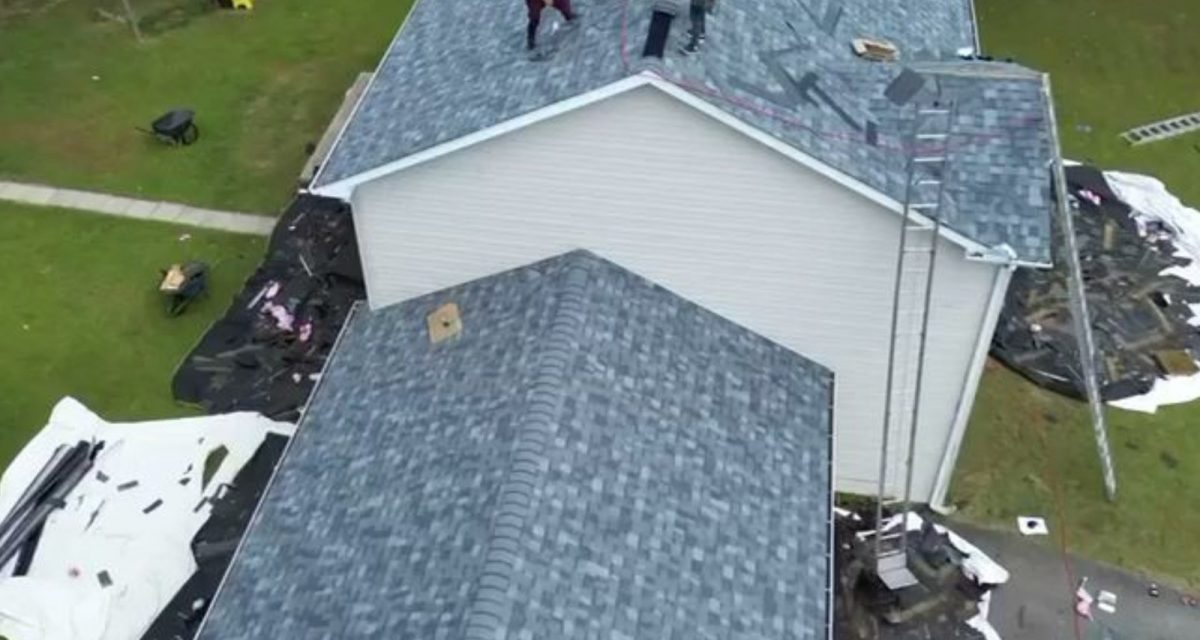
Roof Replacement is an important investment in a home’s protection, appearance, and long-term performance. A properly installed roofing system helps shield the structure from rain, wind, moisture, temperature changes, and other environmental conditions that can gradually affect a property’s exterior. The project shown in this photograph illustrates a substantial residential roofing installation, featuring gray asphalt shingles, multiple roof sections, defined ridges, and a crew working across the roof surface. The visible progress demonstrates why careful planning, accurate installation, and attention to detail are essential when completing a complex roofing project.
For homeowners considering a new roof, appearance is only one part of the decision. A successful roofing project must also address the condition of the underlying structure, the performance of protective materials, the management of water runoff, and the quality of the installation. Each component contributes to how effectively the finished roof performs over time.
Understanding the Roofing Project Shown in the Photograph
The photograph captures a residential roof with several connected sections and intersecting slopes. Gray asphalt shingles cover the main roof surfaces, creating a consistent appearance across the visible structure. The roof design includes prominent ridges and valleys, areas where different slopes meet, and transitions that require accurate material placement to support effective water drainage.
These architectural features make installation more demanding than working on a simple roof with a single uninterrupted slope. Each transition must be considered individually so that shingles, underlayment, flashing, and other relevant components work together as part of a coordinated roofing system.
The photograph also shows roofing materials and removed debris around the building. This is consistent with an active roofing project in which materials are being installed and discarded materials are being managed. Although a photograph cannot confirm every step performed, it highlights the importance of organizing the work area and keeping installation activities coordinated.
A roof is a complete protective assembly rather than merely a layer of shingles. The visible surface is important, but the performance of the finished installation also depends on the condition of the roof deck, the protective layers beneath the shingles, the treatment of roof penetrations, and the finishing details along ridges and edges.
Why Roof Replacement Requires Careful Planning
A roof replacement project begins well before the first new shingle is installed. Planning helps establish the scope of work, identify potential complications, select suitable materials, and organize the installation process.
The first step is to evaluate the existing roofing system. A professional assessment can help identify worn or damaged shingles, signs of moisture intrusion, deteriorated flashing, ventilation concerns, and visible indications of damage to the roof deck. The appropriate scope depends on the actual condition of the property and should not be determined by appearance alone.
Measurements are another important part of the preparation process. A roof with multiple slopes, intersecting sections, and several ridges requires accurate calculations to estimate material quantities and account for cutting, overlapping, and waste. Insufficient materials can interrupt progress, while excessive ordering can create unnecessary expenses.
Planning must also account for weather conditions and property access. Roofing work requires suitable conditions for handling materials, removing old components, and installing protective layers. Coordinating deliveries, equipment, and debris collection helps maintain an orderly worksite.
Homeowners should receive a clear explanation of the proposed work before installation begins. This should identify the expected scope, the roofing materials being considered, any known concerns, and the process for addressing concealed damage discovered after the existing roof covering is removed.
A well-organized plan helps create realistic expectations and provides a foundation for consistent workmanship throughout the project.
Selecting Gray Asphalt Shingles for a Modern Appearance
Gray asphalt shingles are a popular option for residential roofing because they offer a versatile appearance that works with many exterior color schemes. In the photograph, the gray roofing surface complements the light-colored exterior siding and creates a coordinated finish across the different roof sections.
Color selection can influence the overall appearance of a home. Gray tones may provide a neutral backdrop for white, cream, blue, beige, and other exterior finishes. Depending on the specific product, variations in shade and texture can also create depth across the roof surface.
However, appearance should not be the only consideration when selecting shingles. Homeowners should compare the product’s specifications, wind-resistance rating, applicable warranty terms, maintenance requirements, and compatibility with the roof design. Different products may offer different levels of performance, even when their colors appear similar.
The slope of the roof, the manufacturer’s installation instructions, and local building requirements must also be considered. Not every roofing product is appropriate for every roof configuration.
A professional contractor can explain the available options and help homeowners select a roofing system suited to the property, budget, and intended service life. Choosing suitable materials at the beginning can help establish a consistent appearance while supporting the practical requirements of the installation.
Preparing the Roof Deck for a Reliable Installation
The roof deck provides the supporting surface beneath the roofing materials. Its condition is fundamental to the performance of the entire system, which is why inspection during replacement is an important part of responsible roofing work.
Once existing shingles and other specified roofing materials have been removed, the exposed decking can be evaluated for signs of deterioration. Potential concerns include soft or weakened areas, water staining, delamination, damaged fasteners, and sections that no longer provide adequate support.
Not every roof replacement requires extensive decking work. If the existing deck is structurally sound and suitable for the proposed system, preparation may involve removing loose debris, checking fastening conditions, and ensuring that the surface is ready for the next installation stage. If damage is discovered, the affected areas may require repair or replacement.
Moisture deserves particular attention because prolonged exposure can weaken wood-based decking and contribute to deterioration. However, visible staining does not always establish the full extent of damage. A qualified professional should assess the affected area and determine whether further investigation or corrective work is necessary.
Proper preparation also includes following applicable requirements for fastening, spacing, and supporting materials. The exact methods depend on the decking product, roof design, local code, and manufacturer’s instructions.
Installing new shingles over an unsuitable surface can undermine the quality of an otherwise attractive roof. A careful assessment of the deck helps create a stable foundation for the materials installed above it.
Installing Underlayment and Protective Roofing Layers
Underlayment is an important component of many asphalt-shingle roofing systems. Installed beneath the shingles, it provides an additional protective layer and supports the roof assembly’s resistance to moisture when used according to the system’s design.
The appropriate underlayment depends on the roof configuration, local requirements, product specifications, and the manufacturer’s recommendations. Installation details may vary around eaves, valleys, penetrations, and other areas where water management requires particular attention.
In some applications, specialized self-adhering membranes are used in vulnerable locations to provide additional protection against water intrusion. Whether such a membrane is required, and where it should be installed, must be determined from the applicable code and roofing-system specifications.
Underlayment should be installed with the correct overlaps, fastening methods, and transitions. Poorly coordinated layers can create weaknesses that are difficult to identify after the shingles have covered the surface.
The goal is to establish a continuous, properly integrated protective assembly rather than relying on one material to solve every moisture-related concern.
Homeowners should understand that underlayment does not replace the need for correctly installed shingles, flashing, ventilation, or sound structural components. These elements perform different functions and must work together.
During a roof replacement, the installation team should follow the selected products’ instructions and verify that each layer is suitable before proceeding. This approach supports consistency and helps reduce the risk of installation-related problems.
Achieving Accurate Shingle Alignment and Coverage
The finished appearance of the roof depends heavily on accurate shingle placement. The photograph shows gray shingles arranged across several connected slopes, with the roof’s geometric lines creating a clear visual pattern.
Consistent alignment is important for both appearance and performance. Shingles must be positioned according to the manufacturer’s exposure requirements and fastening specifications. Improper placement can create uneven courses, visible irregularities, or weaknesses that affect the intended protection.
Fastener placement is equally important. Nails installed in the wrong location, driven too deeply, or left insufficiently secured may compromise the shingle’s ability to remain attached as intended. The required number and placement of fasteners depend on the particular product and applicable installation conditions.
Roofing crews must also account for the roof’s changing geometry. Areas around transitions, ridges, valleys, and edges require accurate cuts and carefully coordinated installation details. These locations should not be treated as minor finishing tasks because they contribute to the integrity of the completed system.
A professional installation involves checking the developing surface as work progresses rather than waiting until the entire roof is covered. Early identification of alignment or fastening concerns allows corrections to be made before additional materials conceal the affected area.
The objective is a roof that looks consistent while meeting the technical requirements of the selected roofing system.
Managing Roof Ridges, Valleys, and Intersecting Slopes
One of the most important visual features in the photograph is the roof’s complex layout. Multiple sloped surfaces meet at different points, creating ridges and valleys that require specific installation methods.
Ridges are the upper intersections where two roof slopes meet. Depending on the roofing system, these areas may be finished with purpose-designed ridge-cap shingles or other approved components. The ridge assembly must provide suitable coverage while accommodating the roof’s design and any required ventilation.
Valleys are the internal intersections where water from adjoining slopes converges. Because runoff is directed into these areas, correct detailing is essential. Depending on the selected system, valleys may use approved metal flashing, specialized membrane protection, specific shingle patterns, or a combination of components.
Roof intersections can also occur around dormers, extensions, and changes in building height. Each transition must be evaluated to determine how water will move across the surface and how the adjoining materials should be integrated.
Flashing is especially important where the roofing surface meets walls, chimneys, and other projections. These transitions require materials and installation methods suited to the specific location.
Poorly completed intersections can allow water to enter even when most of the roof surface appears to be in good condition. For this reason, these details deserve careful attention during installation and final inspection.
The visible roof geometry in this project illustrates why experience with multi-slope residential roofs can be valuable when planning and executing a replacement.
Protecting the Home During Roofing Work
Roof replacement involves moving materials, removing old components, and working at height. Protecting the property during the process is therefore an essential part of project management.
The photograph shows removed roofing materials and debris around the building. A controlled work area helps keep discarded materials separate from new products and reduces the risk of leaving hazardous objects in places where people may walk.
Before work begins, the contractor should consider landscaping, exterior fixtures, walkways, driveways, windows, and other areas that could be affected by falling debris. Suitable protective coverings and designated collection areas can help limit disruption.
Material staging should also be organized. New shingles, underlayment, tools, and accessories need to be positioned in a way that supports efficient work without creating unnecessary hazards or placing inappropriate loads on the structure.
Roofing is a high-risk activity, particularly on steep slopes and around edges. Appropriate fall-protection practices, secure ladder access, suitable equipment, and attention to changing weather conditions are important safety considerations. Homeowners should avoid entering restricted work areas or attempting to inspect the roof themselves while installation is underway.
Cleanup is another important responsibility. At the end of the project, the work area should be checked for loose debris, discarded materials, and other items associated with the installation.
An organized jobsite supports a safer working environment and helps protect the property throughout the replacement process.
Understanding Roof Ventilation and Moisture Control
A durable roofing system must manage more than rainwater. Air movement and moisture control within the roof assembly can also affect the long-term condition of the structure.
Roof ventilation is intended to support appropriate airflow through the designed attic or roof space. The specific approach depends on the building configuration, insulation, climate, and applicable requirements. Intake and exhaust components must be considered as part of a coordinated system rather than installed independently without evaluating how air will move.
Inadequate or poorly balanced ventilation may contribute to moisture accumulation or temperature-related concerns under certain conditions. However, ventilation is only one part of the solution. Air leakage from the living space, insulation performance, bathroom exhaust arrangements, and other building conditions may also influence attic moisture.
During a replacement project, a contractor can identify visible concerns and recommend further assessment where necessary. The existing ventilation arrangement should not automatically be assumed to be defective, nor should additional vents be installed without determining whether they are appropriate.
Homeowners should ask how the proposed roofing system will accommodate any existing ventilation components and whether adjustments are recommended.
Although ventilation details may not be obvious in a completed roof photograph, they remain relevant to a comprehensive roofing evaluation. The objective is to ensure that the roof covering and the building’s moisture-management strategy function together appropriately.
How Professional Roof Replacement Supports Long-Term Home Protection
A properly planned roof replacement can provide several practical benefits, particularly when an existing roof has widespread deterioration or has reached the end of its expected service life.
The first benefit is renewed protection against the elements. New roofing materials, installed according to the system’s specifications, create a fresh exterior covering intended to resist normal weather exposure. Actual performance depends on product quality, installation, maintenance, and environmental conditions.
A replacement can also improve the property’s appearance. The gray shingles shown in the photograph provide a consistent finish across the different roof sections, creating a cleaner and more coordinated exterior appearance.
Another potential benefit is the opportunity to address concealed concerns. Removing old roofing materials may allow previously hidden decking damage, unsuitable flashing, or other deficiencies to be identified and evaluated. Corrective work can then be included in the project where appropriate.
Homeowners may also appreciate the opportunity to review ventilation, drainage, and material compatibility during the replacement process. These considerations can help the new system function as intended.
Nevertheless, roof replacement should not be presented as a guarantee against every future leak or maintenance issue. Weather events, falling branches, damaged flashing, clogged drainage systems, and other factors can affect roofing performance after installation.
The strongest long-term results come from combining suitable materials, careful workmanship, proper project documentation, and reasonable ongoing maintenance.
Recognizing When Roof Replacement May Be Necessary
Not every roofing problem requires a complete replacement. Some concerns can be addressed through localized repairs, while widespread deterioration may make replacement a more practical option.
Missing, cracked, curling, or heavily worn shingles can indicate that a roof needs professional evaluation. Persistent leaks, recurring repairs, damaged flashing, or visible deterioration around roof transitions may also justify a closer assessment.
The age of the roofing system can provide useful context, but age alone does not determine whether replacement is necessary. Actual condition, installation history, ventilation, exposure, and previous repairs all influence the decision.
Storm damage should also be evaluated carefully. Strong winds, hail, and falling debris can affect shingles and other roof components, sometimes in ways that are difficult to identify from the ground. A professional inspection can help establish the apparent scope of damage and identify appropriate next steps.
Homeowners should not climb onto a roof to look for problems. Sloped surfaces can be slippery, and concealed damage may create additional hazards. A qualified roofing professional can assess accessible areas using suitable procedures and equipment.
The decision between repair and replacement should be based on the findings, the expected performance of the existing system, and the homeowner’s priorities. A clear explanation of the available options makes it easier to choose a solution that addresses the actual problem rather than treating symptoms alone.
Choosing the Right Roofing Contractor
The quality of the installation is a major factor in the performance of a new roof. Homeowners should therefore evaluate contractors based on more than the initial estimate.
A useful starting point is a written proposal that clearly describes the work. It should identify the proposed roofing products, the preparation process, the treatment of flashing and roof transitions, debris removal, and how concealed damage will be handled if discovered.
Homeowners should also ask about applicable licenses, insurance, warranties, and the installation team’s experience with similar roof designs. Requirements vary by jurisdiction, so documentation should be appropriate for the project and location.
Communication matters throughout the process. The contractor should explain important decisions, identify changes to the original scope, and provide an opportunity for questions before additional work is authorized.
Product warranties and workmanship warranties should be reviewed separately because they may cover different matters and have different terms. Homeowners should understand any maintenance requirements, exclusions, and documentation needed to preserve applicable coverage.
References, previous projects, and examples of completed work can also help homeowners assess a contractor’s approach. However, a single photograph cannot establish the full quality or technical details of an installation.
All State Roofing & Chimney offers roofing services that include roof replacement, roof installation, and roof repair. Homeowners can explore the company’s roof installation services to learn more about its roofing options and discuss the needs of their property.
Maintaining a New Roof After Installation
A completed replacement is an important milestone, but reasonable maintenance remains necessary to help protect the investment.
Homeowners should arrange periodic professional evaluations based on the roof’s condition, exposure, manufacturer recommendations, and any events that may have caused damage. Inspections can help identify loose or damaged shingles, deteriorated flashing, debris accumulation, and other visible concerns before they develop into more extensive problems.
Drainage deserves particular attention. Gutters and downspouts should be maintained so that water can move away from the roof and building as intended. Blocked drainage components may contribute to overflow, moisture exposure, and damage around exterior surfaces.
Tree branches should be managed where they create a risk of contacting the roof or depositing excessive debris. Homeowners should also monitor ceilings and upper-floor walls for unexplained staining or other indications of possible moisture intrusion.
After a significant storm, a professional assessment may be appropriate if damage is suspected. Even when no obvious problem is visible from the ground, certain conditions may warrant further evaluation.
Maintenance should be performed safely. Walking on shingles can damage materials and expose homeowners to serious fall hazards, so roof access should be left to qualified professionals using suitable safety practices.
Keeping records of installation details, product information, inspections, and completed repairs can also be helpful. These documents provide a reference for future maintenance and may be relevant to warranty questions or property transactions.
Frequently Asked Questions About Roof Replacement
How long does a roof replacement take?
The timeline depends on the roof’s size, slope, complexity, material selection, weather, accessibility, and the condition of the underlying structure. A straightforward project may be completed relatively quickly, while a large roof with several intersecting sections or concealed damage may require additional time. The contractor should provide a realistic schedule after evaluating the property.
Are gray asphalt shingles a good option for residential roofs?
Gray asphalt shingles can be an attractive and practical choice for many homes. They offer a neutral appearance that works with a wide range of exterior finishes. Suitability depends on the particular product, roof design, local conditions, and manufacturer’s installation requirements. Homeowners should compare specifications and warranty terms rather than selecting shingles based on color alone.
Does every roof replacement require new decking?
No. The existing roof deck may remain suitable if it is structurally sound and compatible with the proposed system. Damaged, weakened, or otherwise unsuitable sections may need repair or replacement. The appropriate scope can be determined after the existing roofing materials are removed and the deck can be evaluated.
Can a new roof prevent all leaks?
No roofing system can guarantee that leaks will never occur. Proper installation helps establish effective protection, but future damage, deteriorated flashing, drainage problems, severe weather, and other factors can still create vulnerabilities. Appropriate maintenance and timely professional evaluations help address concerns as they arise.
What should homeowners ask before approving a replacement?
Homeowners should ask what the estimate includes, which products will be installed, how flashing and roof transitions will be addressed, whether decking repairs are included or billed separately, how debris will be removed, and what warranty terms apply. They should also clarify the expected timeline, payment arrangements, and the procedure for approving additional work.
Invest in Professional Roofing Workmanship With All State Roofing & Chimney
The residential roofing project shown in the photograph highlights the scale and coordination involved in replacing a roof with several interconnected slopes. The gray asphalt shingles create a uniform appearance, while the multiple ridges and transitions illustrate why careful installation and attention to detail matter throughout the project.
A successful roof replacement involves much more than installing new shingles. It requires a suitable plan, an assessment of the underlying structure, appropriate protective layers, accurate fastening, properly finished intersections, responsible site management, and a final review of the completed work.
For homeowners, selecting the right roofing solution begins with understanding the current condition of the roof and identifying the improvements that are genuinely necessary. A professional assessment can help clarify whether localized repairs or a complete replacement is the more appropriate choice.
All State Roofing & Chimney helps homeowners explore roofing solutions based on their property’s needs. Whether you are planning a new installation, evaluating an aging roof, or investigating a potential roofing problem, discussing the available options with a qualified contractor is a valuable first step.