
Roof replacement is a major home improvement project that requires much more than installing a new layer of shingles. A successful roofing project involves careful preparation, organized removal of existing materials, proper installation techniques, attention to roof details, and a thorough review of the finished work.
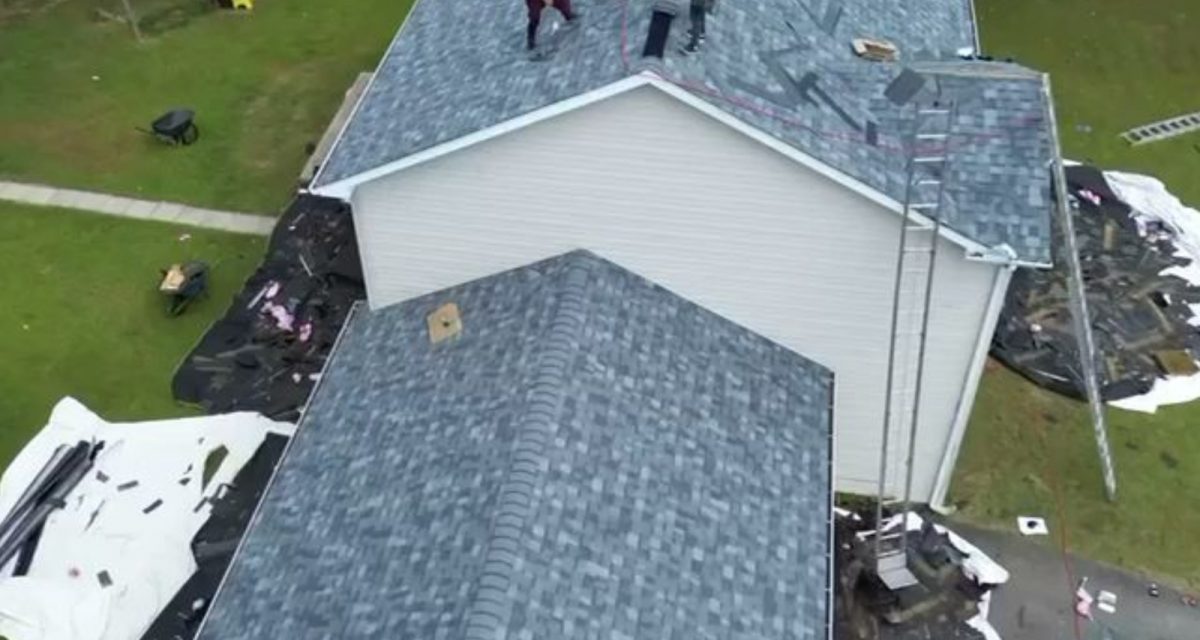
The photograph featured in this article provides a clear look at an active roofing project from above. Several sections of the roof are already covered with new gray asphalt shingles, while other areas show the materials and equipment associated with the ongoing installation.
The image also gives a useful perspective on the complexity of the roof itself. Multiple roof planes, slopes, ridges, and transitions come together across the structure. Completing a project like this requires the roofing crew to work systematically across each section while maintaining consistency throughout the installation.
For All State Roofing & Chimney, professional roofing work is about approaching the project as a complete system rather than focusing only on the appearance of the finished shingles.
Understanding the Roof Replacement Process
A professional roof replacement normally follows a series of important stages.
Before new roofing materials can be installed, the existing roof must be evaluated and the work area prepared. Depending on the condition of the existing system, old roofing materials may need to be removed so the underlying roof surface can be examined.
The photograph shows this process in action.
The completed sections have a consistent shingle pattern, while other parts of the property are still surrounded by roofing materials and construction equipment. This contrast illustrates how a roof changes throughout the course of a project.
A finished roof may appear simple from the ground, but achieving that result requires careful coordination.
The roofing crew must work across different sections of the structure while maintaining proper alignment and installation practices. Areas where roof planes meet require particular attention because these transitions can affect both appearance and water management.
That is why a professional roofing project should be viewed as a complete process rather than simply a change in exterior appearance.
Preparing the Work Area
Preparation is one of the first important stages of a roof replacement.
Before installation progresses, the roofing crew needs an organized work area where materials, ladders, tools, protective coverings, and other equipment can be positioned safely.
The photograph clearly shows the equipment and materials being used around the structure. Roofing projects can generate a considerable amount of material during the removal stage, so controlling the work area is an important part of maintaining an organized project.
Preparation also allows the crew to plan how different sections of the roof will be approached.
This becomes particularly important on a roof with several connected slopes and elevations. Instead of treating the roof as one flat surface, the crew must work through the individual sections while ensuring that the complete roofing system comes together properly.
Good preparation helps create a smoother transition from removal to installation.
Removing Existing Roofing Materials
Another important stage is the removal of the existing roofing materials.
A roof that is being replaced may contain several layers of old shingles or other roofing components. Removing the existing materials gives the roofing contractor an opportunity to evaluate the condition of the roof underneath.
The photograph shows areas around the structure where roofing materials have been removed and collected while installation continues on other sections.
This stage is physically demanding and requires careful organization.
The objective is not simply to remove the old material as quickly as possible. The roofing surface needs to be prepared for the next stage of the project, while debris should be managed responsibly throughout the process.
Once the old materials have been removed, the roofing team can identify areas that require additional preparation before the new roofing system is installed.
Preparing the Roof Surface
The quality of a new roof depends in part on the condition and preparation of the surface beneath it.
During a roof replacement, the contractor should evaluate the exposed roof surface and address issues that could affect the installation of the new roofing materials.
Depending on the individual project, preparation may involve inspecting roof decking, addressing damaged areas, installing appropriate underlayment, and preparing edges, valleys, transitions, and other important areas.
The exact work required will depend on the condition and design of the individual roof.
The photograph demonstrates why this stage is important. The structure contains several connected roof sections, meaning the installation needs to transition correctly from one area to another.
A professional roofing crew must pay attention not only to the large visible surfaces but also to the areas where different sections meet.
These details contribute to both the performance and appearance of the finished roof.
Installing New Shingles
The new gray asphalt shingles are one of the most noticeable elements in the photograph.
Several sections of the roof already show the new shingles installed in consistent rows, creating a clean and uniform appearance.
Asphalt shingles are commonly used for residential roofing systems, and All State Roofing & Chimney identifies asphalt shingle roofing as one of its roofing options.
During installation, the shingles must be properly aligned and secured according to the applicable installation requirements.
The roofing crew also needs to maintain consistency across different roof planes. When multiple sections connect together, careful installation becomes particularly important to achieve a uniform finished appearance.
The objective is not simply to cover the roof.
The new materials form part of a complete roofing system designed to protect the structure from weather exposure while providing the finished appearance visible from the ground.
Working Across Multiple Roof Sections
One of the most interesting aspects of this project is the design of the roof itself.
The aerial photograph shows several distinct roof planes connected across the structure. There are different slopes, ridges, and transition points that the roofing crew must work around.
This type of roof requires careful planning.
A roofing contractor cannot simply install materials in one continuous direction without considering how each section connects to the next. The installation needs to follow the structure of the roof and maintain appropriate transitions between different planes.
This is where experience and attention to detail become especially important.
The finished roof should look consistent across the entire structure, even though the work may have been completed section by section.
The photograph captures that process while it is still underway.
The Importance of Roofing Details
Large areas of shingles are easy to notice, but some of the most important roofing work takes place around smaller details.
Roof edges, ridges, valleys, transitions, flashing areas, and roof penetrations all require appropriate attention.
These areas can be particularly important for managing water.
During a professional roof replacement, the roofing crew needs to consider how water will move across each roof section and how different components connect with one another.
Proper installation of these details can help create a more complete and cohesive roofing system.
It is also important to recognize that not every component of a roofing system is visible after the project is finished. Underlayment, flashing, ventilation components, and other materials may become hidden beneath or around the finished shingles.
This means that the quality of a roof cannot always be judged from the street.
The process behind the finished appearance matters.
Roof Ventilation and Long-Term Performance
Roofing is not only about the materials visible from the outside. Ventilation can also be an important part of an asphalt shingle roofing system.
The Asphalt Roofing Manufacturers Association explains that attic ventilation helps move heat and moisture through the attic space and can contribute to the service life and performance of roofing system materials.
Proper ventilation generally involves balanced intake and exhaust airflow.
ARMA describes intake ventilation near the lower portion of the roof or attic and exhaust ventilation near the upper portion, such as at the ridge.
When a roofing project is being completed, ventilation should therefore be considered as part of the overall roofing system rather than as an unrelated feature.
The exact ventilation requirements depend on the individual building and roofing configuration, so the system should be evaluated as part of the overall project.
External resource:
Use the anchor text “Asphalt Roofing Manufacturers Association ventilation guidance” and link it to the ARMA resource on ventilation.
When adding the external link in WordPress, leave the nofollow option unchecked if you want the link to remain DoFollow.
Final Inspection and Cleanup
A roof replacement is not finished simply because the last shingles have been installed.
A professional project should also include a final review of the completed roofing work.
The roofing crew can inspect the different roof sections, edges, ridges, transitions, and other areas to make sure the installation has been completed properly.
Cleanup is another important part of the process.
The photograph shows an active construction site with roofing materials and equipment around the property. That is expected during the middle of a project.
Once the work is complete, however, the surrounding work area should be cleaned and remaining roofing debris should be properly collected.
The goal is to leave the property with not only a completed roof but also an organized and professionally finished project area.
What This Project Shows About Professional Roofing
This photograph provides more than a view of a new roof.
It shows the work involved behind the finished result.
The different roof sections, the installation in progress, the materials removed from portions of the roof, and the new shingles already installed demonstrate how a roofing project develops from one stage to the next.
A homeowner standing on the ground may only see the finished shingles.
From above, however, the complexity of the structure becomes much more apparent.
Every section needs to connect properly with the surrounding areas. The roofing crew has to work around different slopes and transitions while maintaining a consistent installation.
That is why professional workmanship is important throughout the entire project.
Roof Replacement or Roof Repair?
Not every roofing problem automatically requires a complete roof replacement.
In some situations, a targeted roof repair may be appropriate, particularly when the problem is limited and the remainder of the roofing system is still in suitable condition.
In other cases, a roof may have widespread deterioration or damage that makes a larger replacement project more appropriate.
The All State Roofing & Chimney website provides separate services for roof repair, roof replacement, roof leak repair, and emergency roofing, allowing the appropriate service to be considered based on the condition of the roof.
This is why an inspection is an important starting point.
A professional evaluation can help determine whether a particular roofing problem can be addressed through repair or whether a more comprehensive project should be considered.
The decision should be based on the actual condition of the roofing system rather than simply on the age or appearance of the shingles.
Professional Roof Replacement by All State Roofing & Chimney
The project shown in this photograph represents the type of detailed work involved in a complete residential roofing installation.
From the removal of existing materials to the installation of new asphalt shingles, every stage contributes to the finished result.
All State Roofing & Chimney provides roofing services including roof replacement, roof repair, roof leak repair, new roof installation, and emergency roofing services. The company also lists asphalt shingle, flat, slate, and metal roofing among its roofing options.
The company website also provides dedicated information about its roof replacement services, which can be used as an internal resource from this article.
For homeowners considering roofing work, the most important step is understanding the actual condition of the existing roof and determining what type of work is appropriate.
A professional inspection can provide a clearer picture of the roof’s condition and the work required.
A Finished Roof Begins With Professional Workmanship
The finished appearance of a roof is the result of many individual steps.
Preparation comes first.
Existing materials must be removed carefully. The roof surface must be evaluated. Necessary components must be prepared. New shingles must then be installed across the different sections of the structure, with attention given to transitions, edges, ridges, valleys, and other important areas.
The photograph captures only one moment in that process, but it demonstrates how much work takes place before a homeowner sees the final result.
A professional roof replacement is therefore about more than installing new shingles.
It is about creating a complete roofing system through careful preparation, consistent installation, attention to details, and a thorough final review.
Conclusion
A successful roof replacement requires planning, preparation, skilled installation, and attention to detail from the beginning of the project through completion.
The photograph featured in this article provides a behind-the-scenes view of that process. The new gray shingles, active installation areas, removed roofing materials, equipment, and multiple roof sections show the different stages involved in transforming an existing roof into a newly finished roofing system.
For homeowners, understanding this process can make it easier to recognize the difference between simply replacing visible materials and completing a professional roofing project.
All State Roofing & Chimney provides roofing services for homeowners who need roof replacement, roof repair, leak repair, new roof installation, or emergency roofing assistance.