
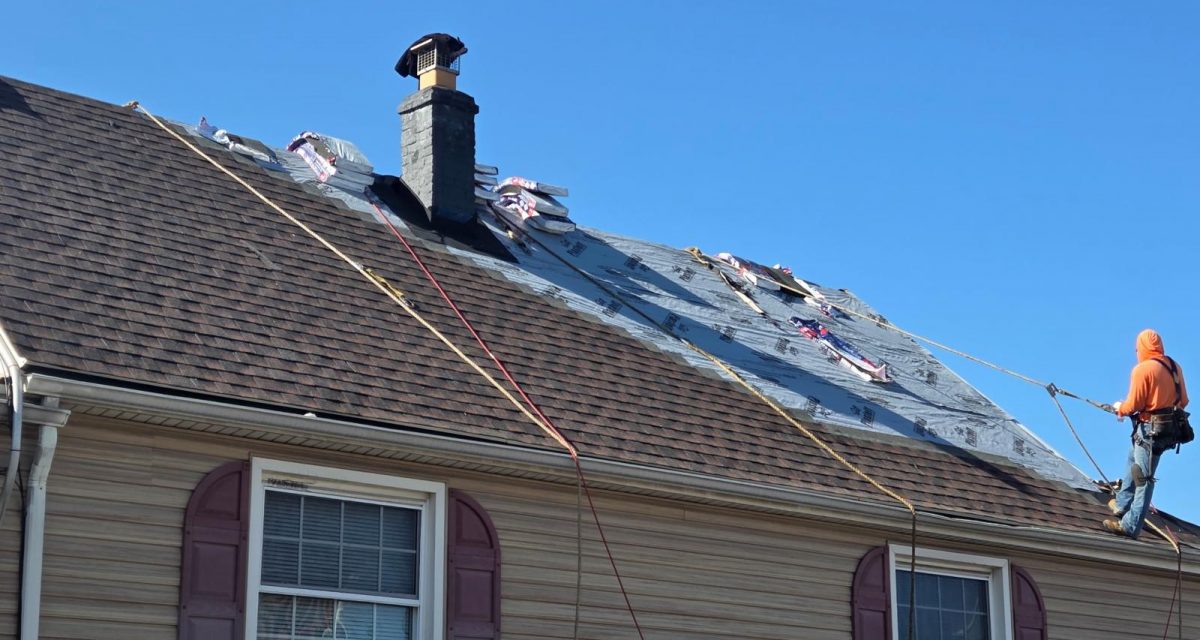
A roof replacement is much more than removing old shingles and placing new roofing materials on a house. The photograph from this project captures an important stage of professional roofing work, where sections of the existing roof have been opened, the underlying surface is being prepared, protective underlayment is visible, and the crew is carefully working around the chimney and roof transitions. This behind-the-scenes view shows why preparation, workmanship, safety, and attention to detail all matter when a roofing system is being rebuilt.
At All State Roofing & Chimney, a professional roof replacement is approached as a complete roofing project rather than a simple change of the visible roof covering. The goal is to prepare the structure correctly, protect vulnerable areas, install the roofing components with care, and leave the property with a finished system designed for dependable performance.
Table of Contents
- Why This Roof Replacement Stage Matters
- What the Photograph Reveals About the Project
- Preparing the Roof Before New Materials Are Installed
- Inspecting the Roof Deck
- The Role of Underlayment
- Working Around a Chimney
- Professional Installation and Roof Transitions
- Safety During Roof Replacement
- When Roof Replacement May Be Appropriate
- Why Workmanship Matters After Installation
- A Complete Roofing System Requires Attention to Detail
- Roof Replacement and Ongoing Roof Care
- Professional Roofing Services from All State Roofing & Chimney
- Final Thoughts
Why This Roof Replacement Stage Matters
The most visible part of a completed roof is usually the shingles. Once installation is finished, homeowners may not realize how much work happened underneath that final surface. During a roof replacement, however, the layers beneath the shingles become temporarily visible, giving a clear picture of how the roofing system is constructed.
In the featured photograph, the roof is being worked on in sections. Existing shingles remain on part of the surface, while another area has been opened and covered with protective roofing material. Bundled materials are positioned near the upper roof, and a roofing professional is working with fall-protection equipment. The masonry chimney creates another important transition that must be handled carefully.
This stage is significant because the final performance of the roof depends on the quality of the work performed before the last shingles are installed. A roof replacement should therefore be treated as a structured process that includes inspection, preparation, installation, detailing, cleanup, and final review.
What the Photograph Reveals About the Project
The image provides a useful look at several elements of an active residential roofing project. The existing shingle surface can be seen on the lower portion of the roof, while a large section higher on the roof has been opened for the next phase of installation. Protective underlayment covers portions of the prepared surface.
The chimney is another prominent feature. Any roof penetration or transition requires careful attention because the roofing material must meet the surrounding structure while maintaining weather protection. Chimneys, vents, skylights, valleys, eaves, and roof edges are all areas where installation details can have a major effect on the completed roofing system.
The photograph also shows the practical nature of roof replacement work. Materials have to be staged properly, crews must move safely across sloped surfaces, and different portions of the roof may progress at different speeds. A professional crew coordinates these activities so that the project can move forward without overlooking important details.
For homeowners, this is one reason it can be valuable to see the work while it is in progress. The finished roof may look simple, but the construction process reveals the number of decisions and installation steps required to create that finished appearance.
Preparing the Roof Before New Materials Are Installed
Preparation is one of the most important stages of a roof replacement. Before new shingles become the finished exterior surface, the existing roofing materials need to be evaluated and removed as required by the scope of the project.
Removing old materials provides access to areas that cannot be properly inspected while they are covered. This allows the roofing crew to identify conditions that may require attention before new materials are installed.
Preparation can involve removing deteriorated roofing components, clearing debris, examining the roof deck, addressing damaged sections, and creating a clean surface for the next layers of the roofing system.
The photograph reflects this principle clearly. The exposed section shows that the project is not simply a cosmetic installation. The crew is working through the underlying stages that support the final roofing surface.
A careful preparation process can also help reduce the chance of installing new materials over an unresolved problem. If damaged decking, poor transitions, deteriorated flashing, or other issues are present, those conditions should be evaluated before the new roofing system is completed.
Inspecting the Roof Deck
The roof deck is an important structural surface beneath the visible roofing materials. During a roof replacement, the condition of this surface deserves careful attention because it supports the layers installed above it.
A deck inspection may reveal areas affected by moisture, deterioration, previous damage, or other conditions. Where replacement or repair of decking is necessary, addressing the problem before the new roof is installed can provide a more appropriate foundation for the finished system.
This is particularly important around areas where water may collect or where roofing materials connect with other building components. The objective is not simply to make the surface look clean. It is to create a suitable base for the roofing layers that follow.
A professional roofing contractor should evaluate the condition of the roof deck as part of the overall project rather than assuming that every roof has the same underlying condition.
The Role of Underlayment
The underlayment visible in the photograph is another important part of the roofing system. It is installed beneath the finished shingles and contributes to the protective layers between the exterior roof surface and the structure below.
Underlayment installation requires attention to coverage, placement, overlaps, and transitions. The exact materials and installation methods can vary depending on the roofing system and project requirements.
Although homeowners may not see the underlayment after the project is complete, it is part of the work that supports the finished roof. This is a good example of why judging a roofing project only by its final appearance does not tell the entire story.
A professional roof replacement considers the roofing system as a whole. The shingles, underlayment, flashing, roof edges, ventilation components, and other details need to work together rather than being treated as separate pieces.
Working Around a Chimney
The chimney shown in the photograph adds another layer of detail to the project. Where a chimney passes through or meets the roofing surface, the installation must be carefully coordinated around the masonry.
Chimney flashing and surrounding roofing materials are particularly important because these areas can become vulnerable to water intrusion if they are not installed or maintained correctly. The roof-to-chimney transition needs to be evaluated as part of the overall replacement.
A complete roofing project should therefore include close attention to existing chimney conditions. Depending on the property, this may involve evaluating flashing, masonry joints, the chimney cap or crown, and the surrounding roof surface.
Because the chimney is a permanent part of the building, the new roofing system has to integrate with it rather than simply stopping at its base. Careful detailing at this transition contributes to the overall weather resistance of the finished roof.
Professional Installation and Roof Transitions
Roof replacement becomes especially detailed when different roof sections meet. Valleys, ridges, eaves, rake edges, penetrations, and changes in roof direction all require accurate installation.
The photograph shows a large sloped roof with a chimney and multiple working areas. A project like this requires the crew to maintain consistent installation practices across the different sections while adapting to the shape and features of the roof.
Shingles need to be aligned correctly, materials must be secured according to the applicable installation requirements, and vulnerable transitions must be handled with care. The goal is to create a continuous roofing system rather than a collection of disconnected sections.
Professional workmanship is also important because small installation errors can affect how the roofing system handles rain and other weather exposure. Correct detailing helps direct water toward the intended drainage paths and away from areas where it could enter the structure.
Safety During Roof Replacement
The photograph clearly shows a roofing professional using safety equipment while working on a steep residential roof. Roof work involves elevated surfaces and fall hazards, so safety procedures are an essential part of professional roofing operations.
OSHA provides guidance for fall protection in residential construction, including the use of appropriate fall-protection systems for workers exposed to elevated fall hazards. The agency identifies personal fall arrest systems, guardrails, safety nets, and other permitted measures as part of the safety framework for residential construction.
Safety is not separate from quality workmanship. A well-organized roofing project needs both careful installation and safe work practices. Crews must be able to move materials, access different roof sections, and complete detailed work while managing the hazards associated with sloped and elevated surfaces.
For homeowners, visible safety equipment is a positive indication that roof work is being approached as a professional construction activity rather than an improvised task.
When Roof Replacement May Be Appropriate
Not every roofing problem requires a complete roof replacement. In some situations, a localized roof repair may address a limited problem. In other cases, the age, condition, extent of damage, or repeated nature of roofing problems may justify a more comprehensive project.
Common signs that a roof needs professional evaluation can include recurring leaks, widespread shingle deterioration, missing or damaged shingles, damaged flashing, sagging areas, visible moisture damage, storm-related damage, or a roofing system that has reached the later part of its expected service life.
The decision should not be based on one symptom alone. A professional inspection can help determine whether the roofing system can be repaired or whether replacement should be considered.
This distinction is important because the right solution depends on the actual condition of the roof. A targeted repair can be appropriate for a localized issue, while a roof replacement may provide a more complete solution when problems are widespread.
Why Workmanship Matters After Installation
A new roof represents a significant investment in the protection of a home. The value of that investment depends not only on the materials selected but also on how those materials are installed.
Professional workmanship includes more than placing shingles in straight rows. It includes preparing the surface, installing protective layers, addressing flashing and transitions, working around roof penetrations, managing drainage, and checking the finished installation.
The photograph provides a useful reminder of this because the project is shown before completion. The final roof is not visible yet, but the quality of the preparation is already part of the finished result.
When the project is completed, many of these details will no longer be visible. That does not make them less important. In fact, the parts that disappear beneath the finished roof can be among the most important components of the system.
A Complete Roofing System Requires Attention to Detail
A roofing system has several interconnected parts. The visible shingles provide the exterior covering, while the layers underneath contribute to weather protection and support. Flashing helps manage vulnerable transitions, and ventilation components can contribute to proper roof and attic performance when designed and installed appropriately.
Roof edges and drainage paths also require careful attention. Water needs to move away from the structure efficiently, while penetrations and transitions need to be protected against moisture intrusion.
This is why a professional roof replacement should be approached systematically. Each stage builds on the stage before it.
The project shown in the photograph illustrates that principle well. The roof is not being treated as one flat surface. Different sections are being prepared, protected, and installed while the crew works around the chimney and other architectural features.
Roof Replacement and Ongoing Roof Care
Even after a roof replacement is complete, ongoing care remains important. Regular visual checks and professional inspections can help identify developing concerns before they become larger problems.
Homeowners should pay attention to signs such as damaged or missing shingles, visible flashing problems, water stains, debris accumulation, or changes in the appearance of roof sections. After severe weather, an inspection can also help identify damage that may not be obvious from ground level.
Maintenance should include connected exterior components as well. Gutters, chimney areas, flashing, vents, and roof drainage paths can all influence how effectively water is managed around the property.
A new roof is designed to provide protection, but it should still be monitored over time. Preventive attention can help preserve the condition of the roofing system and support its long-term performance.
Professional Roofing Services from All State Roofing & Chimney
All State Roofing & Chimney provides roofing and exterior services for homeowners who need professional assistance with roof replacement, roof repair, roof leak repair, emergency roofing, and related chimney services. The company’s published service information confirms these roofing and chimney offerings.
The company’s roof replacement service page explains that its roofing options include asphalt shingle, flat, slate, and metal roofing systems. It also lists chimney inspection, repair, cleaning, cap and crown installation, and chimney flashing repair services.
For a project like the one shown in this photograph, the process should begin with a professional evaluation of the existing roofing system. That evaluation can help identify the condition of the visible roof, the underlying components, vulnerable transitions, and any areas that may require additional work.
All State Roofing & Chimney also provides a free in-house estimate request option for homeowners who want to discuss their roofing or chimney project.
The focus of a professional project should remain on preparation, accurate installation, safety, communication, and attention to detail. These principles help create a roofing system that is not only visually complete but also properly constructed.
Final Thoughts
The photograph captures a valuable moment in a roof replacement: the work is underway, the existing roofing surface is being removed or prepared, protective underlayment is visible, materials are staged, and the crew is working carefully around a chimney and sloped roof.
This stage shows why a professional roofing project involves much more than the final layer of shingles. Proper preparation, roof deck inspection, underlayment installation, chimney detailing, safe work practices, accurate installation, and final inspection all contribute to the completed result.
For homeowners considering a roof replacement, the most important first step is understanding the condition of the existing roofing system. A professional inspection can help determine whether repair, partial work, or a complete replacement is appropriate.
At All State Roofing & Chimney, the objective is to approach each roofing project with careful preparation and professional workmanship. When every stage receives the attention it deserves, the finished roof can provide a clean appearance while serving its primary purpose: protecting the structure below.