
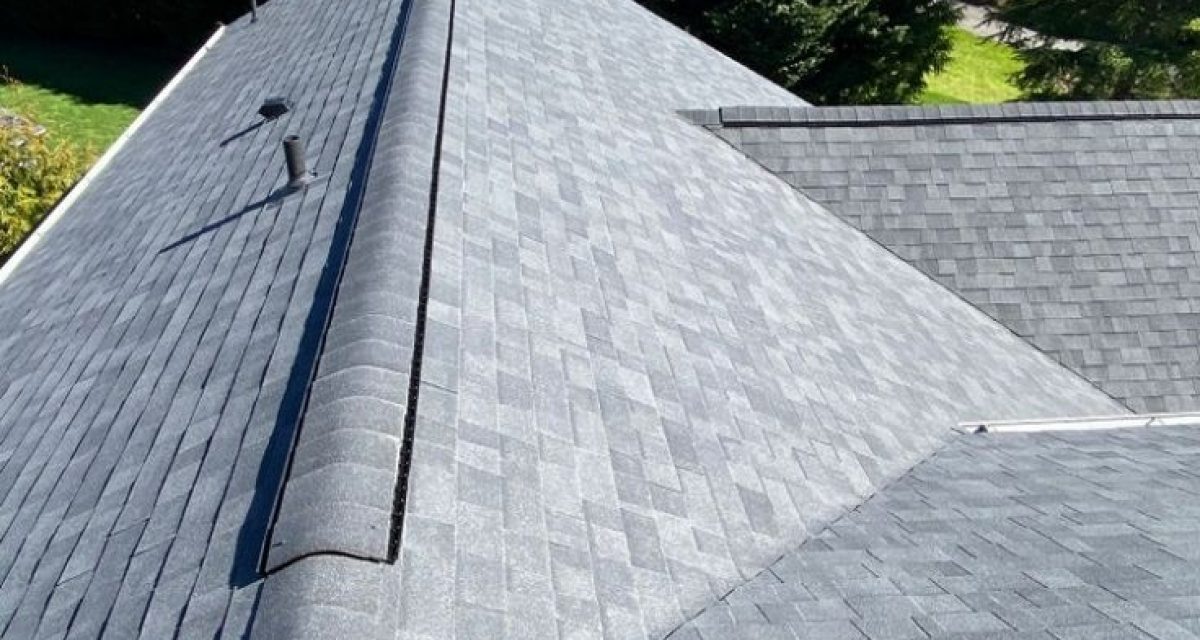
A professional roof replacement is one of the most important investments a homeowner can make to protect a property, improve its exterior appearance, and support long-term structural performance. The completed roofing project featured in this photograph showcases a clean gray shingle surface, carefully defined ridge lines, multiple roof slopes, and consistent installation across several connected roof sections. These details demonstrate why professional roofing requires more than installing shingles. It requires planning, precision, suitable materials, and attention to the components that work together to protect a home from the elements.
At All State Roofing & Chimney, roofing projects are approached with a focus on workmanship, preparation, and the details that contribute to a dependable finished result. Whether a property needs a complete new roofing system, repairs to an existing roof, or an inspection to identify potential problems, understanding the condition of the roof is the first step toward choosing the appropriate solution.
The Importance of Professional Roof Replacement
A roof is the home’s primary barrier against rain, wind, snow, sunlight, and changing outdoor temperatures. Although shingles create the visible appearance of a finished roof, the complete roofing system includes several additional components that must work together to provide effective protection.
A professional roof replacement addresses the condition of the roofing assembly rather than concentrating exclusively on its appearance. The project may involve removing old shingles, examining the roof decking, replacing damaged materials, installing protective underlayment, and carefully fitting new shingles across the roof surface.
The photograph illustrates the finished appearance of a residential roof with gray shingles arranged in consistent courses. The clearly defined ridge cap and orderly transitions between the roof sections contribute to a clean, uniform appearance. Achieving this result requires careful installation practices and a systematic approach to the entire roofing surface.
Homeowners should understand that the appearance of a completed project is only one measure of quality. Proper preparation, flashing, ventilation, drainage, and installation details are equally important to the roof’s overall performance.
A professionally completed roofing system should combine visual consistency with practical weather protection. When these elements are considered together, homeowners can make more informed decisions about maintaining or replacing their roofs.
Understanding the Finished Gray Shingle Roof
The gray shingles shown in the photograph create a balanced, understated appearance that complements the surrounding property. Their consistent color and alignment give the roof a finished look while demonstrating how material selection can influence a home’s exterior character.
Gray roofing is a versatile option for many residential properties because it can complement a wide range of exterior colors, including white, beige, blue, charcoal, and natural wood tones. Depending on the specific shingle product, gray may also include subtle variations that create visual depth across a broad roof surface.
However, selecting a roofing color should involve more than personal preference. Homeowners should consider the exterior siding, trim, architectural style, neighborhood requirements, and the manufacturer’s available product options.
The correct material also depends on the roof’s slope, existing structure, local building requirements, and the property’s exposure to weather. Asphalt shingles are commonly used in residential roofing, but the precise product should be selected according to the project’s needs.
A professional evaluation helps establish which materials are appropriate for the structure. It also provides an opportunity to discuss appearance, durability, installation requirements, and maintenance expectations before work begins.
The goal is to achieve a roof that looks appropriate for the property while providing the protection expected from a properly installed roofing system.
Why Ridge Cap Installation Matters
One of the most noticeable features in the photograph is the raised ridge line running along the upper section of the roof. This area is finished with ridge cap shingles that cover the junction where two opposing roof slopes meet.
The ridge is an important roofing detail because it represents a transition between separate roof planes. The materials installed here must provide appropriate coverage while complementing the surrounding shingles and maintaining the roof’s intended weather resistance.
Ridge cap shingles are specifically designed for these elevated roof intersections. They differ from ordinary field shingles in their intended application and must be installed according to the roofing manufacturer’s instructions.
Proper alignment contributes to the finished appearance of the roof. Uneven placement, inconsistent exposure, or poorly secured materials can detract from the overall finish and may compromise performance if installation requirements are not followed.
Ridge installation can also interact with the roof’s ventilation design. Some residential roofs incorporate ridge ventilation systems, while others use different ventilation arrangements. The correct configuration depends on the building and the roofing system being installed.
A roofing professional should therefore evaluate the ridge as part of the complete assembly rather than treating it as a purely decorative finishing detail.
The clean ridge line shown in the photograph illustrates how carefully finished transitions can contribute to a more organized and professional-looking roof.
Managing Multiple Roof Slopes and Intersections
Residential roofs frequently contain several connected sections with different slopes and orientations. The featured project demonstrates this complexity through its broad central roof plane, adjoining sections, and intersecting rooflines.
Each roof plane must be considered individually during installation because water movement, material placement, and detailing can vary according to the roof’s geometry.
Where two roof sections meet, the roofing system must manage runoff without allowing water to penetrate vulnerable joints. Depending on the configuration, these areas may require carefully fitted shingles, flashing, or other components specified for the roofing assembly.
Valleys deserve particular attention because they collect and direct water from adjoining slopes. Their construction must be appropriate for the roof design, the selected materials, and applicable installation requirements.
The transitions between roof planes also affect how installers lay out shingle courses. Consistent alignment across visible sections helps create a uniform appearance, while accurate cutting and fitting are necessary around edges and intersections.
These details become especially important on larger roofs, where even small inconsistencies may be noticeable across an extensive surface.
Professional installation involves planning the sequence of work so that each section connects correctly with the next. This organized process supports a more consistent finish and helps ensure that the roofing system functions as a coordinated whole.
Roof Deck Inspection and Preparation
Although the roof decking is hidden beneath the finished shingles, it provides the supporting surface for the roofing materials above it. Its condition is therefore a critical consideration during a complete roof replacement.
Before new shingles are installed, the existing roof structure should be evaluated for visible deterioration, moisture damage, weakened areas, and other conditions that could affect the installation.
If old roofing materials are removed, previously concealed problems may become easier to identify. Damaged or unsuitable decking may need repair or replacement before the new roofing system can be installed.
Installing shingles over an inadequate surface can create unnecessary complications and may interfere with proper fastening. For this reason, the preparation stage should not be rushed or overlooked.
A professional roofing contractor should determine the necessary work based on the actual condition of the roof. Not every project requires extensive decking replacement, and repairs should be limited to the areas that genuinely need attention.
Once the supporting surface is ready, the installation can proceed according to the selected roofing system’s specifications.
This behind-the-scenes preparation may not be visible in the completed photograph, but it remains an essential part of responsible roofing work. The finished appearance depends on the quality of the underlying surface as well as the shingles that cover it.
Underlayment and Moisture Protection
Roofing shingles provide the primary visible covering, but they are not the only component responsible for managing moisture. Underlayment forms another layer within many residential roofing assemblies and provides additional protection beneath the shingles.
The type of underlayment and the method of installation depend on the roofing materials, roof configuration, manufacturer’s requirements, and applicable building codes.
Proper installation includes attention to overlaps, edges, valleys, penetrations, and other locations where water management is especially important. The objective is to create an integrated assembly in which each component performs its intended role.
Underlayment should not be viewed as a substitute for correct shingle installation or properly detailed flashing. Instead, these components work together as part of a complete roofing system.
Moisture protection also depends on the condition of the roof deck and the way water is directed toward the roof edges and drainage system.
Homeowners planning a roof replacement should ask which protective materials will be used and how the installation will address vulnerable areas. Clear communication helps establish expectations before construction begins.
For additional information about maintaining residential buildings and preventing moisture problems, homeowners can consult the U.S. Environmental Protection Agency’s guidance on moisture control and building maintenance.
Flashing Around Roof Penetrations
A finished roof contains more than shingles and ridge caps. Pipes, vents, chimneys, skylights, and other features may interrupt the roofing surface and create transitions that require specialized detailing.
Flashing is used in appropriate locations to help direct water away from vulnerable joints and prevent moisture from entering the building. Its design and installation depend on the specific roof detail and the materials involved.
The photograph includes a visible roof penetration on the left-hand roof plane. The image does not establish the condition of its flashing, but it highlights why these components deserve attention during a roofing inspection.
A professional assessment should examine the surrounding shingles and the relevant flashing components for visible deterioration, separation, damage, or other signs that may warrant repair.
Where a chimney meets a roof, the transition requires particular care because roofing materials connect with vertical masonry. Chimney flashing, counterflashing, and the condition of the surrounding roof should be evaluated as appropriate to the structure.
Because All State Roofing & Chimney provides roofing and chimney services, homeowners can discuss related concerns when arranging an inspection.
Addressing these details during a roof replacement may help prevent avoidable problems and supports a more complete approach to exterior protection.
Roof Ventilation and Long-Term Performance
Ventilation is another important consideration when evaluating a residential roofing system. An appropriately designed attic ventilation arrangement helps manage heat and moisture in the attic space, depending on the building’s construction and climate.
The correct solution depends on factors such as attic configuration, insulation, air sealing, existing ventilation openings, and applicable building requirements. A roof replacement provides an opportunity to assess these conditions and determine whether improvements are necessary.
Ridge vents, soffit vents, gable vents, and other ventilation components serve different functions within a ventilation design. They should not be added or modified without considering how the overall system is intended to operate.
Insufficient ventilation, excessive indoor moisture, and air leakage can contribute to moisture-related concerns in some buildings. However, ventilation is only one part of the solution; insulation and air sealing also influence attic conditions.
A professional roofing evaluation can help identify visible concerns and determine whether further assessment is appropriate.
For homeowners, the important point is that roof performance depends on more than the exterior covering. The structure, moisture management, ventilation, and roofing materials must be considered together to support reliable performance.
Recognizing When Roof Replacement Is Necessary
Not every roofing problem requires a complete replacement. In some situations, targeted repairs may be sufficient to address localized damage and maintain an otherwise serviceable roof.
However, widespread deterioration, recurring leaks, extensive storm damage, or repeated repairs may indicate that a more comprehensive solution deserves consideration.
Homeowners should watch for missing or damaged shingles, exposed roofing materials, deteriorated flashing, recurring water stains, and other visible warning signs. These conditions do not automatically confirm that a roof must be replaced, but they justify a professional evaluation.
The age of the roofing system is also relevant. Different materials have different expected service lives, and actual performance depends on installation quality, weather exposure, maintenance, and other factors.
An inspection should consider the roof’s overall condition, the extent of any damage, the state of the underlying materials, and the practicality of continued repairs.
All State Roofing & Chimney provides roof repair, roof leak repair, and roof replacement services to help homeowners evaluate available options.
For additional guidance, read the company’s related article on professional roof replacement.
The best recommendation is one based on the property’s actual condition rather than an assumption that every aging roof needs the same solution.
Choosing Materials for a New Roofing System
Material selection affects the appearance, installation requirements, maintenance, and expected performance of a replacement roof. Homeowners should review the available options with a qualified roofing professional before making a final decision.
When considering asphalt shingles, relevant factors include product specifications, wind-resistance ratings, warranty terms, color, compatibility with the roof design, and manufacturer installation requirements.
Homeowners should also consider the supporting components, including underlayment, flashing, ventilation, and ridge materials. Choosing shingles alone does not define the complete roofing system.
Material compatibility matters because roofing components are designed to function within particular assemblies. Using suitable products and following the manufacturer’s instructions helps establish a consistent installation approach.
A written estimate should describe the proposed work and identify the main materials included. It should also clarify whether decking repairs, flashing replacement, disposal, or other related tasks are included or may require additional approval.
These discussions help homeowners understand what the project involves before installation begins.
The gray finish in the featured photograph provides an example of how a neutral roofing color can create a clean and coordinated exterior. The appropriate choice for another property, however, should reflect its own architectural design and material requirements.
The Value of a Professional Roofing Inspection
A professional roofing inspection helps homeowners understand the condition of the existing roof and identify areas that may require maintenance, repair, or replacement.
The inspection should extend beyond the most visible shingles. Depending on accessibility and safety, the assessment may include ridge caps, roof edges, valleys, flashing, penetrations, ventilation components, and signs of moisture-related deterioration.
Interior observations can also provide useful information. Water stains, damp insulation, peeling finishes, or musty odors may indicate moisture problems that deserve investigation, although these symptoms can have causes unrelated to the roof.
An inspection should distinguish between confirmed damage and conditions that require additional evaluation. This helps avoid unnecessary work and supports more informed decisions.
For homeowners comparing estimates, it is useful to understand the proposed scope, the materials specified, the treatment of vulnerable transitions, and the cleanup arrangements.
A clear explanation of the recommended work makes it easier to evaluate the options available for the property.
All State Roofing & Chimney can help homeowners assess roofing concerns and determine the next steps appropriate to their situation. The objective is to identify the problem accurately and develop a practical plan for maintaining the property’s exterior protection.
Maintaining a Roof After Installation
A new roof still benefits from periodic attention. Although proper installation is essential, ongoing maintenance can help homeowners identify developing problems before they become more extensive.
A sensible maintenance approach includes looking for visible changes, checking for missing or damaged shingles after significant weather events, and paying attention to signs of water intrusion inside the home.
Roof inspections should be performed safely. Homeowners should not climb onto steep or slippery roofs to examine possible damage. A qualified professional can assess difficult-to-access areas using appropriate safety procedures.
Gutters and downspouts also contribute to effective water management. When these systems become obstructed, water may not drain as intended, potentially affecting roof edges and other parts of the exterior.
Trees should be managed so that branches do not repeatedly scrape against roofing materials or create avoidable maintenance problems. Roof penetrations and flashing should also receive attention when inspections identify concerns.
Maintenance requirements vary according to the roof design, materials, exposure, and manufacturer’s recommendations.
For broader guidance on roofing materials and professional maintenance practices, homeowners can consult the National Roofing Contractors Association.
Regular attention does not eliminate every roofing problem, but it can help homeowners respond more promptly when deterioration or damage becomes apparent.
Professional Workmanship from Start to Finish
The completed roof in the photograph demonstrates how consistent shingle placement, a defined ridge line, and carefully coordinated roof sections contribute to a polished final appearance.
However, professional workmanship should be evaluated across the entire project. Preparation, material handling, fastening, flashing, ventilation considerations, waste management, and final inspection all contribute to the overall result.
A well-organized roofing project follows an appropriate sequence. Existing materials are evaluated and removed where required, the supporting surface is prepared, protective components are installed, and the shingles and finishing details are completed according to the selected system’s specifications.
The finished roof should then be reviewed for visible installation concerns, incomplete details, debris, and other issues that need attention before the project is considered complete.
Homeowners should receive clear information about the work performed, relevant product documentation, and applicable warranty terms.
Professional communication is also important. Questions about materials, scheduling, unexpected conditions, or recommended repairs should be addressed clearly throughout the project.
These practices help homeowners understand the work being completed and why each stage matters.
The result should be more than an attractive surface. It should be a carefully assembled roofing system intended to provide dependable protection under the conditions for which it was designed.
Why Homeowners Choose All State Roofing & Chimney
Roofing work requires attention to both visible finishes and the components that remain concealed after installation. All State Roofing & Chimney provides residential roofing services focused on evaluating roof conditions and addressing the work appropriate to each property.
Services include roof replacement, roof repair, roof leak repair, emergency roofing, and chimney-related work. This combination is particularly useful when a roofing concern may involve flashing, roof penetrations, or transitions around masonry.
Every property has its own requirements. The roof’s configuration, material condition, existing damage, and underlying structure all influence the recommended approach.
A professional assessment helps establish whether localized repairs are appropriate or a complete replacement should be considered. When replacement is necessary, careful planning and installation help bring the different roofing components together into a coordinated system.
Homeowners should expect a clear explanation of the proposed work and an opportunity to discuss material choices and project requirements before construction begins.
For another example of the company’s approach to roofing details, visit its article about professional roofing craftsmanship and quality results.
The goal is to provide practical roofing solutions that address the property’s needs while maintaining attention to installation quality, weather protection, and the appearance of the finished roof.
Protect Your Home with Professional Roof Replacement
The gray shingle roof featured in this project demonstrates the visual benefits of a clean, consistent roofing installation. Its defined ridge cap, orderly shingle courses, and coordinated roof sections create a finished appearance that complements the surrounding property.
Achieving a result like this requires careful consideration of the complete roofing system. Roof decking, underlayment, flashing, ventilation, shingles, and finishing details each contribute to the overall performance of the installation.
For homeowners experiencing leaks, visible deterioration, storm damage, or concerns about an aging roof, a professional inspection provides a useful starting point. It helps clarify the roof’s condition and whether repair or complete replacement is the more appropriate option.
All State Roofing & Chimney is available to discuss residential roofing and chimney needs, explain potential solutions, and help homeowners plan the work their property requires.