
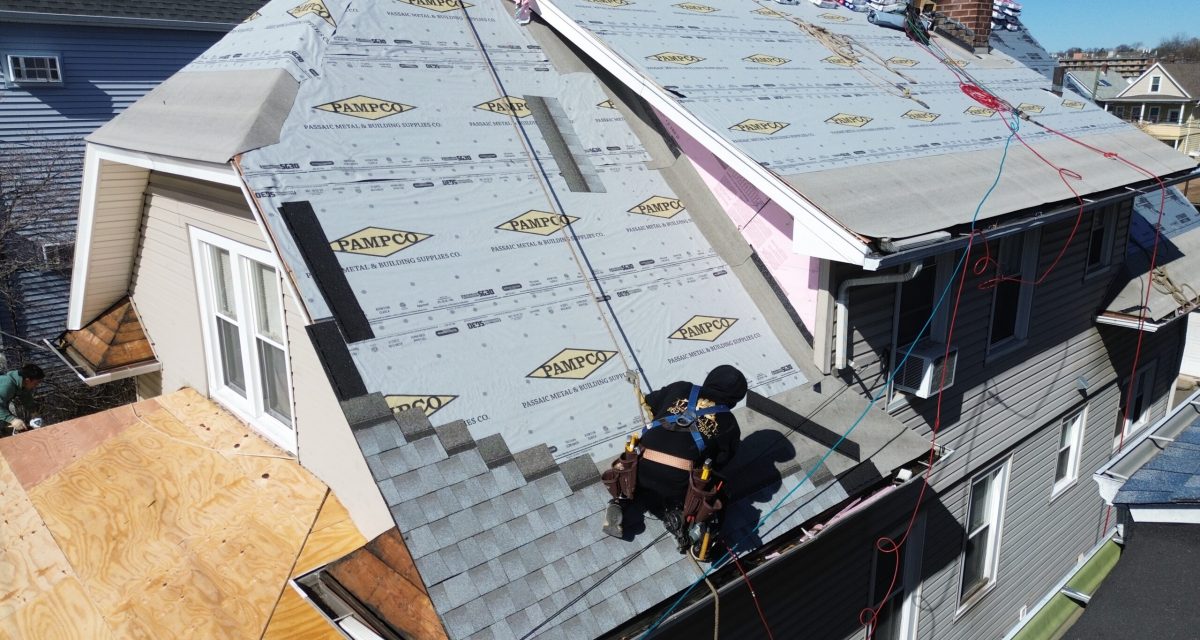
A professional roof replacement is one of the most important investments a property owner can make to protect a home from rain, wind, snow, and long-term moisture damage. A properly installed roofing system does much more than improve the appearance of a house. It creates a protective barrier, helps preserve the structural components beneath the roof, and contributes to the property’s long-term performance. The roof replacement project shown in this photograph highlights the importance of careful preparation, quality underlayment, accurate shingle installation, and professional workmanship at every stage of construction.
During this project, the roofing crew is installing new gray asphalt shingles across a sloped roof while other sections remain covered with protective underlayment. The exposed roof decking, partially completed shingle courses, and carefully positioned materials show why a complete roofing installation requires planning, technical knowledge, and attention to detail. Each section must be prepared correctly before the next layer can be installed.
At All State Roofing and Chimney, the goal of a successful roofing project is to create a dependable roofing system that combines durability, weather resistance, and a clean, professional finish. Every roof has its own layout, slope, drainage requirements, and vulnerable connection points. Understanding these details helps ensure that the completed installation provides reliable protection rather than focusing only on the visible roofing materials.
Understanding the Roof Replacement Process
A complete roof replacement involves several connected stages, beginning with an assessment of the existing roof and continuing through surface preparation, protective membrane installation, shingle placement, flashing details, and final inspection. The quality of the finished roof depends on how well these stages work together.
Unlike a minor roof repair, a replacement project provides an opportunity to examine the underlying structure and address problems that may have developed beneath the old roofing materials. Damaged shingles, worn underlayment, deteriorated decking, and previous moisture intrusion can all affect the performance of a new roofing system if they are not properly evaluated.
The photograph illustrates a project in progress rather than a finished installation. Several roof sections have been prepared with underlayment, while gray shingles have already been installed along the lower portion of the sloped surface. This stage demonstrates how professional roofers work systematically across different sections, protecting exposed areas and maintaining an organized installation process.
A reliable roof replacement should be planned around the property’s existing conditions, the selected roofing products, manufacturer instructions, and applicable building codes. Proper sequencing is essential because roofing materials are designed to function as a complete assembly, with each layer supporting the performance of the layers above and below it.
Why Professional Roof Replacement Matters
A roof is constantly exposed to environmental conditions that can gradually weaken roofing materials. Heavy rainfall, changing temperatures, wind-driven debris, snow accumulation, and prolonged sunlight can contribute to deterioration over time. When an existing roof begins to fail, replacing the affected roofing system may provide a more dependable long-term solution than repeatedly repairing isolated problems.
One of the primary benefits of professional roof replacement is the opportunity to evaluate the roof deck before installing new materials. The decking supports the roofing assembly and provides the fastening surface for shingles. If sections are soft, warped, delaminated, or weakened by moisture, those areas may require repair or replacement before installation continues.
A properly planned replacement also allows roofers to evaluate flashing, drainage paths, roof edges, valleys, and chimney connections. These areas deserve particular attention because water can enter through poorly integrated joints even when the shingles themselves are in good condition.
Another important advantage is the ability to establish a consistent installation standard across the entire roof. Correct material placement, appropriate fastening, properly overlapped underlayment, and carefully finished transitions all contribute to the performance of the completed system.
For property owners, the objective is not simply to install new shingles. It is to create a roof assembly that manages water effectively, protects vulnerable structural components, and maintains its appearance through years of seasonal exposure.
Roof Deck Preparation and Structural Inspection
Before new roofing materials can be installed, the condition of the underlying roof deck must be assessed. The deck is generally constructed from structural wood panels or boards that provide the base for the roofing system. Its condition directly affects the stability of the materials installed above it.
During a roof replacement, removing old roofing materials can reveal damage that was not visible during an exterior inspection. Past leaks, trapped moisture, inadequate ventilation, and prolonged exposure to water can cause deterioration in localized areas. A professional contractor evaluates these conditions and determines which repairs are necessary before proceeding.
The plywood visible along the lower-left portion of the photograph illustrates the importance of a properly prepared roof surface. Where new decking is installed, the panels must be suitable for the application and secured according to the structural requirements and applicable installation specifications. Existing sound decking should also be checked for secure fastening and an appropriate surface condition.
A consistent roof deck helps shingles lie flat and allows fasteners to achieve the required holding performance. Uneven surfaces, loose panels, and damaged wood can interfere with the finished appearance and may compromise the installation if left unaddressed.
Deck preparation also includes checking roof edges, transitions, valleys, and areas surrounding chimneys or other penetrations. These details help determine how underlayment and flashing should be integrated with the rest of the roofing system.
Thorough preparation is an essential part of professional roof replacement because defects hidden beneath the shingles can affect the durability of the entire installation. Correcting problems before the roof is covered helps establish a stronger foundation for the finished work.
Roofing Underlayment and Moisture Protection
The protective sheet material covering the larger roof sections in the photograph is an important part of the installation process. Roofing underlayment is installed beneath the finished roof covering and serves as a secondary water-management layer. Although shingles provide the primary exterior protection, underlayment adds another level of defense against moisture reaching the roof deck.
The performance of this layer depends on selecting a suitable product and installing it according to the manufacturer’s instructions and local building requirements. Underlayment must be properly positioned, fastened, and overlapped so that water is directed toward the roof drainage system rather than beneath the protective layers.
During roof replacement, roofers must also account for weather conditions while the roof is partially exposed. Unprotected decking can be vulnerable to sudden rainfall, which makes careful scheduling and temporary protection particularly important. Work should be organized so that exposed sections are covered or otherwise protected when weather conditions require it.
Different roof areas may require different protective details. Eaves, valleys, roof-to-wall intersections, and penetrations can experience increased water exposure. Depending on the roof design, climate, product specifications, and applicable codes, specialized self-adhered membranes may be required or recommended in these locations.
The U.S. Department of Energy’s Building Science Education resources explain how self-sealing membranes can help protect roof eaves and how properly integrated water-control layers reduce the risk of water intrusion. These principles are especially relevant when planning a replacement that must perform reliably during changing weather conditions.
Reference: https://bsesc.energy.gov/energy-basics/sealing-eaves-self-sealing-membrane
Installing Asphalt Shingles With Precision
The gray asphalt shingles visible on the lower roof section demonstrate the next major stage of the project. Shingle installation requires a consistent layout, accurate alignment, correct fastening, and careful attention to the manufacturer’s instructions.
Asphalt shingles are installed in overlapping courses designed to shed water down the roof slope. Each course must align with the specified exposure and pattern so that the finished surface provides the intended coverage. Small errors in positioning can become more noticeable as installation progresses across a large roof.
Roofers begin by establishing the appropriate starting course and following the layout recommended for the selected shingle product. Starter materials, field shingles, and ridge or hip components each have specific roles within the roofing assembly. Using compatible products and following the approved installation sequence helps create a consistent finished surface.
Fastening is equally important. Nails must be placed in the designated fastening area and installed according to the manufacturer’s requirements. Incorrect placement, insufficient penetration, or overdriven fasteners can affect the shingles’ ability to remain secure. The required fastening pattern may vary by product and application, so installation should never rely on guesswork.
The photograph shows the shingles being installed in neat, overlapping rows. Maintaining this pattern helps create a uniform appearance and supports the roof’s ability to direct water toward the eaves.
For additional technical guidance, homeowners and contractors can consult the official Owens Corning shingle installation instructions. These instructions demonstrate why installation details must be matched to the specific roofing product rather than treated as identical for every shingle system.
Roof Valleys, Edges, and Transition Details
Roof valleys and edges require particular care during a replacement because these areas influence how water moves across the roofing surface. A valley forms where two sloping roof planes meet, concentrating runoff from the adjoining sections. If the valley is not correctly protected, water can reach the underlying structure.
The roof in the photograph includes multiple intersecting planes and changes in direction. Such configurations require careful coordination between the underlayment, shingles, flashing, and edge components. The installation method should follow the roofing system’s design and the manufacturer’s approved details.
At the eaves and rake edges, properly installed metal drip edge and compatible underlayment help manage water at the perimeter. These components must be integrated in the correct sequence so that runoff moves away from vulnerable wood surfaces rather than behind the exterior edge.
Roof-to-wall intersections also need appropriate flashing. When a sloping roof meets a vertical wall, water must be directed safely over the roofing surface without entering the joint. Step flashing and other compatible flashing components are commonly used where the roof design requires them.
The Building Science Education resource on structural penetrations explains how flashing and self-adhered membranes can help protect locations where a roof meets a wall or chimney.
Reference: https://bsesc.energy.gov/energy-basics/sealing-structural-penetrations
These details are particularly important for a durable roof replacement because water intrusion often begins at transitions rather than in the middle of an otherwise correctly installed shingle field. A professional installation addresses these locations as part of the complete roofing system.
Chimney Flashing and Roof Protection
Chimneys are important features to evaluate during roof replacement because the connection between masonry and roofing materials can be vulnerable to water intrusion. A chimney may remain structurally sound while the flashing around its base deteriorates, separates, or becomes improperly integrated with the surrounding roof.
The photograph shows a brick chimney rising above the roof surface. Although the image does not establish whether chimney repairs are required, its presence highlights the importance of inspecting this connection during the replacement process.
Chimney flashing must be selected and installed according to the chimney configuration, roofing materials, and applicable construction requirements. The goal is to create a properly integrated water-shedding detail that directs runoff away from the joint. Depending on the design, this may involve step flashing, counterflashing, and appropriate sealing details.
Roofers should also look for damaged masonry joints, loose flashing, deteriorated sealant, staining, and signs of moisture around the chimney. If problems are discovered, the appropriate repair should be determined before the surrounding roofing work is considered complete.
It is important to distinguish between roofing work and masonry repairs. Replacing shingles alone will not resolve a deteriorated chimney crown, damaged mortar, or other masonry-related problem. When an inspection identifies issues beyond the roofing system, the property owner should receive a clear explanation of the necessary work.
Coordinating roof replacement with a chimney inspection can help identify potential weaknesses at the intersection of these two building components. This approach supports more complete moisture protection and reduces the chance that an overlooked connection will undermine the new roofing installation.
Roof Safety and Professional Workmanship
Working on a sloped roof requires appropriate safety planning, particularly when the surface is steep and several roofing materials are being handled simultaneously. The photograph shows a roofing professional wearing a harness while working on the partially completed shingle section. This illustrates the importance of using suitable fall-protection equipment and organizing work around the roof’s physical conditions.
Professional workmanship includes more than the visible installation of shingles. It also involves planning material movement, maintaining clear work areas, protecting surrounding property, and following appropriate safety procedures throughout the project.
Roofing materials should be staged in a way that considers roof geometry, structural loading, and manufacturer recommendations. Tools and supplies must be secured, and workers need safe access to the areas being completed. Safety arrangements should be appropriate for the height, pitch, weather conditions, and scope of the job.
Weather also influences how roofing work should proceed. Wet surfaces, strong winds, extreme temperatures, and approaching storms can increase hazards and affect installation quality. A responsible contractor considers these conditions when determining whether work can continue safely.
Attention to safety benefits both the roofing crew and the property owner. A well-managed worksite reduces unnecessary disruption and supports a more organized installation process.
The goal is to complete the replacement efficiently without compromising the quality of the roofing assembly or the safety standards required for elevated construction work.
Choosing Roofing Materials for Long-Term Performance
Selecting the right roofing materials is an important part of planning a roof replacement. Asphalt shingles are widely used on residential properties because they offer a broad range of styles, colors, and product specifications. However, the best choice depends on the home’s design, roof pitch, local climate, budget, and the performance characteristics of the selected product.
The gray shingles shown in the photograph create a neutral, consistent appearance that complements the home’s exterior. Color is an important design consideration, but it should not be the only factor guiding a material decision.
Property owners should review product specifications, warranty conditions, wind-resistance information, and installation requirements before making a selection. A roofing system must be installed as intended for its published performance characteristics and warranty terms to apply.
Compatibility between roofing components also matters. Shingles, underlayment, starter strips, ridge products, flashing, and ventilation components should be selected and installed as a coordinated system. Combining incompatible materials or ignoring installation requirements can affect performance.
It is also useful to consider the availability of replacement materials and the maintenance needs associated with a particular product. A qualified roofing contractor can explain the differences between suitable options and help homeowners choose materials that fit the property’s needs.
A well-informed decision balances appearance, durability, proper installation, and long-term value rather than relying on the lowest initial price alone.
Roof Ventilation and Moisture Management
A durable roofing system depends on appropriate moisture management both above and below the roof deck. Exterior layers help shed precipitation, while attic ventilation and air control influence how heat and moisture move through the building.
Inadequate ventilation, uncontrolled air leakage, or excessive indoor moisture can contribute to condensation under certain conditions. Over time, persistent moisture may affect roof decking, insulation, and other building materials. A replacement project provides an opportunity to evaluate whether the existing ventilation arrangement is suitable for the home’s design.
Ventilation requirements vary according to the roof assembly, attic configuration, insulation strategy, and applicable codes. Contractors should evaluate the existing conditions rather than automatically assuming that additional vents or a particular ventilation product is appropriate for every property.
Intake and exhaust ventilation should be considered together where a ventilated attic design is used. Simply adding an exhaust vent without adequate intake air may not achieve the intended result. Likewise, ventilation should not be treated as a substitute for repairing leaks or addressing uncontrolled air movement.
The roofing system shown in the photograph is still under construction, so its final ventilation performance cannot be determined from the image alone. However, a complete roof replacement should consider these underlying building conditions as well as the exterior shingles.
Integrating sound moisture management into the project helps support the longevity of the roof assembly and the protection of the home beneath it.
Quality Control During Roof Replacement
Quality control should take place throughout the replacement process rather than only after all materials have been installed. Inspecting each stage allows potential problems to be identified while the relevant components are still accessible.
Before covering the roof deck, the contractor should confirm that necessary repairs have been completed and that the surface is suitable for the new roofing system. Underlayment and specialized protective membranes should be checked for proper positioning, fastening, and overlap.
During shingle installation, the crew should verify alignment, fastening, course exposure, and the treatment of edges and transitions. Flashing around chimneys, walls, valleys, and other penetrations should be reviewed carefully because these details are essential to water management.
The final inspection should examine the completed roof for visible installation concerns, incomplete details, damaged materials, and remaining debris. Gutters and drainage paths should be checked to ensure that construction waste has not obstructed them.
A responsible contractor should also explain any maintenance recommendations, provide relevant product and warranty documentation, and identify any limitations or follow-up work that may be necessary.
Photographic documentation can be useful because it records concealed components before they are covered. The progress image supplied for this project already illustrates the value of documenting the installation, particularly the underlayment and partially completed shingle courses.
Consistent quality control helps ensure that the finished roof reflects the intended installation standards rather than simply appearing complete from the ground.
Warning Signs That a Roof May Need Replacement
Not every roofing problem requires a complete replacement, but certain conditions can indicate that a more extensive evaluation is necessary. Persistent leaks, widespread shingle deterioration, recurring repair needs, visible sagging, and extensive storm damage may suggest that the existing roof is approaching the end of its useful service life.
Missing, cracked, curling, or badly worn shingles can leave sections of the roof more vulnerable to moisture. Water stains on ceilings or attic surfaces may indicate a roofing problem, although the actual source should be investigated because plumbing and condensation can produce similar symptoms.
Granule accumulation in gutters, damaged flashing, deteriorated roof edges, and signs of moisture around a chimney can also justify a professional inspection. These conditions do not automatically prove that the entire roof must be replaced, but they should not be ignored.
The appropriate solution depends on the roof’s age, overall condition, extent of damage, and the feasibility of repairing the affected areas. A localized issue on an otherwise serviceable roof may be addressed with a targeted repair. Widespread deterioration or repeated failures may make roof replacement a more practical long-term option.
A professional assessment helps property owners understand the difference between an isolated defect and a system-wide problem. Making that distinction supports informed budgeting and helps prevent unnecessary work.
Maintaining a Newly Replaced Roof
Even a professionally installed roof benefits from periodic inspection and basic maintenance. After a replacement, homeowners should pay attention to visible changes, drainage performance, and the condition of accessible roofing components.
Gutters should remain clear enough to carry rainwater away from the roof and foundation. Blocked drainage can cause water to overflow near roof edges and contribute to moisture problems around the exterior of the building.
After significant storms, homeowners can look for visible signs of missing shingles, displaced materials, or debris from a safe location on the ground. They should avoid climbing onto steep roofs to investigate problems themselves. If damage is suspected, a qualified professional can inspect the affected area safely.
Attic inspections may also help reveal warning signs such as unusual dampness, water staining, or changes in the condition of visible roof decking. Persistent condensation or unexplained moisture should be evaluated rather than covered up with a cosmetic repair.
Trees should be maintained so that overhanging branches do not repeatedly scrape roofing materials or deposit excessive debris. Any trimming near electrical lines should be handled by qualified professionals.
Homeowners should also retain invoices, warranty documentation, product information, and photographs from the installation. These records can be valuable when planning maintenance or discussing a future concern with the contractor.
Regular attention does not eliminate every roofing risk, but it can help identify developing problems before they lead to more extensive damage.
The Value of a Professional Roofing Contractor
A successful roof replacement depends on choosing a contractor who understands the complete roofing assembly and approaches each stage with care. The work involves evaluating existing conditions, selecting compatible materials, protecting the structure, following installation specifications, and checking the completed system.
Property owners should look for clear communication, a detailed written estimate, an explanation of the proposed materials, and information about workmanship coverage and manufacturer warranties. They should also confirm applicable licensing, insurance, permits, and local requirements before work begins.
A professional contractor should explain what the project includes and how unexpected conditions, such as deteriorated decking discovered during removal, will be handled. This transparency helps homeowners understand the scope of work and avoid confusion about additional repairs.
The photograph demonstrates several visible aspects of a replacement project: protective underlayment, new shingle installation, exposed decking in a separate section, and the use of fall-protection equipment. These details reflect why roofing work requires coordination and attention beyond simply laying new materials over an existing surface.
For homeowners considering a replacement, the priority should be a complete, properly installed system that addresses the roof’s actual needs. Professional planning and execution can help protect the investment and support dependable performance over time.
Professional Roof Replacement by All State Roofing and Chimney
The roof replacement project shown in this photograph demonstrates the importance of preparation, suitable protective layers, accurate shingle placement, and careful attention to roof transitions. From the exposed decking to the newly installed gray shingles, each stage contributes to the performance and appearance of the completed roofing system.
At All State Roofing and Chimney, homeowners can discuss their roofing concerns, the condition of their existing roof, and the options available for replacement or repair. Every property should be evaluated according to its specific requirements, including the condition of the roof deck, drainage details, flashing, and chimney connections.
Whether a roof has reached the end of its service life or has developed problems that require professional attention, a thorough assessment helps determine the most appropriate next step. The objective is to deliver roofing work that prioritizes sound preparation, dependable materials, and careful installation.
To learn more about the company and its roofing services, visit the All State Roofing and Chimney website.
A well-executed roof replacement is an investment in the protection, appearance, and long-term condition of a home. By focusing on the complete roofing system and paying attention to the details that are not always visible after installation, property owners can make more informed decisions about protecting their property for the years ahead.