
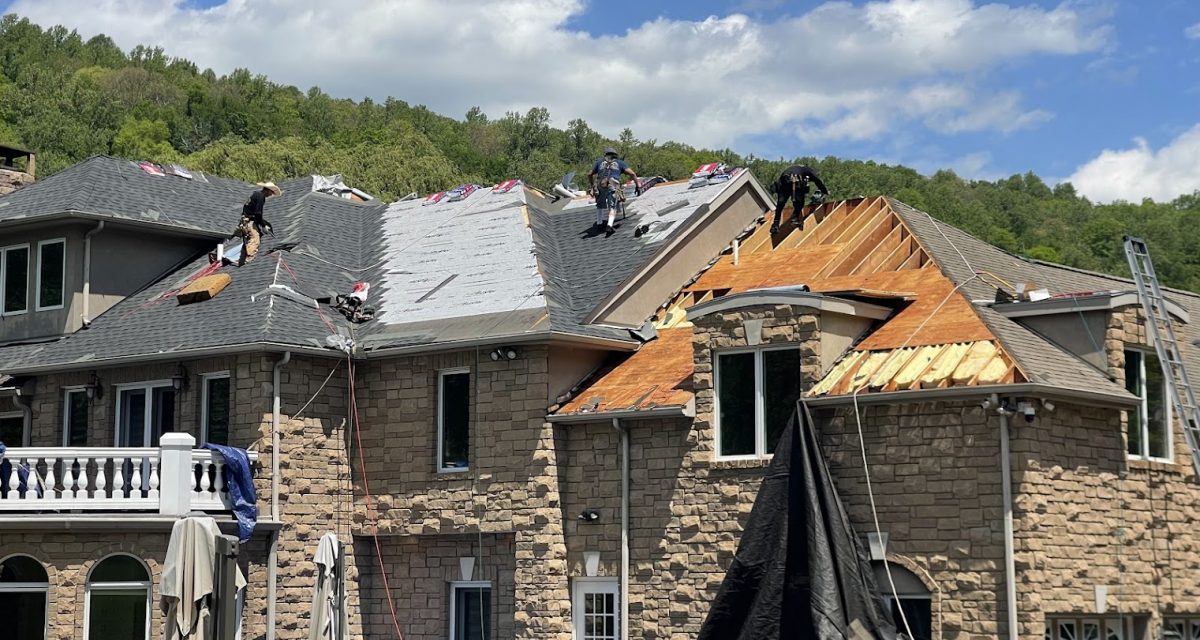
A professional roof replacement involves more than removing old shingles and installing new roofing materials. It requires careful preparation, inspection of the exposed roof decking, installation of protective underlayment, and precise workmanship across every section of the roof. The photograph accompanying this article captures these stages in progress on a large residential property, showing exposed wooden decking, installed underlayment, completed shingle sections, and several intersecting rooflines.
For homeowners, understanding the roof replacement process helps explain why preparation and installation details matter. The condition of the supporting surface, the placement of protective materials, and the treatment of roof valleys and transitions all influence the performance of the finished roofing system.
All State Roofing and Chimney provides roofing services for homeowners seeking assistance with roof replacement, roof repair, and related roofing concerns. This project illustrates the importance of evaluating the roof as a complete system rather than focusing only on its final appearance.
Table of Contents
- Why Roof Replacement Requires Careful Planning
- Removing Old Roofing Materials
- Inspecting and Preparing the Roof Decking
- Installing Protective Underlayment
- Installing New Roofing Shingles
- Managing Valleys, Ridges, and Roof Transitions
- Protecting the Property During Installation
- Roof Replacement or Roof Repair?
- Final Inspection and Maintenance
- Professional Roofing Services from All State Roofing and Chimney
Why Roof Replacement Requires Careful Planning
A successful roof replacement begins with an evaluation of the existing roofing system. Before work starts, the contractor should assess the visible condition of the shingles, roof edges, flashing, drainage components, and accessible structural areas.
The photograph shows a roof with multiple slopes, intersecting sections, valleys, and changes in elevation. These features require a coordinated installation approach because each roof plane must connect correctly with the surrounding sections.
Planning helps establish the sequence of removal, inspection, preparation, and installation. It also helps identify areas that may require additional work once the existing roofing materials have been removed.
The objective is to create a complete roofing assembly that manages water effectively and provides suitable protection for the underlying structure. A clean appearance is important, but the finished roof must also be supported by sound decking and correctly installed protective layers.
Removing Old Roofing Materials
Removing the existing roofing materials is an important stage when a complete roof replacement is necessary. Old shingles and other materials scheduled for removal must be taken off carefully so the underlying surface can be examined.
The photograph shows sections where the original roof covering has been removed, exposing the wooden surface beneath it. Other areas retain completed shingles, while underlayment covers part of the prepared roof. This contrast illustrates how a large roofing project progresses section by section.
Removing the old materials provides an opportunity to identify concerns that may have been concealed. These can include deteriorated decking, moisture damage, loose fasteners, or other defects requiring attention before installation continues.
Debris must also be managed appropriately to maintain an organized work area and reduce the risk of damage to the surrounding property. The removal process should follow the project specifications and account for the condition of the existing roof.
Proper preparation at this stage helps establish the conditions needed for the new roofing materials to be installed correctly.
Inspecting and Preparing the Roof Decking
Roof decking provides the supporting surface beneath the roofing materials. Its condition is a fundamental consideration during roof replacement because new shingles should not be installed over unsuitable or damaged decking.
Once the existing covering has been removed, the exposed surface should be examined for soft areas, moisture damage, deterioration, delamination, and inadequate fastening. Damaged panels may need to be repaired or replaced before the next installation stage.
The exposed wooden panels in the photograph show why this inspection matters. Removing the outer roofing materials gives the contractor access to areas that cannot be fully evaluated while covered.
The required work depends on the actual condition of the decking. Sound sections may remain in place, while deteriorated areas may require corrective work. Any replacement panels must be suitable for the roofing assembly and installed according to applicable requirements.
Preparing the deck properly creates a stable base for the subsequent layers. It also helps prevent problems associated with uneven surfaces, unsuitable fastening, and concealed damage.
For further information about this stage, homeowners can review the company’s article on roof decking replacement.
Installing Protective Underlayment
Underlayment is installed over the prepared roof deck and beneath the exterior roofing materials. It provides an additional layer of protection as part of the complete roofing system.
In the photograph, a broad section of light-colored underlayment is visible across the central roof area. This shows the stage between preparing the underlying surface and completing the shingle installation.
The underlayment must be appropriate for the roofing system, roof slope, and installation requirements. Its placement, overlaps, fastening, and integration with other protective components should follow the applicable product instructions and building requirements.
Particular attention is necessary around roof valleys, edges, penetrations, and other transitions. These areas may require specific materials or additional protection according to the roof design.
Underlayment does not replace properly installed shingles or flashing. Instead, it works with these components to help protect the structure from moisture intrusion.
A carefully prepared and protected roof deck provides an important foundation for the remaining installation work.
Installing New Roofing Shingles
The completed sections in the photograph show dark gray shingles arranged across several roof planes. These areas provide a clear contrast with the exposed decking and underlayment on the sections still being prepared.
During roof replacement, shingles must be installed according to the manufacturer’s specifications. Correct positioning, fastening, alignment, and integration with adjacent courses all contribute to the finished roofing system.
The installation must also account for roof edges, ridges, valleys, and changes in direction. These details require more attention than a simple uninterrupted roof plane because water must be directed away from vulnerable joints.
Material selection should consider the roof design, the homeowner’s preferences, the product specifications, and the property’s requirements. Architectural asphalt shingles are a common residential option, but the suitability of any roofing material depends on the individual project.
The appearance of the finished roof depends on consistent installation, but performance is equally important. Proper fastening and careful detailing help the shingles function as part of a coordinated system rather than as an isolated exterior covering.
Managing Valleys, Ridges, and Roof Transitions
The roof shown in the photograph has several intersecting sections and changes in elevation. These features make careful installation essential because water moves differently across adjoining roof planes.
Valleys collect water from two roof slopes and direct it toward the drainage path. Their construction must follow the requirements of the selected roofing system. Incorrectly installed valley materials can create vulnerable points where water may enter the roof assembly.
Ridges and hips require appropriate finishing to cover exposed edges and maintain continuity between roof sections. Dormers and other projections may also require correctly integrated flashing and carefully fitted shingles.
Chimney and wall connections deserve particular attention whenever they are present within the roofing area. Flashing must be integrated with the surrounding materials to direct water away from joints and penetrations.
The photograph does not establish the condition of every concealed connection, so these areas should be assessed during the actual project rather than assumed to be defective or already repaired.
Correctly addressing transitions helps maintain the continuity of the roofing system and reduces the likelihood of problems developing around vulnerable details.
Protecting the Property During Installation
Roof replacement involves removing materials, moving equipment, and working across elevated surfaces. Protecting the property and maintaining an organized work area are therefore important parts of the process.
The photograph shows materials and equipment positioned around the work area, along with protective coverings near portions of the building. These visible details highlight the importance of planning material handling and managing the area beneath the roof.
Depending on the property, appropriate precautions may include protecting landscaping, covering vulnerable exterior features, controlling debris, and keeping access routes clear.
Weather conditions must also be considered. When sections of the roof are open, unexpected rainfall can expose the decking and interior areas to moisture. Work should be organized to minimize unnecessary exposure, with suitable temporary protection used when needed.
Roofing work also presents serious fall hazards. Contractors must use appropriate fall-protection measures and follow applicable safety requirements. The Occupational Safety and Health Administration provides guidance on fall protection in residential construction.
An organized work area and suitable protective measures help support a more controlled roofing project while limiting unnecessary risks to workers and the property.
Roof Replacement or Roof Repair?
Not every roofing problem requires a complete roof replacement. In some cases, a targeted repair may be sufficient when the damage is localized and the surrounding roofing system remains in serviceable condition.
Roof repair may be appropriate for isolated shingle damage, a limited flashing problem, or another defect that can be corrected without replacing the entire system.
Replacement may be worth considering when deterioration is widespread, leaks continue to recur, extensive damage affects the roofing materials, or the existing system is approaching the end of its useful service life.
The correct decision should be based on an inspection of the roof’s actual condition. The assessment may include visible shingles, roof edges, flashing, drainage details, and the condition of the decking where it can be accessed.
Homeowners can learn more about the differences by reading the company’s guide to professional roof repair.
A clear assessment helps determine whether localized repairs are reasonable or whether a complete roof replacement is the more appropriate solution.
Final Inspection and Maintenance
Completing the installation is not the only consideration in a roofing project. The finished work should be reviewed to confirm that the agreed-upon installation stages and visible details have been addressed.
The inspection should consider shingle alignment, roof edges, ridges, valleys, flashing, and other relevant transitions. Any outstanding concerns should be identified and addressed according to the project requirements.
Cleanup is another important part of completion. Removed roofing materials and construction debris should be managed appropriately, and the surrounding work area should be left in an orderly condition.
After installation, periodic inspections can help identify missing shingles, displaced flashing, blocked drainage areas, and other visible concerns. Inspections following severe weather may also help identify damage that needs professional attention.
Homeowners should avoid unsafe attempts to access steep or elevated roof surfaces. A qualified roofing professional can assess conditions that are difficult to inspect safely from the ground.
Maintaining records of the roofing materials, installation details, warranties, inspections, and subsequent repairs can also support better long-term maintenance decisions.
Professional Roof Replacement from All State Roofing and Chimney
The project shown in the photograph illustrates the different stages involved in a substantial residential roof replacement. Exposed decking, installed underlayment, completed shingle sections, and intersecting roof planes demonstrate why preparation and careful installation are essential.
All State Roofing and Chimney lists roof replacement, roof repair, roof leak repair, and emergency roofing among its services. The appropriate solution depends on the condition of the property and the work identified during an assessment.
Homeowners should request a clear explanation of the proposed scope, the materials to be installed, the treatment of roof transitions, and the process for addressing any damaged decking discovered during removal.
A professional estimate should explain which tasks are included and identify any additional work that may require separate approval. This helps homeowners understand the project before installation proceeds.
For information about the company’s roofing services, visit All State Roofing and Chimney’s official homepage. The link takes readers directly to the company’s main website, where they can explore available services and contact information.