
A properly completed roof installation is one of the most important investments a property owner can make to protect a home against changing weather conditions, moisture intrusion, and long-term structural deterioration. A roofing system must do more than provide an attractive exterior appearance. It must combine dependable materials, correctly installed protective layers, carefully positioned shingles, and professional workmanship to create a durable barrier between the building and the elements.
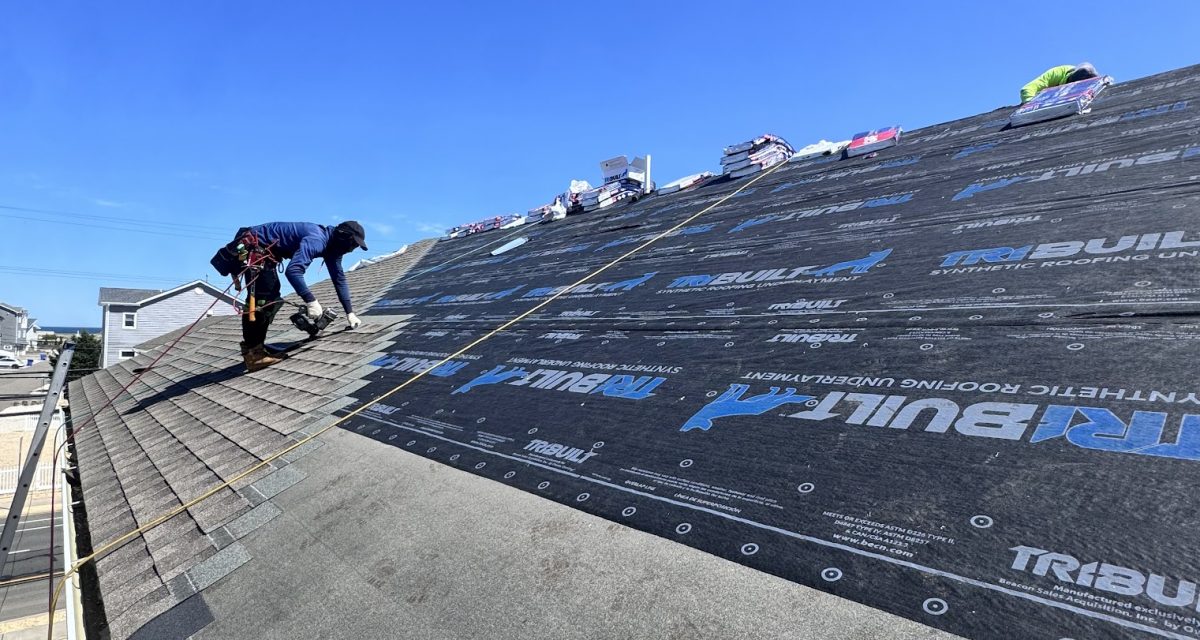
The roofing project shown in this photograph demonstrates an important stage of asphalt shingle installation. A substantial section of the roof is covered with black synthetic roofing underlayment, while asphalt shingles are being installed across another section of the sloped surface. Roofing materials are organized along the upper portion of the roof, allowing the installation team to continue working across the prepared surface.
The photograph also highlights the importance of precision when working on a steep roof. The installers are positioned carefully on the sloped structure, using safety equipment while handling roofing materials and aligning the shingle courses. This type of work requires experience, attention to detail, and an understanding of how the different components of a roofing system work together.
At All State Roofing & Chimney, professional roofing services are focused on delivering dependable protection through appropriate materials and careful installation practices. Every roofing project deserves attention to the details that influence its performance, from the protective underlayment beneath the shingles to the alignment and fastening of the finished roofing surface.
Understanding these installation stages helps homeowners recognize why professional workmanship matters and what to look for when investing in a new roofing system.
Table of Contents
- Understanding the Importance of Professional Roof Installation
- Preparing the Roof Surface Before Installation
- The Role of Synthetic Roofing Underlayment
- Why Proper Underlayment Installation Matters
- Installing Asphalt Shingles With Precision
- The Importance of Correct Shingle Alignment and Fastening
- Working Safely on Steep Roofing Structures
- Roofing Materials and Their Long-Term Performance
- Weather Protection and Water Management
- Roof Ventilation and Moisture Control
- Common Roofing Installation Problems to Avoid
- Why Professional Workmanship Makes a Difference
- When Should Homeowners Consider a New Roof?
- Maintaining a Newly Installed Roofing System
- Professional Roofing Services From All State Roofing & Chimney
Understanding the Importance of Professional Roof Installation
A roofing system is a combination of materials and components designed to protect a property from rain, wind, sunlight, snow, and other environmental conditions. Although asphalt shingles are the most visible part of many residential roofs, their performance depends on the layers and installation details beneath them.
Professional roof installation requires a systematic approach. Each stage must be completed with consideration for the next one. The roof deck provides the supporting surface, underlayment creates an additional protective layer, and the shingles form the exterior covering that helps direct water away from the structure.
When these components are installed correctly, they work together as a complete roofing assembly. When important details are overlooked, even attractive roofing materials may fail to provide the expected level of protection.
The photograph illustrates this relationship particularly well. The exposed synthetic underlayment covers a large portion of the roof, while the completed shingle section demonstrates how the exterior roofing material is installed over the protective layer.
This is an important distinction for homeowners. A quality roofing project should never be evaluated exclusively by the appearance of the finished shingles. The preparation and installation work beneath the visible surface deserves equal attention.
Choosing experienced roofing professionals helps ensure that the installation process considers the entire roofing system rather than concentrating only on its final appearance.
Preparing the Roof Surface Before Installation
The foundation of a reliable roofing system begins with the condition of the roof deck. This structural surface supports the underlayment, roofing nails, and shingles. If the decking is damaged, uneven, or unable to hold fasteners properly, the performance of the entire roof may be affected.
Before installing new roofing materials, contractors should evaluate the surface and determine whether it is suitable for the selected roofing system.
For a complete roof replacement, preparation may include removing existing roofing materials, clearing loose nails, removing debris, and examining the exposed decking. Any deteriorated sections should be assessed and addressed before new materials are installed.
The roof deck should provide a sufficiently smooth and stable surface. Loose boards, damaged plywood, moisture-related deterioration, and other structural concerns can interfere with proper installation.
It is also important to examine the roof’s edges, valleys, transitions, and penetrations. These locations require appropriate detailing because they are potential points where water can enter if the roofing assembly is not properly constructed.
Although the photograph focuses on the underlayment and shingle installation stages, proper preparation is an essential part of the broader process. The visible work depends on having a suitable supporting surface beneath it.
A professional contractor should never treat preparation as an unnecessary step. Taking time to evaluate the roof before installation helps prevent problems that could otherwise remain hidden beneath the finished roofing materials.
The Role of Synthetic Roofing Underlayment
One of the most noticeable features in the photograph is the black synthetic roofing underlayment covering the exposed roof surface. The printed material is identified as TRI-BUILT synthetic roofing underlayment.
This protective layer is installed beneath the exterior roofing material and provides an additional line of defense against moisture. Asphalt shingles are designed to shed water, but a properly specified underlayment provides supplementary protection for the roof deck.
Synthetic underlayment is commonly used in modern steep-slope roofing assemblies because it provides a practical protective layer during installation and beneath the completed roof covering.
Its exact properties depend on the product selected. Different products may have different requirements for approved applications, fastening patterns, exposure periods, and installation methods.
The underlayment visible in the photograph covers a significant portion of the roof, demonstrating how this layer is incorporated into the installation process before the remaining shingles are placed.
One important consideration is that underlayment is not a substitute for properly installed shingles, flashing, or other roofing components. It is part of a complete system, and its performance depends on correct installation and compatibility with the materials above and below it.
The Asphalt Roofing Manufacturers Association’s guidance on steep-slope roofing underlayment explains why asphalt shingles should be installed over an appropriate roofing underlayment rather than directly over an uncovered wood roof deck.
Homeowners should also understand that synthetic products are not automatically interchangeable. The selected material must meet the requirements of the intended roofing application and follow its manufacturer’s instructions.
Why Proper Underlayment Installation Matters
Installing synthetic underlayment requires more than simply rolling material across the roof. The placement, fastening, and overlapping of individual sections are important details that influence the protective performance of the roofing assembly.
Underlayment is generally installed in horizontal courses, beginning near the lower edge of the roof and progressing upward. This arrangement allows upper sections to overlap lower sections so that water is directed toward the eaves rather than behind the protective layer.
The exact overlap dimensions and fastening requirements depend on the manufacturer’s instructions, roof slope, product specifications, and applicable building requirements.
Wrinkles, poorly secured edges, incorrect overlaps, and damaged sections can create unnecessary weaknesses. Installers must pay attention to the surface as each course is positioned.
The underlayment should also be secured using the appropriate fasteners and fastening pattern. The goal is to keep the material properly positioned while avoiding unnecessary damage.
Another consideration is exposure to weather before the shingles are installed. Underlayment products have specific limitations regarding how long they may remain exposed. Installation teams should coordinate their work so that the protective layer is covered within the manufacturer’s recommended period.
The photograph provides a clear example of the importance of this stage. The exposed black membrane represents a substantial part of the installation surface, and its condition matters before the remaining asphalt shingles cover it.
For further technical guidance, homeowners and contractors can consult the Owens Corning roofing installation instructions, which explain underlayment selection and installation considerations for compatible asphalt shingle systems.
Installing Asphalt Shingles With Precision
Once the appropriate underlayment and other required protective components are in place, the installation team can proceed with the asphalt shingles.
In the photograph, shingles have already been installed across a section of the roof, creating a visible contrast between the finished gray roofing surface and the black underlayment that remains exposed.
Asphalt shingles are popular for residential properties because they offer a combination of appearance, material availability, and practical weather protection. They are manufactured in different styles, profiles, and colors, allowing property owners to select an exterior finish that complements their home.
However, the quality of the finished roof depends heavily on how these materials are installed.
Shingles must be positioned according to the manufacturer’s layout requirements. Each course needs to maintain consistent alignment, appropriate exposure, and the correct offset from the course below it.
This arrangement helps avoid continuous vertical joints and supports the intended water-shedding design.
Installers must also pay attention to the roof’s edges and transitions. Starter shingles, ridge components, valley details, and flashing systems each have specific functions within the completed assembly.
A professional installation should maintain consistency across the entire roof surface. Irregular spacing, uneven rows, or careless cutting can affect both appearance and performance.
The work visible in the photograph demonstrates the careful positioning required when installing shingles across a sloped roof. Every completed course becomes part of the protective exterior system.
The Importance of Correct Shingle Alignment and Fastening
Shingle alignment is one of the details that separates a carefully executed roofing project from an installation where appearance and performance may be compromised.
Each shingle must be positioned according to the manufacturer’s specified exposure and offset. These dimensions vary according to the particular shingle design, so installers should not rely on a universal pattern for every product.
Fastening is equally important. Roofing nails must be placed in the designated fastening area, using the specified number, type, and length for the selected shingles and roof assembly.
A nail driven too deeply can damage the shingle surface. A nail that is not properly seated may interfere with the intended sealing and alignment of the material.
Incorrect nail placement can also reduce the ability of shingles to resist wind forces. This is especially important in areas where roofing materials may experience strong gusts or severe weather.
Professional installers follow the manufacturer’s fastening instructions rather than choosing a pattern based on convenience.
The GAF asphalt shingle installation guide provides useful information about preparation, underlayment, starter shingles, fastening, and ridge installation.
The objective is to create a consistent roofing surface in which each component is installed according to its intended function.
Working Safely on Steep Roofing Structures
The photograph also highlights another essential part of professional roofing work: job-site safety.
The roof has a noticeable slope, and the installers are working at an elevated position while handling materials. One worker is visible using safety equipment and positioning carefully along the shingled section.
Steep-slope roofing requires specialized precautions because the working surface creates additional fall hazards. Even experienced installers must use appropriate equipment and follow established safety procedures.
Depending on the project, safety measures may include suitable fall-protection systems, properly anchored lifelines, harnesses, appropriate footwear, secured access equipment, and organized material placement.
Weather conditions also influence job-site safety. Rain, moisture, frost, loose debris, and excessive wind can make roof surfaces hazardous.
Materials should be positioned carefully to reduce unnecessary movement and avoid creating obstacles along the working area.
A well-organized installation process supports both productivity and safety. Workers need sufficient space to handle materials, maintain secure positioning, and complete their tasks without unnecessary risks.
Homeowners should recognize that professional roofing is not simply about the speed of installation. Responsible contractors must also consider the safety of their employees, the property, and everyone around the work area.
Roofing Materials and Their Long-Term Performance
Selecting the appropriate roofing material is an important part of planning a new roof. Different systems offer different characteristics, installation requirements, appearances, and maintenance considerations.
Asphalt shingles remain a widely used choice for residential properties. They are available in several styles and colors, making them suitable for many architectural designs.
Metal roofing offers another option for property owners seeking a different appearance and roofing construction. Depending on the selected system, metal roofs can provide long-term performance with specific maintenance requirements.
Slate roofing is known for its distinctive appearance and substantial durability when correctly installed over a suitable supporting structure.
Flat roofing systems require materials and installation methods appropriate for low-slope applications. Their water-management requirements differ from those of conventional steep-slope shingle roofs.
All State Roofing & Chimney provides information about different roofing options through its roof installation services page.
The right choice depends on several factors, including roof design, structural suitability, project requirements, appearance preferences, and budget.
A professional assessment helps determine which materials are appropriate for the property. The goal should be to select a system that satisfies the building’s requirements rather than choosing materials based on appearance alone.
Weather Protection and Water Management
A roof must manage water effectively throughout its entire surface. Rainwater should move from the upper portions of the roof toward the eaves and into the appropriate drainage system without entering the underlying structure.
This process depends on several connected components.
The shingles create the primary exterior surface, while underlayment provides additional protection beneath them. Flashing protects vulnerable transitions, and properly designed drainage components help direct water away from the building.
Roof valleys deserve particular attention because they collect water from intersecting roof sections. These areas require an appropriate valley design and installation method.
Roof penetrations, including plumbing vents and other openings, also require compatible flashing details. The flashing must be integrated with the surrounding roofing materials so that water can move away from these locations.
Roof edges require appropriate detailing as well. Drip edge components help guide water away from the roof edge and protect the underlying construction when correctly installed.
The specific materials and installation sequence depend on the roof design and applicable manufacturer instructions.
A complete roofing project should account for these details rather than treating shingles as the only important component.
When water-management details are properly planned, the roofing system is better positioned to protect the building against moisture-related problems.
Roof Ventilation and Moisture Control
Ventilation is another important consideration when installing a residential roofing system.
A properly designed attic ventilation system helps manage heat and moisture within the roof assembly. Without adequate ventilation, moisture-laden air may accumulate in attic spaces, potentially contributing to condensation and other building concerns.
Ventilation generally involves a balanced arrangement of intake and exhaust openings. Intake ventilation is commonly located near the lower roof edges, while exhaust ventilation may be positioned near the roof’s upper portions.
The correct design depends on the building layout, attic configuration, existing ventilation openings, and applicable requirements.
Roofing contractors should consider the existing ventilation system when planning a new installation. Replacing the shingles without evaluating ventilation may leave an important part of the roofing assembly unaddressed.
Homeowners should also understand that ventilation is not a substitute for repairing roof leaks or correcting moisture problems caused by other sources.
The GAF installation instructions emphasize the importance of appropriate roof deck conditions, underlayment, fastening, and ventilation for the specified shingle system.
A professional assessment can help determine whether the current ventilation arrangement is appropriate or whether improvements should be considered during the roofing project.
Common Roofing Installation Problems to Avoid
Even high-quality materials can experience performance problems when important installation details are overlooked.
One common concern is insufficient preparation of the roof deck. Installing new materials over a damaged or unstable surface can compromise the support required for the completed system.
Another problem involves incorrect underlayment placement. Poor overlaps, loose sections, and failure to follow product instructions may reduce the effectiveness of this protective layer.
Improper shingle fastening is another concern. Incorrect nail placement, unsuitable fasteners, or inconsistent fastening patterns can affect how securely the shingles remain attached.
Uneven shingle courses may create an inconsistent finished appearance and indicate that installation measurements were not maintained properly.
Flashing details should never be overlooked. Areas around roof penetrations, valleys, and wall transitions require appropriate materials and careful integration.
Inadequate ventilation may also contribute to moisture-related concerns within the roof assembly.
Finally, leaving roofing materials exposed beyond their approved exposure period can create unnecessary risks. Installation schedules should account for the manufacturer’s recommendations and changing weather conditions.
Avoiding these problems requires planning, product knowledge, and attention to detail throughout the project.
A professional roof installation should be evaluated as a complete system, with every stage receiving appropriate consideration.
Why Professional Workmanship Makes a Difference
Roofing work requires technical knowledge, practical experience, and an understanding of how different materials interact.
The installation process involves more than placing shingles across a surface. Contractors must evaluate the roof structure, select compatible products, prepare the surface, install protective layers, and complete the exterior covering according to applicable requirements.
Professional workmanship is particularly important on roofs with steep slopes, multiple sections, complex edges, or different roof penetrations.
Experienced installers understand that small details can influence long-term performance. Consistent alignment, correct fastening, properly installed underlayment, and carefully finished transitions all contribute to the overall quality of the work.
At All State Roofing & Chimney, roofing services include roof installation, roof replacement, leak repair, and emergency roofing assistance.
The company’s website also provides information about its roof replacement services and other available roofing solutions.
Choosing a qualified contractor also gives property owners an opportunity to discuss material options, project expectations, installation procedures, and the condition of the existing roofing system.
A clear project plan helps homeowners understand what work is required and why particular materials or installation methods are recommended.
When Should Homeowners Consider a New Roof?
Not every roofing concern requires a complete replacement. Some problems can be addressed through targeted repairs, while others indicate that a larger roofing project may be appropriate.
Missing, cracked, curling, or deteriorated shingles can expose vulnerable sections of the roof to weather conditions.
Recurring leaks may indicate that the roofing surface, flashing, or another component is no longer performing as intended.
Water stains on ceilings and walls should also be investigated because moisture can travel from its original entry point before becoming visible inside the property.
Sagging areas, deteriorated decking, and extensive damage deserve prompt professional attention.
Age is another consideration. Different roofing materials have different expected service lives, and actual performance depends on installation quality, maintenance, exposure, and environmental conditions.
A professional inspection helps determine whether repair or replacement is the more appropriate solution.
For homeowners experiencing water intrusion, professional roof leak repair may help identify and address the source of the problem.
When a roofing system has widespread deterioration or repeated failures, a new installation may provide a more practical long-term solution.
The important point is to evaluate the roof’s actual condition rather than assuming that every damaged shingle requires a complete replacement.
Maintaining a Newly Installed Roofing System
After a new roof has been installed, regular maintenance can help property owners identify potential concerns before they become more serious.
A visual inspection after significant weather events can help identify missing shingles, visible damage, or debris accumulation.
Gutters and downspouts should be kept clear so that rainwater can move away from the building as intended. Blocked drainage components may contribute to water accumulation around roof edges.
Trees near the property should also be monitored. Overhanging branches can drop debris onto the roof, while branches that contact roofing materials may cause physical damage.
Homeowners should pay attention to interior warning signs, including water stains, damp insulation, unusual odors, or visible moisture in attic spaces.
Periodic professional inspections can provide a more detailed evaluation of the roofing surface, flashing, drainage, and other accessible components.
Roof inspections should be performed by qualified professionals using appropriate safety procedures. Homeowners should avoid climbing onto steep roofing surfaces to investigate problems themselves.
Maintenance does not eliminate normal material aging, but it can help identify developing issues and support the continued performance of the roofing system.
Keeping records of installation details, product information, and maintenance work can also be useful when planning future inspections or repairs.
Professional Roofing Services From All State Roofing & Chimney
The installation shown in the photograph demonstrates how several important elements come together during a roofing project. Synthetic underlayment provides an additional protective layer, while asphalt shingles create the visible exterior surface. Careful placement, appropriate fastening, and organized workmanship help bring these components together into a complete roofing assembly.
For homeowners considering a new roof, understanding the installation process is an important first step. The quality of the finished system depends not only on the materials selected but also on the preparation, technical details, and professional attention given to each stage.
All State Roofing & Chimney provides roofing services for residential properties throughout New Jersey, including roof installation, roof replacement, roof leak repair, and emergency roofing services.
The company serves homeowners across Bergen, Passaic, Hudson, Essex, Morris, Hunterdon, Somerset, Sussex, Union, and Warren Counties.
Whether a property requires a new asphalt shingle system, an assessment of an aging roof, or professional attention to an existing roofing concern, the first step is understanding the property’s specific needs.
Homeowners can explore the company’s professional roofing services to learn more about available solutions and request information about their project.