
Roof installation is one of the most important investments a homeowner can make in the safety, appearance, and long-term performance of a property. A properly installed roofing system helps protect the home against rain, wind, changing temperatures, and the everyday effects of outdoor exposure. It also contributes to curb appeal, energy performance, and the overall condition of the building.
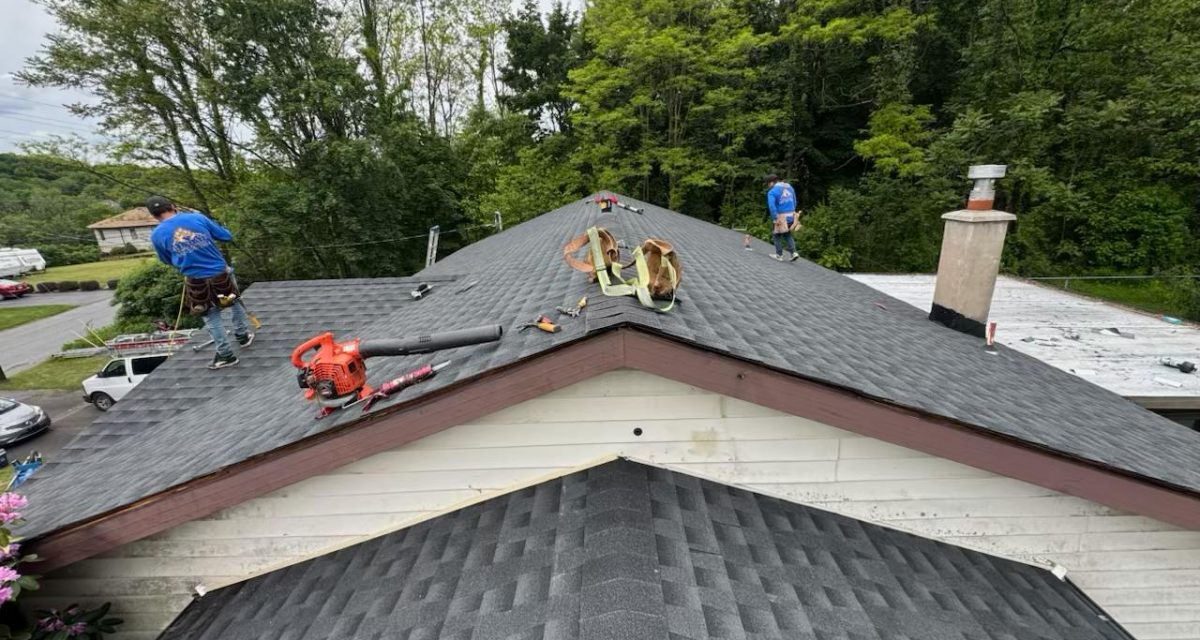
The photograph accompanying this article shows a roofing project featuring gray asphalt shingles across several intersecting roof sections. The visible work includes a prominent main ridge, sloping roof planes, carefully arranged shingle courses, and a chimney rising above the roof surface. Roofing professionals are working on the upper sections, with equipment and safety gear positioned around the work area.
These visible details demonstrate why quality roofing involves much more than placing shingles across a surface. Every section must be considered as part of a complete system, from the underlying roof deck to the ridge, edges, valleys, and areas where the roof meets other structures.
For homeowners planning a roof replacement or a new roofing project, understanding these components makes it easier to recognize the importance of professional workmanship. All State Roofing & Chimney provides roofing services, including roof installation, roof replacement, roof repair, and chimney-related work. The goal of a successful project is to create a roof that combines dependable protection, a consistent appearance, and attention to the details that influence long-term performance.
Understanding the Roof Installation Process
A successful roof installation begins with an understanding of the property’s existing roof structure, drainage requirements, and material needs. Each home has its own configuration, and the installation process must account for its slopes, ridges, valleys, edges, and any features that interrupt the roofing surface.
The photograph illustrates a roof with multiple sloping planes meeting near a central ridge. These transitions require careful planning because water must move away from the structure without collecting around joints or vulnerable details.
Before work begins, a professional assessment should identify the existing roofing condition, signs of moisture intrusion, potential structural concerns, and the most appropriate materials for the project. The contractor should also determine whether damaged decking or other underlying components may need attention.
Once the scope of work is established, the installation can proceed in a controlled sequence. Depending on the project, this may include removing existing shingles, inspecting the roof deck, replacing damaged materials, installing underlayment, preparing flashing details, and laying the new roofing material.
The final stages involve completing ridge and edge details, checking transitions, and removing construction debris. Each stage contributes to the reliability of the finished system.
For property owners, understanding this sequence helps explain why a professional roofing estimate should address more than the visible surface. The shingles matter, but their performance also depends on the preparation and components beneath them.
Why Proper Roof Preparation Matters
Roof preparation establishes the foundation for the entire roofing system. Even high-quality shingles may not perform as intended if they are installed over an unsuitable, deteriorated, or improperly prepared surface.
During a roof replacement, removing the existing roofing material may reveal damaged decking, loose fasteners, soft areas, or evidence of moisture exposure. These conditions should be evaluated before the new materials are installed.
The roof deck must provide an appropriate base for the selected roofing system. Where deterioration is identified, repairs or replacement of affected sections may be necessary. Installing new shingles over compromised decking can leave underlying problems unresolved and may reduce the reliability of the completed roof.
Underlayment is another essential component. Installed beneath the shingles according to the roofing system’s requirements, it provides an additional layer of protection against water that may pass beneath the outer covering. The appropriate product and installation method depend on the roof design, local requirements, and manufacturer specifications.
Particular attention should be given to vulnerable areas, including eaves, valleys, roof penetrations, and transitions between different surfaces. These locations often require specialized waterproofing details.
Preparation also includes confirming that materials, tools, and safety equipment are ready before installation progresses. An organized workflow reduces unnecessary disruption and helps roofing professionals maintain consistent workmanship.
The photograph shows shingles already covering much of the visible roof. Although the underlying deck and concealed components cannot be evaluated from the image alone, the project highlights why a completed surface must be supported by careful work at every stage.
The Importance of Quality Asphalt Shingles
Asphalt shingles remain a popular choice for residential roofing because they offer a practical combination of appearance, versatility, and weather protection. The gray shingles visible in the photograph create a consistent finish that complements the home’s existing exterior features.
Available in a range of colors, profiles, and performance ratings, asphalt shingles allow homeowners to select a roofing appearance suited to the architecture of their property. Gray and charcoal tones are particularly versatile because they coordinate with many siding colors, trim finishes, and exterior materials.
However, appearance should not be the only factor in choosing a roofing product. Homeowners should consider durability, wind-resistance ratings, warranty terms, installation requirements, and compatibility with the complete roofing system.
Different shingle products may require specific fastening patterns, nail placement, exposure dimensions, and accessory components. Following the manufacturer’s instructions is essential for achieving the performance described in the product documentation.
Ventilation and moisture management should also be considered when selecting and installing a roofing system. Shingles are only one part of the roof assembly, and their service life may be affected by conditions within the attic and beneath the roof deck.
Professional guidance helps property owners compare suitable options without choosing materials based solely on color or initial cost. A well-planned roof installation should balance the homeowner’s budget, architectural preferences, and the technical requirements of the building.
Achieving Consistent Shingle Alignment
Consistent shingle alignment is one of the most noticeable indicators of a carefully executed roofing project. In the photograph, the gray shingle courses create a repeating pattern across the main roof planes, giving the surface a uniform appearance.
Achieving this result requires accurate layout and attention to the manufacturer’s installation instructions. Roofing professionals must maintain the specified exposure between courses and position each shingle correctly in relation to adjacent rows.
Improper alignment can create irregular patterns, uneven edges, or visible inconsistencies. More importantly, incorrect placement or fastening may affect the roof’s resistance to wind and water intrusion.
The layout must also accommodate the shape of the roof. Where a roof plane meets a ridge, valley, wall, or adjoining section, shingles and accessory materials must be cut and installed appropriately. These details require a combination of technical knowledge and practical experience.
Fastener placement is equally important. Nails positioned incorrectly, driven too deeply, or left insufficiently secured can compromise the installation. The number and location of fasteners must follow the requirements for the specific shingle product and the applicable installation conditions.
A professional final review should examine the visible pattern, exposed fasteners where relevant, transitions, and any areas where materials have been adjusted to fit the roof geometry.
A clean shingle layout improves the roof’s appearance, but its value goes beyond aesthetics. Correct installation helps the roofing system perform as designed and reduces the likelihood of avoidable problems.
Ridge Lines and Intersecting Roof Sections
The ridge is a defining feature of the roof shown in the photograph. It runs along the upper meeting point of sloping roof planes, while the forward-facing gable creates a prominent architectural feature. These intersecting sections require accurate installation to achieve both a consistent appearance and dependable weather protection.
Roof ridges deserve particular attention because they are exposed to wind and changing weather conditions. The shingles or specialized ridge components used in these locations must be installed according to the roofing system’s requirements. Improper placement can leave vulnerable areas exposed to moisture or wind-driven rain.
Ridge caps are designed to cover the upper junction between opposing roof slopes. Their positioning, fastening, and overlap must be appropriate for the selected materials. Some roofing systems also incorporate ridge ventilation, which requires compatible components and a properly designed ventilation arrangement.
Valleys, where two roof slopes meet and channel water toward the eaves, require equally careful detailing. Depending on the design, they may use specific underlayment, metal flashing, or manufacturer-approved shingle installation methods. Water must be directed toward the drainage system rather than beneath adjacent roofing materials.
The roof in the photograph also includes intersecting sections above and below the main roofline. These transitions should be assessed as individual details within the overall installation. The finished appearance should remain consistent while allowing each section to perform its intended function.
A professional roofing contractor understands that these junctions cannot simply be treated like ordinary areas of the roof. Careful measurements, suitable materials, and correct fastening methods help establish a durable finish.
Chimney Flashing and Roof Penetrations
The chimney visible on the right side of the photograph is an important feature of this roofing project. Any point where a chimney passes through a roof creates a transition between different building materials, making proper waterproofing essential.
Chimney flashing helps direct rainwater away from the junction between the chimney masonry and the surrounding roof. Depending on the construction, the system may include base flashing, step flashing, counterflashing, and other components designed for the specific chimney and roof configuration.
These materials must be integrated correctly with the shingles and the chimney structure. If flashing is damaged, improperly fitted, or poorly sealed, water may enter the building even when the surrounding shingles appear to be in good condition.
A visible chimney also deserves an assessment of its masonry, crown, cap, and surrounding joints when the scope of the project calls for it. Deteriorated mortar, cracked masonry, or damaged protective components may require separate chimney repairs. Roofing work should not automatically be taken as evidence that the chimney itself has been inspected or repaired.
Homeowners should also understand that sealant alone is not a substitute for a properly designed flashing system. Suitable materials and correct integration are essential to managing water at this transition.
Because the photograph does not show the concealed flashing details, it is not possible to determine their condition from the image. A professional on-site inspection is the appropriate way to evaluate these components.
For homeowners considering roof installation alongside chimney work, All State Roofing & Chimney offers roofing and chimney services that can help address the different elements of the building envelope.
Roofing Materials and Weather Resistance
A dependable roofing system must be selected with the property’s design and local weather exposure in mind. In New Jersey, roofs may experience heavy rainfall, wind, summer heat, freezing temperatures, snow, and repeated seasonal changes.
These conditions place demands on shingles, underlayment, flashing, fasteners, and drainage components. Selecting materials that work together is therefore just as important as choosing a visually appealing roof covering.
Asphalt shingles provide the visible outer layer, but other components contribute to the roof’s resistance to moisture. Underlayment, flashing, drip edges, and properly designed drainage paths help manage water and protect vulnerable sections.
Wind resistance depends on factors such as the product specification, fastening method, roof geometry, and installation quality. Homeowners should discuss the applicable product ratings and installation requirements with their contractor rather than assuming all shingles offer identical performance.
Temperature changes can also affect roofing materials. Appropriate installation methods help accommodate the requirements of the selected products, while proper attic ventilation can help manage heat and moisture within the building assembly.
Drainage should not be overlooked. Gutters and downspouts need to direct water away from the roof and foundation effectively. Blockages, poor drainage, or damaged gutter components can contribute to moisture problems even when the main roofing surface remains intact.
The gray shingles in the photograph provide a cohesive finish across the roof’s main slopes. A successful project combines this visual consistency with suitable materials, correct installation, and attention to the environmental conditions the roof will face.
Workmanship, Safety, and Job-Site Organization
Professional roofing requires a combination of technical skill, careful planning, and appropriate safety practices. The photograph shows two roofing workers positioned on separate sections of the roof, with tools and safety equipment visible near the central ridge.
Working on a sloped roof presents significant fall hazards. Professional crews should evaluate the working conditions, use appropriate fall-protection systems, and follow applicable workplace safety requirements. Equipment must be suitable for the roof configuration and the tasks being performed.
Safety planning also includes assessing weather conditions, access points, material handling, and the location of tools. Wind, rain, wet surfaces, and unstable working conditions can increase the risks associated with roofing activities.
A well-organized work area supports quality as well as safety. Materials should be positioned to avoid unnecessary movement, while tools and debris should be managed to reduce the risk of slips, trips, and falling objects.
Protecting the property below the work area is another important consideration. Contractors should plan for debris collection, safe material transport, and reasonable protection of landscaping, walkways, and other vulnerable areas.
Communication with the homeowner helps establish expectations about access, noise, project timing, and cleanup. Although roofing work can temporarily disrupt normal household activities, a clear process makes the experience more manageable.
The presence of workers and equipment in the photograph demonstrates an active installation environment. However, a single image cannot confirm the specific safety systems used throughout the project. Homeowners should discuss safety procedures and verify that their contractor follows the requirements applicable to the work.
Preventing Common Roofing Problems
Many roofing problems can be reduced through proper installation, suitable material selection, and timely maintenance. Understanding common warning signs helps homeowners respond before minor defects develop into more extensive damage.
One concern is water intrusion around flashing. Chimneys, vents, and other roof penetrations interrupt the continuous shingle surface, so their waterproofing details must be installed correctly and inspected periodically.
Another common issue is damaged or displaced shingles. Strong winds, falling branches, aging materials, or improper fastening can affect the roof covering. Missing shingles may expose underlying layers to weather and increase the risk of leaks.
Poor drainage can also create problems. Gutters filled with leaves and other debris may prevent water from moving away efficiently. During freezing weather, drainage problems can contribute to ice-related complications, depending on roof design and environmental conditions.
Inadequate attic ventilation and moisture management may contribute to condensation, excessive heat buildup, and premature deterioration of certain roofing components. These conditions should be evaluated as part of the building’s overall performance rather than addressed through surface repairs alone.
Homeowners should watch for warning signs such as ceiling stains, peeling paint near the roofline, damp attic materials, visible shingle damage, or water appearing around a chimney after rainfall. These symptoms do not always reveal the exact source of a problem, so a proper inspection is necessary.
Avoiding repairs can allow moisture to affect insulation, interior finishes, or wooden components. Prompt assessment helps determine whether a localized repair is appropriate or a larger roofing intervention may be necessary.
A professional roof installation is intended to establish a reliable foundation for years of service. Periodic inspections and timely maintenance help preserve that investment.
Roof Inspections and Long-Term Maintenance
Roof inspections help homeowners understand the condition of their roofing system and identify maintenance needs. They are particularly useful after severe weather, when visible damage appears, or when the roof is approaching the expected service life of its materials.
A comprehensive assessment may examine shingle condition, ridge caps, roof edges, valleys, flashing, drainage components, and accessible attic areas. The inspection should also consider signs of moisture intrusion and any visible deterioration around the chimney.
Homeowners should avoid walking on steep or potentially damaged roofs themselves. A qualified professional can evaluate difficult-to-access areas using appropriate safety procedures.
Maintenance recommendations should be based on the roof’s actual condition. Some roofs may need minor repairs or drainage maintenance, while others may require more extensive work because of widespread deterioration.
It is also important to keep records of roofing materials, installation dates, warranty documents, repairs, and inspection findings. This information can help homeowners make informed decisions and communicate more effectively with contractors.
Manufacturer warranties and workmanship warranties should be reviewed carefully. Their terms, exclusions, maintenance requirements, and coverage periods can differ, so homeowners should not assume that every roofing component is covered in the same way.
For additional general guidance on roofing materials and installation, consult the National Roofing Contractors Association and the U.S. Department of Energy’s guidance on cool roofs. These resources provide useful background for understanding roofing performance and energy-related considerations.
Regular maintenance cannot eliminate every roofing issue, but it can help identify developing concerns and support the long-term performance of the system.
When to Consider Roof Repair or Replacement
Deciding between roof repair and full replacement requires an evaluation of the roofing system’s condition, the extent of the damage, and the homeowner’s long-term plans.
Roof repair may be suitable when damage is localized and the surrounding materials remain in serviceable condition. Examples include isolated shingle damage, certain flashing defects, or a limited area affected by a leak.
A roof replacement may be more appropriate when shingles show widespread deterioration, repeated leaks affect multiple areas, or the underlying roofing system has reached the end of its useful life. Significant decking damage may also influence the scope of work.
The age of the roof is relevant, but it should not be the only deciding factor. Material type, installation quality, ventilation, maintenance history, and weather exposure can all affect performance.
A professional inspection should identify the observed problems and explain the available options. Homeowners should receive a clear description of the recommended work, the materials involved, and any additional repairs that may be required if concealed damage is discovered during installation.
Cost comparisons should consider the complete scope of each proposal rather than focusing only on the lowest initial price. Material quality, preparation, flashing details, disposal, cleanup, and warranty terms can all influence the overall value of a roofing project.
All State Roofing & Chimney provides roof installation services and other roofing solutions for homeowners seeking professional assistance. A project-specific assessment is the best starting point for determining which approach is appropriate for a particular property.
Professional Roof Installation With All State Roofing & Chimney
The roof shown in the photograph illustrates the visual impact of a carefully arranged asphalt shingle surface. Its gray finish, prominent ridge, intersecting slopes, and chimney provide a useful example of the details that should be considered during residential roofing work.
For homeowners, the objective should be more than obtaining a new-looking roof. The complete roofing system must be planned and installed to manage water, accommodate the building’s design, and provide reliable protection under normal environmental conditions.
All State Roofing & Chimney offers roofing services that include roof installation, roof replacement, roof repair, roof leak repair, and emergency roofing. The company also provides chimney-related services, including chimney inspections and repairs, chimney cap and crown installation, and chimney flashing repair.
Addressing roofing and chimney concerns together can be useful when an inspection identifies issues around the chimney or other transitions. The appropriate work will depend on the property’s condition and the findings of an on-site assessment.
Homeowners should ask questions about the proposed materials, installation sequence, flashing details, cleanup arrangements, and applicable warranty coverage. Clear communication helps ensure that the finished work meets the agreed scope and that important concerns are addressed before the project is considered complete.
To learn more about the available services, visit the official All State Roofing & Chimney website. Homeowners can also explore the company’s roof installation information to learn more about the available roofing options.