
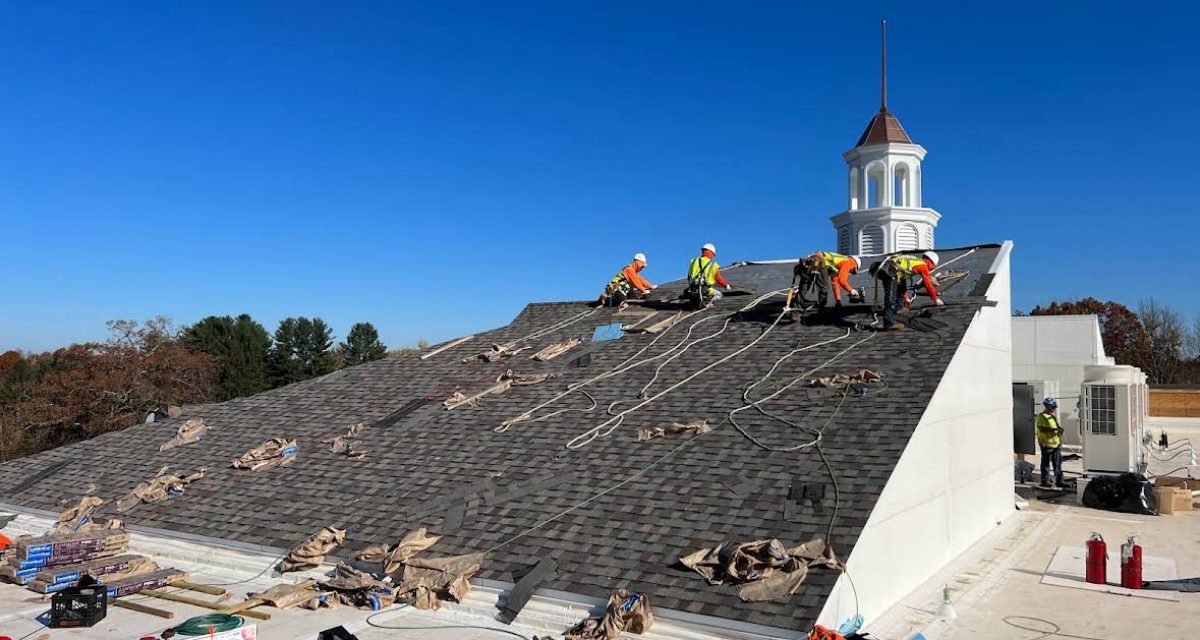
Professional roof installation is an essential investment in the long-term protection, performance, and appearance of any building. A properly installed roofing system helps defend the structure against rain, wind, moisture, seasonal temperature changes, and other environmental conditions that can gradually damage a property. The roofing project shown in this photograph demonstrates the scale, preparation, coordination, and attention to detail required when installing shingles across a large, sloped roof.
The image captures roofing professionals working together near the upper section of an expansive roof. Shingle materials, tools, safety equipment, and installation supplies are visible across the work area, illustrating the practical stages of an active roofing project. The roof features a dark, dimensional shingle appearance that complements the building’s architectural design, while the broad roof surface requires careful planning to achieve consistent coverage and a uniform finished result.
At All State Roofing and Chimney, a successful roofing project should be approached as a complete building protection solution rather than simply the placement of new shingles. Every part of the installation process matters, including evaluating existing conditions, preparing the roof deck, installing protective underlayment, detailing vulnerable transitions, and securing the roofing materials according to applicable requirements.
A roof may look attractive from the ground, but its actual performance depends heavily on the quality of the work beneath and around the visible surface. Proper installation helps reduce the risk of leaks, premature material deterioration, and avoidable maintenance problems.
Whether a property needs a complete roof replacement or a new roofing system as part of a larger construction project, professional planning and workmanship help establish a reliable foundation for long-term performance.
Understanding the Roofing Project Shown in the Photograph
The photograph presents a substantial sloped roof covered with shingles, with several workers concentrated near the upper portion of the structure. The visible work area includes loose packaging, roofing supplies, tools, and ropes arranged across different sections of the roof. These details reflect the logistical demands of a project that requires materials to be moved, positioned, installed, and managed safely at an elevated working height.
Large roofing projects require more than the ability to install shingles efficiently. The crew must understand the roof’s geometry, identify transitions between different surfaces, maintain appropriate working procedures, and coordinate the installation sequence so that exposed areas remain protected.
The roof’s considerable surface area also makes consistency especially important. Shingles should follow the intended layout, with appropriate alignment, exposure, fastening, and detailing. Small installation errors can become more noticeable across a large roof and may affect its resistance to water infiltration.
Another important consideration is the relationship between the sloped roof and the adjoining flat or low-slope sections visible in the photograph. These roof areas may require different materials and waterproofing methods. Their transitions must be evaluated carefully because changes in slope, drainage direction, and construction details can create vulnerable points if they are not properly addressed.
The architectural structure rising above the roof also introduces additional detailing considerations. Features that project through or rise alongside a roofing surface can affect how water moves across the roof. Their surrounding edges, flashing, and connections must be evaluated according to the actual construction.
The photograph provides a clear view of the installation activity, but it cannot establish every technical specification of the project. Roof deck condition, underlayment type, flashing design, and fastening requirements must be confirmed through an on-site assessment and the applicable product instructions.
This careful, evidence-based approach is an important part of delivering professional roof installation that meets the property’s actual needs.
Why Professional Roof Installation Matters
A roofing system performs several essential functions simultaneously. It sheds precipitation, helps protect the roof structure, contributes to the building envelope, and influences the property’s exterior appearance. When these functions are supported by proper installation, the roof is better positioned to perform as intended throughout its service life.
One of the principal advantages of professional installation is attention to the complete roofing assembly. Shingles are the visible component, but they work together with the roof deck, underlayment, flashing, ventilation provisions, and other relevant components.
If one part of this assembly is neglected, the entire system may become more vulnerable. For example, incorrectly installed flashing can allow water to reach concealed surfaces even when the surrounding shingles appear intact. Likewise, damaged decking or unsuitable fastening can compromise the support and attachment of the finished roofing material.
Professional roof installation also helps ensure that materials are appropriate for the roof’s design and exposure conditions. The selected products must be compatible with the intended application and installed according to manufacturer specifications.
Workmanship is equally important. Proper shingle alignment, correct fastening, carefully detailed edges, and attention to penetrations help create a roofing surface that is both visually consistent and functionally reliable.
For property owners, these details can make a meaningful difference in maintenance requirements, moisture protection, and the likelihood of needing premature repairs. A well-planned installation can also improve the appearance of the building by creating a clean, consistent roofline.
Ultimately, quality roofing work is measured by more than how quickly a crew completes the visible surface. It is measured by whether the complete system has been installed carefully, documented appropriately, and prepared to withstand the conditions for which it was designed.
Preparing the Roof Deck Before Installing Shingles
Successful professional roof installation begins with evaluating the surface that will support the new roofing materials. The roof deck provides the foundation for the roofing assembly, so its condition should be checked before new shingles are installed over it.
During a roof replacement, the existing roofing materials may need to be removed to expose the underlying deck. This allows the roofing contractor to inspect areas that were previously concealed and identify signs of deterioration, moisture damage, loose panels, or other conditions requiring attention.
Not every roof replacement requires extensive decking repairs. However, damaged sections should not simply be ignored because they will eventually be covered by new materials. The contractor should determine whether repairs or replacement are necessary based on the observed condition and applicable installation requirements.
Once the deck has been assessed, the work area should be prepared for the next stage. Loose debris, protruding fasteners, and unsuitable surface conditions should be addressed as appropriate. The objective is to provide a stable, suitable foundation for the roofing system.
On a large roof like the one shown in the photograph, preparation also involves organizing materials and coordinating access to different sections. Roofing supplies should be positioned so that installers can work efficiently without creating unnecessary obstacles or compromising safe movement across the roof.
The contractor must also consider weather conditions. Rain arriving during an exposed installation can create additional risks, particularly when the roof deck or protective layers have not yet been fully covered. Planning the work sequence and protecting unfinished sections are important measures for managing these conditions.
Careful preparation supports the rest of the installation process. It helps reduce avoidable complications, improves the consistency of the finished work, and gives the roofing materials a suitable surface on which to perform.
Choosing Quality Asphalt Shingles for the Roofing System
The dark shingle surface visible in the photograph gives the building a uniform, finished appearance. Asphalt shingles are widely used on sloped roofs because they are available in different styles, colors, and performance categories, allowing property owners to select products that suit the building’s design and requirements.
However, selecting shingles should involve more than choosing a color. The contractor should consider the roof’s slope, local climate, product compatibility, applicable building codes, and the manufacturer’s installation instructions.
Different shingle products can have different fastening patterns, exposure requirements, installation limitations, and warranty conditions. These specifications should be reviewed before work begins so that the finished roof is installed in accordance with the selected system.
Material quality and installation quality must work together. Even a reputable roofing product can underperform if it is installed incorrectly or used outside its intended application. Conversely, careful workmanship cannot compensate for materials that are unsuitable for the roof.
Property owners should ask about the proposed shingle product, the associated underlayment and flashing materials, and any relevant manufacturer documentation. Understanding what is included in the roofing assembly helps establish realistic expectations for the project.
Color and appearance also deserve consideration. A consistent shingle finish can complement the building’s exterior and create a more cohesive architectural appearance. The selected design should work with the existing exterior finishes, roof geometry, and overall character of the property.
A professional contractor can explain the available options without promising that one material is ideal for every building. The best choice is the product that meets the property’s performance requirements, installation conditions, appearance preferences, and budget.
Installing Underlayment and Managing Moisture Protection
Underlayment is an important component of many shingle roofing systems. Installed beneath the shingles, it provides an additional protective layer according to the product’s intended purpose and installation requirements.
The appropriate underlayment depends on factors such as roof design, slope, climate exposure, building regulations, and the manufacturer’s instructions. Some roofing assemblies may require specific materials or additional protection in designated areas.
Correct installation includes following the required overlap, fastening, and coverage specifications. The material must be integrated properly with the rest of the roofing assembly, including relevant edge details and flashing.
Areas exposed to increased moisture risk may require additional measures. Eaves, valleys, roof penetrations, and transitions between adjoining surfaces should be evaluated carefully to determine the protection needed for the specific roof.
The photograph shows workers installing shingles across the upper roof area, but the underlayment beneath the completed portions cannot be assessed from the image alone. This illustrates why the quality of a roofing project must be evaluated through its installation records, appropriate inspections, and observation of the relevant work stages rather than exterior appearance alone.
A roofing contractor should explain which protective layers are being used and how they are integrated into the system. Property owners benefit from understanding how the roofing assembly is designed to direct water away from vulnerable areas.
Underlayment is not a substitute for properly installed shingles, flashing, or drainage details. It works as part of a coordinated system in which each component has a specific role.
Careful Shingle Placement, Alignment, and Fastening
Shingle installation requires consistency across the entire roof surface. Each course must be positioned according to the product specifications so that the intended coverage and drainage pattern are maintained.
Installers must pay attention to the required exposure, alignment, fastening locations, and fastening depth. These details are important because incorrect placement or fastening can affect the shingles’ ability to remain securely attached and perform as designed.
On a broad roof, maintaining straight, consistent courses is especially important. Small alignment variations can become increasingly noticeable as the work progresses. A planned layout helps the crew maintain a uniform appearance and coordinate the installation across different sections.
Fasteners must be suitable for the selected roofing product and installed in the designated locations. Underdriven, overdriven, misplaced, or otherwise incorrect fasteners can compromise the intended attachment. The precise requirements depend on the product instructions and applicable building regulations.
Weather conditions also influence installation procedures. Wind, moisture, and unsuitable temperatures can affect material handling and installation quality. Contractors should follow the manufacturer’s limitations rather than continuing work under conditions that may compromise the roofing system.
The crew must also coordinate its movements and material placement. Tools, packaging, and loose supplies should be managed carefully to prevent trip hazards and reduce the chance of materials sliding or falling.
These practical details contribute to a finished roof that looks consistent and performs reliably. Professional installation combines technical accuracy with disciplined organization throughout every stage of the project.
Flashing and Roof Transitions Require Special Attention
Flashing is one of the most important elements of a complete roofing system because it helps manage water at locations where the roof meets another surface or where an opening interrupts the roofing plane.
Typical locations requiring careful detailing include chimneys, plumbing vents, skylights, roof edges, valleys, walls, and changes in roof direction. Each location may require a different flashing configuration based on the construction and the materials involved.
The large roof in the photograph includes an architectural feature rising above the surrounding roofline and adjoining roof sections with different surface characteristics. These visible features emphasize the importance of evaluating transitions rather than treating the roof as one uninterrupted surface.
Where a roof meets a vertical wall, the flashing arrangement must be designed to direct water away from the connection. Valleys must accommodate concentrated runoff, while penetrations require compatible details that maintain the integrity of the surrounding roofing assembly.
Chimneys deserve particular attention because water can enter around the base, at masonry joints, or through deteriorated components if the relevant defects are not corrected. Depending on the condition, appropriate work may involve flashing repairs, counterflashing, masonry evaluation, or other targeted measures.
As a roofing and chimney service provider, All State Roofing and Chimney recognizes the importance of considering these related building components when assessing a property’s exterior protection needs.
Not every roof requires the same flashing arrangement, and the photograph does not confirm which concealed details have been installed. The appropriate configuration should be determined by the actual roof design, product requirements, and applicable construction standards.
Careful detailing at these locations helps prevent water intrusion and supports the long-term performance of the entire roofing system.
Roofing Safety on Large and Sloped Surfaces
The photograph shows several workers operating near the upper portion of a steep roof, wearing high-visibility clothing and hard hats, with ropes and equipment distributed across the work area. Their presence highlights an essential part of professional roofing: managing the risks associated with working at height.
Roofing can expose workers to falls, unstable surfaces, changing weather, falling materials, and hazards associated with tools and equipment. These risks require appropriate planning, training, protective equipment, and work procedures.
Fall protection must be selected and implemented according to the site conditions and applicable safety regulations. Depending on the project, this may involve suitable personal fall-arrest systems, properly designed anchorage points, guardrails, or other compliant protective measures.
Ropes visible in a photograph do not, by themselves, establish that a complete fall-protection system is correctly configured. The equipment must be appropriate for the task, inspected, used as intended, and supported by a suitable safety plan.
Material handling is another important consideration. Shingles, tools, packaging, and equipment should be secured and positioned to reduce the possibility of slipping or falling. Workers also need clear access routes and an organized work area.
Weather monitoring is especially important on sloped roofs. Wet surfaces, strong winds, ice, and poor visibility can increase risk and may require work to stop until conditions improve.
Property owners can learn more about workplace safety requirements through the official Occupational Safety and Health Administration website at https://www.osha.gov/fall-protection. Its guidance provides useful background on fall hazards and protective measures for construction activities.
A professional roofing project should prioritize worker safety alongside installation quality. Good planning helps protect the crew, the building, and people who may be present around the work area.
Ventilation, Drainage, and Long-Term Roof Performance
A durable roof depends on more than the shingles visible from outside. Ventilation, drainage, and the condition of the surrounding building envelope can all influence how the roofing system performs over time.
Roof ventilation should be evaluated as part of the building’s overall design. Where an attic or roof assembly requires ventilation, the system should provide the intended airflow in accordance with applicable codes and manufacturer recommendations.
Poorly designed or obstructed ventilation can contribute to moisture accumulation and temperature-related problems in certain roof assemblies. However, ventilation requirements differ between buildings, and additional vents should not be installed without considering the existing configuration.
Drainage is equally important. Rainwater must be directed toward suitable collection and discharge points rather than allowed to accumulate near roof transitions or vulnerable edges.
On buildings with both sloped and low-slope roof sections, drainage details deserve particular attention. These areas may have different requirements for waterproofing, slope, membrane selection, and water discharge.
Gutters and downspouts should also be evaluated when they form part of the property’s drainage system. Blockages, inadequate capacity, or poor discharge arrangements can contribute to water-related damage around roof edges and foundations.
The goal is to create a coordinated system in which shingles, flashing, protective layers, ventilation provisions, and drainage components work together.
Professional roof installation offers an opportunity to identify visible concerns and recommend appropriate corrective work. Addressing relevant issues during a roofing project may help prevent recurring maintenance problems and improve the building’s overall protection.
How Weather Conditions Affect Roofing Work
Roofing projects take place outdoors, making weather management an important part of installation planning. Even a carefully prepared project can encounter changing conditions that affect the work sequence.
Rain can interfere with installation and expose unfinished surfaces to moisture. Strong winds can affect worker stability and the handling of shingles or other lightweight materials. Temperature extremes may also influence the handling and installation requirements of certain roofing products.
Contractors should monitor forecasts and consider the condition of the roof before beginning or continuing work. When conditions are unsuitable, delaying a task may be more responsible than risking damage or compromising installation quality.
Temporary protection is particularly important when existing roofing materials have been removed or when sections remain incomplete. Appropriate protective measures should be planned for the actual roof configuration and expected weather exposure.
Material storage also deserves attention. Roofing products should be handled and stored according to manufacturer instructions, with protection from conditions that could damage them or interfere with installation.
A large roof such as the one shown requires coordination between the installation sequence, available materials, working conditions, and the need to maintain protection across exposed sections.
Effective weather planning does not eliminate every possible interruption. Instead, it helps the contractor respond appropriately, limit unnecessary exposure, and maintain quality throughout the project.
Quality Control Before the Roofing Project Is Complete
A professional roofing project should include appropriate checks during installation and before the work is considered complete. Quality control helps identify defects while they can still be corrected efficiently.
The inspection process should reflect the roofing system, project scope, applicable codes, and manufacturer requirements. It may include reviewing shingle alignment, fastening, flashing details, roof edges, penetrations, and the condition of accessible drainage components.
The contractor should also check that materials have been installed according to their specifications and that relevant transitions have been completed properly.
Cleanup is another important part of the final stage. Loose packaging, unused materials, and construction debris should be removed from the work area. Tools and equipment should be collected, and accessible surrounding areas should be checked for leftover debris or discarded fasteners.
For properties occupied during construction, a clear handover is especially valuable. The contractor should explain the completed work, identify any agreed-upon remaining items, and provide relevant product documentation or warranty information where applicable.
Photographs taken at appropriate stages can also help document concealed components before they are covered. Such records may be useful when reviewing the work performed or discussing future maintenance.
A finished roof should not be judged solely by its color or appearance. The quality of the installation depends on the condition of the complete roofing assembly and the care taken with critical details.
For this reason, a structured final review is an important part of delivering professional roof installation that meets the property’s requirements.
Maintaining the Roof After Installation
Once a new roofing system has been installed, regular maintenance can help property owners identify developing concerns before they lead to more extensive damage.
A maintenance plan should consider the roof’s age, material type, exposure to weather, nearby trees, drainage arrangement, and the manufacturer’s recommendations. Different roofs require different inspection intervals and maintenance procedures.
After severe weather, a qualified roofing professional can assess accessible areas for visible signs of damage, displaced shingles, damaged flashing, or drainage problems. Property owners should avoid climbing onto steep roofs themselves because doing so introduces unnecessary fall risks.
Gutters and downspouts should be checked periodically for obstructions where they are part of the building’s drainage system. Debris should be removed safely, and any recurring water accumulation should be investigated.
Interior signs can also provide useful clues. Water stains on ceilings, damp areas near roof transitions, peeling paint, or unexplained moisture in an attic may indicate a problem requiring further assessment. These symptoms do not automatically mean the roof has failed, but they should not be ignored.
Maintenance should focus on identifying the source of a problem rather than applying a temporary repair without understanding the cause. Water can travel along concealed surfaces, so the visible location of a stain may not correspond to the actual entry point.
Property owners should retain installation documents, product information, warranties, and records of subsequent repairs. These details can help with future inspections and make it easier to understand the history of the roofing system.
Although no roof can be guaranteed to remain free from every maintenance issue, appropriate inspections and timely repairs can support its continued performance.
Choosing All State Roofing and Chimney for Your Roofing Needs
Selecting a roofing contractor is an important decision because installation quality can affect the building’s protection for years. Property owners should look for a contractor who communicates clearly, evaluates the existing conditions, explains the proposed scope of work, and follows the relevant installation requirements.
A professional assessment should address more than the visible roofing surface. It should consider the roof’s general condition, areas of potential water entry, flashing details, drainage, and any related components that may require attention.
Before work begins, property owners should understand the materials proposed for the project, the expected work sequence, the handling of existing roofing materials, and the procedures for protecting unfinished areas.
It is also sensible to discuss applicable permits, insurance, workmanship expectations, and warranty terms. Requirements vary by jurisdiction and project type, so the contractor should clarify which obligations apply to the specific property.
All State Roofing and Chimney can be contacted to discuss roofing and chimney service needs and arrange an assessment of the property’s condition. The appropriate recommendations will depend on the actual roof, the extent of any existing damage, and the owner’s goals.
Whether the project involves a complete roof replacement, installation of shingles, evaluation of flashing, or investigation of a suspected leak, a clear understanding of the work helps establish realistic expectations.
Property owners can visit the company’s website at https://allstateroofingandchimneynj.com/ to learn more about its services and make an inquiry.
A well-managed roofing project should combine careful preparation, suitable materials, responsible safety procedures, and attention to details that may not be visible after installation. These principles provide a practical foundation for achieving a durable and attractive roofing system.
Protect Your Property With Professional Roofing Work
The roofing project shown in the photograph demonstrates the coordination required to work across a large, sloped roof. Multiple installers, roofing supplies, tools, and safety equipment all form part of the process of completing the installation efficiently and carefully.
However, the lasting value of a roofing project depends on the quality of every stage, from the initial assessment and preparation of the roof deck to the installation of shingles, protection of vulnerable transitions, and final quality checks.
Professional roof installation helps create a complete roofing system designed to manage water, withstand the conditions for which it was selected, and complement the property’s exterior appearance.
For property owners considering a roof replacement or a new roofing system, the most important step is to understand the building’s actual needs and select an appropriate installation approach. A qualified assessment can help identify priorities, explain material options, and establish a clear scope of work.
All State Roofing and Chimney is a resource for property owners seeking information about roofing and chimney services. Contact the company through its website to discuss your project and determine the next steps toward improving your property’s exterior protection.
Investing in proper installation, quality materials, and ongoing maintenance can help support the long-term performance of the roof while preserving the building’s appearance and value.