
Introduction: Building a Stronger and More Reliable Roofing System
Roof Replacement is one of the most important investments a homeowner can make to protect a residential property, improve its appearance, and maintain its structural integrity. A properly installed roofing system does much more than provide an attractive exterior finish. It creates a protective barrier against rain, wind, moisture, temperature changes, and other environmental conditions that can gradually affect a home’s structure.
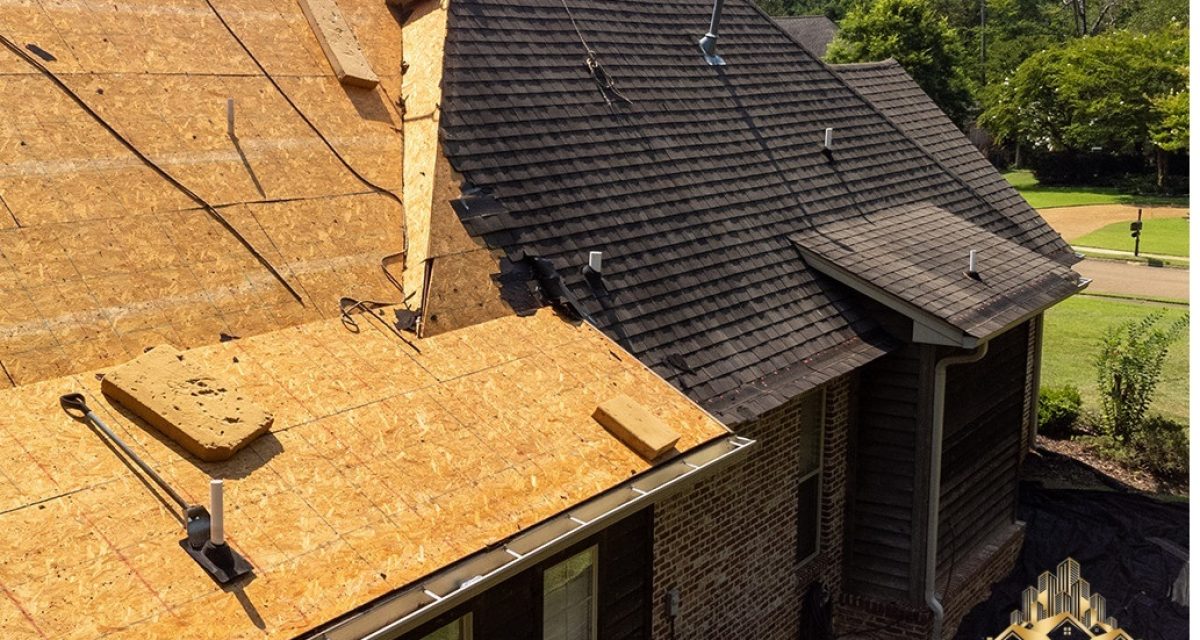
The roofing project shown in this photograph demonstrates an important stage of a professional roof replacement. One section of the residential roof features newly installed wood roof decking, while the adjoining roof section has already received dark asphalt shingles. This contrast provides a clear view of the different stages involved in rebuilding and installing a roofing system.
The exposed roof surface shows large structural sheathing panels secured across the roof structure. The completed section displays carefully arranged asphalt shingles, together with visible roofing penetrations, flashing details, and drainage components around the roofline. These elements illustrate why successful roofing work requires attention to both the underlying structure and the exterior materials.
For homeowners, understanding these stages is essential when considering a roof replacement. A new roof should not simply cover an aging surface. It should begin with a careful evaluation of the existing structure, appropriate preparation, suitable materials, and installation practices that support long-term performance.
At All State Roofing & Chimney, roofing projects are approached with an understanding that every layer contributes to the overall protection of a property. Through professional roofing services, the company helps homeowners address roofing concerns and explore appropriate solutions for their properties.
This article examines the visible work in the photograph, explains the importance of roof decking, discusses asphalt shingle installation, and explores the factors homeowners should consider when planning a roofing improvement.
Table of Contents
- Understanding the Roof Replacement Process
- Why Roof Decking Matters
- Preparing the Roof Structure
- Installing New OSB Roof Sheathing
- The Importance of Proper Roof Underlayment
- Asphalt Shingle Installation and Protection
- Roof Flashing and Penetration Details
- Roof Ventilation and Moisture Management
- Managing Roof Transitions and Drainage
- Common Problems That Require Roof Replacement
- Choosing the Right Roofing Professionals
- Long-Term Roof Maintenance and Protection
- Professional Roofing Services from All State Roofing & Chimney
- Conclusion
Understanding the Roof Replacement Process
A complete roof replacement involves several connected stages that must work together to create a dependable roofing system. Although the finished shingles are the most visible part of the project, the quality of the underlying construction is equally important.
The photograph illustrates this relationship particularly well. The left side shows an exposed roof section with newly installed sheathing panels, while the right side shows a roof surface covered with dark asphalt shingles. These two areas represent different stages of the roofing process and demonstrate how the underlying deck eventually supports the finished exterior covering.
A professional roof replacement generally begins with an assessment of the existing roofing materials and supporting structure. Contractors evaluate the condition of the shingles, roof decking, flashing, drainage areas, and visible penetrations. The purpose is to identify deterioration, potential water intrusion, and other conditions that could affect the new installation.
When an existing roofing system has reached the end of its useful service life, removing the old materials may be necessary. Once the roof surface is exposed, the condition of the underlying decking can be evaluated more accurately.
Damaged or deteriorated sections should be addressed before the installation continues. Covering compromised wood with new roofing materials can conceal existing problems rather than resolve them.
The objective is to establish a suitable foundation for the new roofing system. This foundation allows the remaining materials to be installed according to applicable manufacturer instructions and building requirements.
Why Roof Decking Matters
Roof decking is one of the most important structural components of an asphalt shingle roofing system. It provides the supporting surface onto which underlayment and shingles are installed. Without a stable and properly prepared deck, even high-quality roofing materials may not perform as intended.
In the photograph, the exposed section clearly shows wood-based roof sheathing panels arranged across the roof structure. Their broad, continuous surface creates the foundation needed for the subsequent installation stages.
Roof decking must be evaluated for several conditions, including moisture damage, deterioration, separation, excessive movement, and inadequate fastening. These issues can develop over time because of prolonged water exposure, previous leaks, poor ventilation, or aging materials.
A weakened deck can create installation difficulties and compromise the attachment of roofing components. For example, roofing fasteners need an appropriate supporting surface to achieve the required holding performance.
During a roof replacement, contractors should inspect the exposed decking rather than automatically assuming that the existing structure remains suitable. If damaged sections are discovered, replacement or appropriate repairs should be considered.
The type, thickness, spacing, and installation of replacement sheathing must follow the applicable structural requirements, local building codes, and roofing manufacturer specifications.
According to the National Roofing Contractors Association, professional roofing guidance considers the roof substrate, underlayment, fasteners, shingles, and flashing as interconnected parts of the complete roofing assembly.
Preparing the Roof Structure Before Installation
Preparation is a critical stage because it determines whether the new materials will have a suitable surface for installation.
Once the existing roofing materials have been removed where necessary, the exposed structure should be examined carefully. Contractors need to identify areas that may have experienced water penetration, deterioration, or movement.
The inspection should include the visible roof decking, panel connections, roof edges, valleys, and locations where the roofing system meets walls or penetrates the roof surface.
Any loose materials, protruding fasteners, or debris should be addressed before the next installation stage. The roof surface must provide an appropriate substrate for the selected roofing materials.
It is also important to consider the condition of the supporting framing. Although the photograph primarily shows the upper roof surface, the structure beneath the decking remains essential to the overall performance of the roof.
If structural concerns are discovered, they should be evaluated and addressed before the new sheathing and roofing layers are completed.
Proper preparation also involves coordinating the work so that exposed areas are protected from unexpected weather. Roof decking and other moisture-sensitive materials should not be unnecessarily exposed to rain.
A carefully organized installation process helps reduce avoidable delays and protects the materials throughout the project.
Installing New OSB Roof Sheathing
The large wood panels visible in the photograph resemble oriented strand board, commonly known as OSB. This engineered wood product is widely used in residential roof construction because it provides a continuous sheathing surface when selected and installed according to the appropriate specifications.
OSB roof decking is manufactured from compressed wood strands bonded together with adhesives. Its structural properties make it suitable for many roofing applications when the correct panel grade and thickness are selected.
During a roof replacement, installing new sheathing can become necessary when the existing decking is damaged, deteriorated, or unsuitable for supporting the new roofing system.
The installation process requires careful attention to panel positioning, edge support, spacing, and fastening. Panels should be installed in accordance with the manufacturer’s requirements and applicable building codes.
Proper spacing is particularly important because wood-based panels can experience dimensional changes as environmental moisture conditions fluctuate. Installation must account for the specified expansion allowances rather than placing panels tightly together without considering manufacturer recommendations.
Fasteners must also be appropriate for the application and installed at the required locations. Incorrect fastening can contribute to movement, uneven surfaces, or inadequate support.
The exposed decking in the photograph demonstrates how extensive the preparation stage can be before the finished shingles are installed. This is why homeowners should pay attention not only to the appearance of a new roof but also to the condition and preparation of the materials beneath it.
For additional technical information, homeowners and roofing professionals can consult Owens Corning’s roof deck requirements, which explain substrate and installation considerations for its asphalt shingle products.
The Importance of Proper Roof Underlayment
After the roof decking has been prepared and accepted for installation, the next important component is the underlayment.
Roof underlayment is installed over the decking and beneath the exterior roofing material. It provides an additional protective layer that helps manage water exposure and supports the performance of the overall roofing assembly.
Although the underlayment is generally hidden after the shingles are installed, its role should never be underestimated.
Different roofing projects may require different underlayment products depending on the roof slope, climate conditions, material selection, and manufacturer specifications.
Synthetic underlayment is commonly used in residential roofing applications because it provides a lightweight protective layer and can offer practical advantages during installation. Self-adhering membranes may also be appropriate in specific areas that require additional protection against water intrusion.
The installation must follow the selected product’s instructions. Overlaps, fastening locations, surface preparation, and integration with flashing components all influence how effectively the underlayment performs.
Special attention is necessary around roof edges, valleys, and penetrations. These areas may experience concentrated water flow or more complicated transitions between roofing components.
The Building America Solution Center provides useful guidance about asphalt shingle roof assemblies, including the relationship between roof decking, underlayment, drip edges, and flashing.
For homeowners planning a roof replacement, understanding the importance of these concealed layers helps explain why installation quality extends far beyond the visible shingle surface.
Asphalt Shingle Installation and Exterior Protection
Asphalt shingles are among the most recognizable residential roofing materials. They are widely selected because they offer a combination of weather protection, design flexibility, and a broad range of available styles and colors.
The completed roof section in the photograph displays dark asphalt shingles arranged in consistent horizontal courses. Their overlapping configuration creates an exterior surface designed to direct water toward the roof edges while helping protect the underlying assembly.
Shingle installation requires accurate positioning, correct fastening, and attention to the manufacturer’s application requirements.
The installation generally begins with the appropriate starter materials at the roof edge. Subsequent shingle courses are installed in a planned sequence, with the required exposure and alignment maintained across the roof surface.
Fasteners must be positioned according to the product specifications. Incorrect nail placement, insufficient penetration, or inadequate fastening can affect the shingles’ ability to resist wind forces.
The alignment of each course is also important. Consistent spacing and properly maintained exposure help produce a uniform appearance and support the intended water-shedding design.
The dark shingle surface shown in the photograph creates a clean visual contrast against the exposed wood decking on the adjoining section. This makes it possible to appreciate the transformation that takes place as the roofing assembly progresses from its structural foundation to its finished exterior covering.
A successful roof replacement should combine the visual benefits of new shingles with the functional requirements of the complete roofing system.
Homeowners should also remember that shingles are only one component of the roof. Their performance depends on the quality of the decking, underlayment, flashing, ventilation, and installation details beneath and around them.
Roof Flashing and Penetration Details
Roof flashing is another essential component of a reliable roofing system. It is designed to help manage water around locations where the roof meets another surface or where an object passes through the roofing assembly.
The photograph shows several visible roof penetrations and metal components positioned across the completed shingle section. These details demonstrate why careful installation around individual roof features is necessary.
Common flashing locations include chimneys, plumbing vents, exhaust outlets, roof-wall intersections, valleys, and other transitions.
Each location requires an appropriate approach because water can enter through gaps or poorly integrated connections if the flashing is not installed correctly.
For example, plumbing vent penetrations require compatible flashing components that integrate with the surrounding shingles and direct water away from the opening.
Roof-wall intersections also deserve particular attention. Flashing must be integrated with the roofing and wall materials so that water is directed outward rather than toward the building structure.
Where chimneys are present, flashing condition becomes especially important because the intersection between masonry and roofing materials can create multiple potential entry points for water.
Since All State Roofing & Chimney provides both roofing and chimney services, homeowners can also explore its chimney repair services when roofing and chimney-related concerns need professional evaluation.
Flashing should never be treated as a minor finishing detail. Even a newly installed roof can experience problems if its transitions and penetrations are not properly addressed.
Roof Ventilation and Moisture Management
A roofing system must manage more than exterior rainfall. Moisture and heat within the attic can also affect the condition of roof decking and other building components.
Proper ventilation helps support the movement of air through the attic space, depending on the building’s design and ventilation configuration.
When ventilation is inadequate, excess moisture may accumulate under certain conditions. Over time, this can contribute to condensation, deterioration of wood components, and other building-envelope concerns.
Balanced intake and exhaust ventilation is an important consideration in many residential roof assemblies. Intake ventilation is commonly provided near the eaves, while exhaust ventilation may be located near the roof ridge or through other approved systems.
The photograph shows several roof-mounted components that should be considered during the evaluation of the completed roofing system. Their exact function and configuration should be verified on site rather than assumed from appearance alone.
A professional roof replacement should account for existing ventilation arrangements and determine whether they are appropriate for the building.
Ventilation requirements vary according to the roof design, attic configuration, applicable codes, and roofing product specifications.
The NRCA roofing resources explain why attic ventilation can be important for managing moisture and protecting roof sheathing.
Proper ventilation is therefore an important part of long-term roof performance, not simply an optional accessory.
Managing Roof Transitions and Drainage
Residential roofs frequently contain several connected sections with different slopes, elevations, and architectural features.
The property shown in the photograph includes intersecting roof areas and a transition between the exposed decking section and the completed shingle-covered surface. These details require careful planning during a roof replacement.
Where roof sections meet, contractors must pay attention to the direction of water flow and the integration of roofing materials.
Valleys are particularly important because they collect water from adjoining roof surfaces. Their design and installation must accommodate the expected water movement while following the selected roofing system’s specifications.
Roof edges also play a major role in drainage. Drip edges help direct water away from vulnerable roof edges and into the appropriate drainage areas.
The completed section in the photograph includes visible gutter and roof-edge components. These elements are important because water must move away from the roof without creating unnecessary exposure to the fascia, exterior walls, or foundation.
A complete roofing evaluation should consider the condition of the gutters and downspouts as well as the shingles themselves.
Poor drainage can contribute to water accumulation, overflow, and moisture-related damage around the home.
This is why roof replacement planning should include the entire roof assembly and its drainage connections rather than concentrating exclusively on the central roof surface.
Common Problems That May Require Roof Replacement
Homeowners often begin considering a roof replacement after noticing visible signs of deterioration or experiencing recurring roofing problems.
Some issues can be resolved through targeted repairs, while others may indicate that a larger replacement project is more appropriate.
One common warning sign is widespread shingle deterioration. Asphalt shingles may become cracked, curled, brittle, or lose protective granules as they age.
Missing shingles can expose the underlying roofing materials to weather and increase the possibility of water penetration.
Recurring leaks are another concern. Water stains on ceilings, damp attic insulation, or visible moisture around roof penetrations may indicate that the existing roofing system is no longer providing adequate protection.
However, the source of a leak is not always directly above the visible interior damage. Water can travel along structural components before becoming noticeable inside the home.
Damaged roof decking is another important reason to investigate the condition of the complete roofing system. Prolonged moisture exposure can weaken wood panels and reduce their suitability as a supporting surface.
Sagging areas, soft decking, or noticeable structural movement should be evaluated by qualified professionals.
Storm damage can also create conditions that require repair or replacement. Strong winds, falling branches, and severe weather may damage shingles, flashing, and other roof components.
When multiple sections are affected, a professional assessment can help determine whether isolated repairs or a more comprehensive roof replacement is appropriate.
The goal should always be to identify the actual cause of the problem and select a solution that addresses the condition rather than simply covering visible symptoms.
Choosing the Right Roofing Professionals
Selecting a qualified roofing contractor is an important part of any roofing improvement project.
A roof replacement involves multiple materials, installation stages, and technical details. Homeowners should therefore look beyond the final appearance when evaluating a contractor’s approach.
A professional company should be able to explain the condition of the existing roof, identify necessary repairs, discuss suitable materials, and provide a clear description of the proposed work.
Communication is particularly important when unexpected conditions are discovered after old roofing materials have been removed.
For example, deteriorated decking may not be fully visible during an initial exterior inspection. Homeowners should understand how additional repairs will be evaluated and documented if such conditions are found.
It is also important to discuss the roofing products being used, manufacturer installation requirements, project scheduling, cleanup procedures, and applicable warranty information.
Homeowners should verify licensing and insurance where required and ask about relevant experience with similar residential roofing projects.
A reliable contractor should not promise that every roofing system will last a specific number of years regardless of conditions. Actual performance depends on materials, installation quality, environmental exposure, ventilation, and maintenance.
For additional information about the services offered, homeowners can visit the All State Roofing & Chimney website and review its available roofing solutions.
The right professional approach combines technical preparation, appropriate materials, clear communication, and attention to the individual characteristics of the property.
Long-Term Roof Maintenance and Protection
Even after a successful roof replacement, regular maintenance remains important.
A newly installed roofing system should be monitored periodically to identify potential problems before they develop into more extensive repairs.
Homeowners can begin by observing the roof from a safe location and looking for visible signs of damage, displaced shingles, or unusual changes around roof edges.
Gutters should also be maintained so that water can drain properly. Accumulated leaves, branches, and debris can interfere with drainage and cause overflow.
After significant storms, it may be appropriate to arrange a professional inspection, particularly when there are signs of impact damage or missing roofing materials.
Attic inspections can also provide useful information. Water stains, unusual dampness, or condensation may indicate moisture-management concerns that deserve further evaluation.
Roof penetrations and flashing should receive attention during professional inspections because these areas can be vulnerable to water intrusion.
It is important to avoid unnecessary foot traffic on shingles. Walking on a roof without appropriate training and safety equipment can create additional damage and expose homeowners to serious fall hazards.
A professional inspection is often the safer and more effective way to evaluate areas that cannot be observed from the ground.
Maintenance recommendations should be appropriate for the installed roofing products and the property’s exposure conditions.
By monitoring the roof and addressing minor concerns promptly, homeowners can support the performance of their investment and reduce the likelihood of avoidable deterioration.
Professional Roofing Services from All State Roofing & Chimney
The project shown in the photograph highlights the importance of combining structural preparation with careful exterior roofing installation.
The exposed roof decking demonstrates the work involved in creating a suitable foundation, while the completed asphalt shingle section illustrates the appearance of the finished roofing surface.
For homeowners planning similar improvements, All State Roofing & Chimney offers roofing services that include roof replacement, roof installation, roof repair, roof leak repair, and emergency roofing solutions.
The company also provides chimney-related services, helping homeowners address concerns involving another important part of the building’s exterior.
Choosing the appropriate service depends on the property’s existing condition and the extent of the problem.
A roof that has isolated damage may require a targeted repair rather than a complete replacement. On the other hand, widespread deterioration, recurring leaks, or compromised decking may indicate the need for more extensive work.
Homeowners can learn more about the company’s roof replacement services and roof installation solutions.
All State Roofing & Chimney serves communities across New Jersey, including areas within Bergen, Passaic, Hudson, Essex, Morris, Hunterdon, Somerset, Sussex, Union, and Warren Counties.
The company’s website provides additional information about its service coverage and available roofing solutions.
For homeowners who want to discuss the condition of their roof, request an inspection, or obtain information about a potential project, the company can be contacted directly.
All State Roofing & Chimney
Phone: (862) 295-7864
Website: https://allstateroofingandchimneynj.com/
Conclusion: Quality Preparation Creates a Better Roofing System
A dependable roofing system begins long before the final shingles are installed. The condition of the roof decking, quality of preparation, selection of appropriate underlayment, and accuracy of shingle installation all contribute to the finished result.
The photograph provides a valuable illustration of these different stages. The newly installed wood sheathing represents the structural foundation of the roofing assembly, while the dark asphalt shingles show how that foundation becomes a finished exterior surface.
The project also highlights the importance of roof transitions, penetrations, ventilation components, and drainage details. Each element has a role in supporting the overall performance of the roof.
For homeowners, the most important consideration is to ensure that a roof replacement addresses the complete roofing system rather than focusing only on the materials visible from outside.
Careful evaluation, proper installation, suitable materials, and regular maintenance can all contribute to a more dependable residential roof.
When planning a roofing project, working with experienced professionals can help homeowners understand the available options and make informed decisions about protecting their properties.